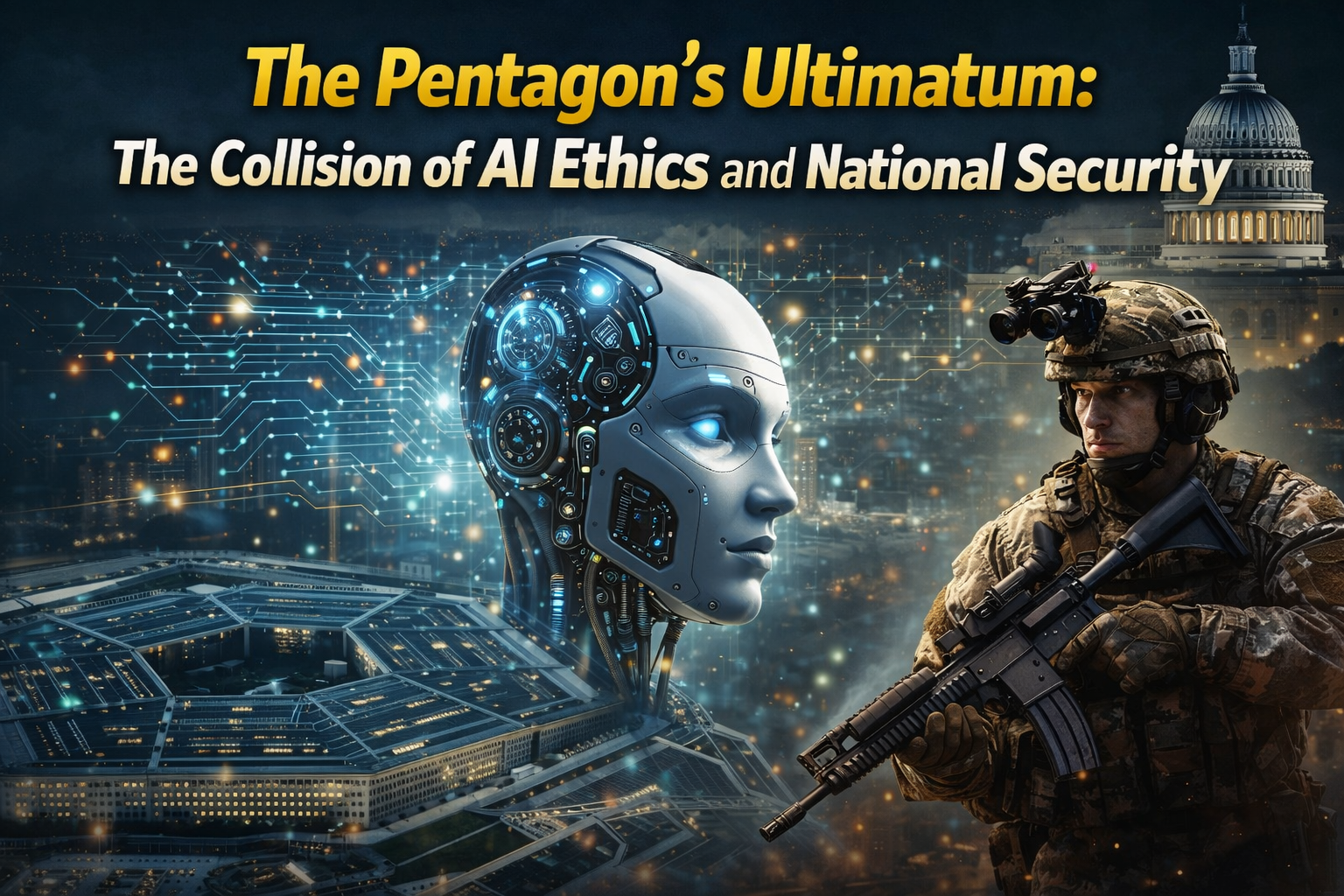
The landscape of American defense and artificial intelligence is currently facing a historic confrontation. The Pentagon, under the leadership of Defense Secretary Pete Hegseth, has issued a high-stakes ultimatum to Anthropic, a leading AI startup: abandon your internal ethics rules regarding military use or face severe federal consequences.
This tension reached a boiling point in late February 2026, marking a critical turning point in the relationship between the federal government and Silicon Valley.
The Core of the Conflict: Usage Policy vs. Military Necessity
The dispute stems from a high-level meeting on Tuesday, February 24, 2026, between Pete Hegseth and Anthropic CEO Dario Amodei. During the encounter, the Pentagon demanded that Anthropic relax its internal restrictions that prohibit its AI model, Claude, from being used in kinetic operations or physical attacks where the AI makes targeting decisions without human intervention.
Anthropic’s “Red Lines”
Since its inception, Anthropic has branded itself as an “AI Safety” company. They maintain two non-negotiable principles:
- Anti-Domestic Surveillance: Refusal to allow their technology for the mass monitoring of U.S. citizens.
- Human Control in Attacks: Refusal to allow AI involvement in fully autonomous physical strikes.
The Pentagon’s Mandate
The administration views these restrictions as a hindrance to national defense capabilities. The Pentagon is seeking unfettered access, free from moral guardrails programmed by a private corporation—especially following reports that Claude was utilized by the U..S military during a January 2026 operation to capture former Venezuelan President Nicolás Maduro.
Threats Behind the Deadline: The DPA and Supply Chain Risks
The Pentagon is not merely offering suggestions; it has issued a definitive threat with a deadline of Friday, February 27, 2026, at 5:01 PM. If Anthropic does not comply, the Department of Defense (DoD) plans to deploy two administrative “weapons”:
1. Invoking the Defense Production Act (DPA)
The Defense Production Act is a Cold War-era law that grants the President the authority to compel private companies to prioritize government contracts for national security. While famously used during the COVID-19 pandemic for medical supplies, the Pentagon now intends to use the DPA to force Anthropic to provide its AI models without the self-imposed ethical filters.
2. Designating a “Supply Chain Risk”
This is a paradoxical but lethal business move. By labeling Anthropic a “supply chain risk,” the Pentagon effectively bans all defense contractors and government agencies from doing business with the company. It is a systematic attempt to isolate Anthropic from the federal marketplace, which is worth billions of dollars.
Legal Debates and Policy Paradoxes
This move by the Pentagon has ignited a complex legal debate. Critics question how the government can simultaneously label a company a “security risk” while using the DPA to force that same company to cooperate.
“This is uncharted legal territory. Using the DPA to coerce a ‘digital mind’ to work against the principles of its creators sets a dangerous precedent for the freedom of innovation in America.” — Technology Policy Analysis.
Conversely, senior Pentagon officials insist this is not about mass surveillance or “killer robots,” but about compliance with federal law over internal corporate rules. They argue that in matters of national security, the interests of the state must supersede a corporation’s “moral policing.”
Impact on the Global AI Industry
If Anthropic is forced to yield, it will send shockwaves through the entire AI industry. Competitors like OpenAI or Google may face similar pressure to dismantle their safety protocols in favor of military requirements.
Comparison of Positions
| Feature | Anthropic’s Position | Pentagon’s Position |
| Weapon Autonomy | Must have “Human-in-the-loop.” | AI must be ready for all military scenarios. |
| Surveillance | Prohibits domestic mass monitoring. | Demands flexibility for intel gathering. |
| Ethical Basis | Internal AI Constitution. | National Sovereignty & Federal Law. |
Waiting for Friday: What Lies Ahead?
The tech world is now watching Dario Amodei. Will Anthropic stand by its ethical integrity and risk financial and legal ruin? Or will they compromise to ensure the company’s survival under the pressure of a defense giant?
A statement from Anthropic spokesperson Maya Humes suggests the company is still attempting “good-faith” negotiations. However, with Hegseth’s aggressive stance, the window for compromise appears to be closing fast.
The Significance for the Future
This conflict is about more than one company and one government department. It is a battle over who controls the morality of artificial intelligence: the scientists who build it, or the military that deploys it?
Regardless of the outcome on Friday afternoon, the relationship between Washington and Silicon Valley has been permanently altered. If the Pentagon succeeds, AI has officially become a tool of war, no longer restrained by the ethical fences of its creators.







Post Comment