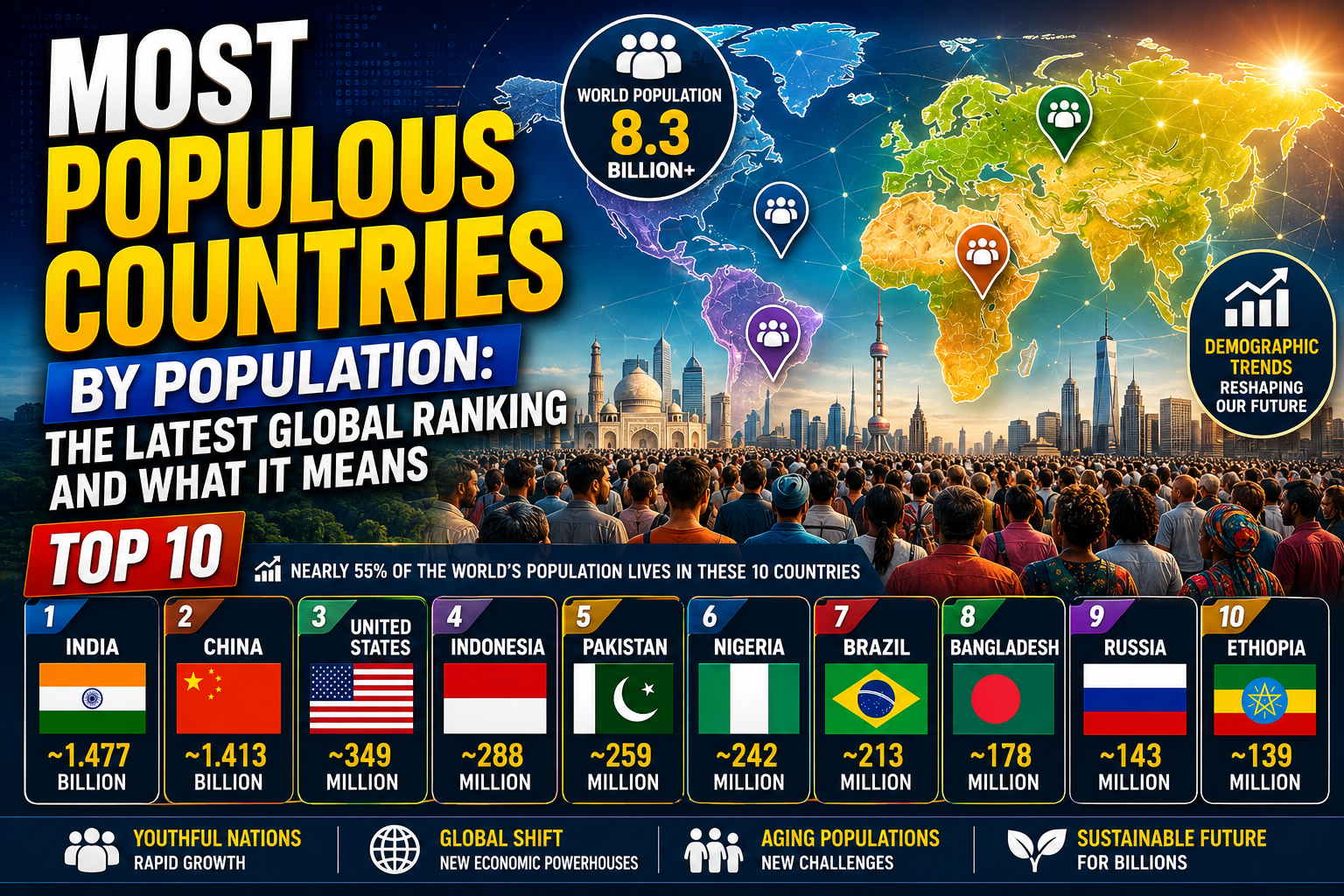
The human story has reached a momentous milestone. With the world population surpassing 8.3 billion people, human demographic dynamics are shifting faster and more dramatically than at any point in modern history. We are witnessing historic realignments: centuries-old demographic powerhouses are plateauing, emerging economies in South Asia and Sub-Saharan Africa are surging, and birth rates across vast swathes of the developed world have fallen below replacement levels.
Demographics shape virtually everything—from global trade routes and consumer markets to geopolitical leverage, environmental sustainability, and labor migration patterns. Understanding which nations host the largest populations—and where those populations are heading—is essential for policymakers, business leaders, investors, and global citizens alike.
This comprehensive guide explores the latest global ranking of the most populous countries, examines the underlying demographic forces driving these changes, and unpacks what this reordered global landscape means for the future of humanity.
The Top 10 Most Populous Countries in the World
According to the latest United Nations demographic projections and national statistical estimates, the ten most populous nations currently account for nearly 55% of the total human population.
Below is the definitive ranking of the world’s demographic giants:
| Rank | Country | Region | Estimated Population | % of World Population | Demographic Trajectory |
| 1 | India | Southern Asia | ~1.477 Billion | 17.8% | Growing steadily (Peak ~2060s) |
| 2 | China | Eastern Asia | ~1.413 Billion | 17.0% | Declining & aging |
| 3 | United States | Northern America | ~349 Million | 4.2% | Slow growth (Migration-driven) |
| 4 | Indonesia | Southeast Asia | ~288 Million | 3.5% | Moderating growth |
| 5 | Pakistan | Southern Asia | ~259 Million | 3.1% | Rapid growth |
| 6 | Nigeria | Sub-Saharan Africa | ~242 Million | 2.9% | High growth (Surging youth) |
| 7 | Brazil | South America | ~213 Million | 2.6% | Near peak / Plateauing |
| 8 | Bangladesh | Southern Asia | ~178 Million | 2.1% | Slowing growth |
| 9 | Russia | Eastern Europe / Northern Asia | ~143 Million | 1.7% | Structural decline |
| 10 | Ethiopia | Sub-Saharan Africa | ~139 Million | 1.7% | Rapid growth |
(Data compiled from United Nations World Population Prospects medium-variant projections and official statistical updates).
Deep Dive into the Top 5 Demographic Leaders
1. India (~1.477 Billion)
Having officially overtaken China as the world’s most populous country, India now stands at the apex of global demographics. What makes India’s demographic profile unique is its median age: roughly 28 years old, with over 65% of its population under the age of 35.
This massive, tech-savvy working-age population grants India an unprecedented demographic dividend. As manufacturing, information technology, and services expand, India’s domestic consumer market is rapidly becoming one of the most lucrative in the world. However, to fully capitalize on this advantage, India faces the monumental task of creating tens of millions of high-quality jobs annually, upgrading urban infrastructure, and elevating higher education standards.
2. China (~1.413 Billion)
After decades as the world’s population titan, China has entered a period of structural demographic contraction. Decades under the One-Child Policy (1979–2015), combined with rapid urbanization and high living costs, pushed China’s total fertility rate down to approximately 1.0 to 1.1 children per woman—well below the 2.1 replacement threshold needed to maintain a stable population.
China’s population is now shrinking and rapidly aging. By 2035, more than 300 million Chinese citizens will be aged 60 or older—equivalent to nearly the entire population of the United States. This “graying” transition poses steep challenges for pension systems, healthcare funding, and labor availability, forcing China to pivot from a labor-intensive economy toward high-tech automation and artificial intelligence.
3. United States (~349 Million)
The United States remains the third most populous nation and the only major developed country projecting continued, albeit modest, population growth through the mid-21st century.
Unlike many European or East Asian peers experiencing severe birth rate declines, the U.S. demographic engine is stabilized by net international migration. Immigrants continue to rejuvenate the workforce, drive entrepreneurship, and maintain economic vitality. However, political debates around immigration policy and slowing natural birth rates remain pivotal factors shaping the long-term size and composition of the American population.
4. Indonesia (~288 Million)
As Southeast Asia’s largest economy, Indonesia ranks fourth globally. Concentrated largely on the island of Java, Indonesia’s population benefits from a young median age (around 30 years) and steady economic development.
The Indonesian government’s ambitious relocation of its capital city from sinking, overcrowded Jakarta to Nusantara in East Kalimantan reflects the immense urban and environmental pressures that accompany massive population concentrations. Indonesia’s growing middle class makes it a major player in ASEAN and the broader Indo-Pacific economy.
5. Pakistan (~259 Million)
Pakistan holds the fifth spot with a fertility rate higher than most of its Asian neighbors. With an annual growth rate near 1.6% to 2.0%, Pakistan’s population is heavily skewed toward youth.
This rapid expansion presents a double-edged sword: a massive potential workforce on one hand, but severe strain on water resources, energy grids, educational facilities, and healthcare systems on the other. Ensuring social stability and economic opportunities for tens of millions of young Pakistanis remains a critical policy priority.
Major Trends Defining the Global Demographic Landscape
To truly understand what these population figures mean, we must look beyond raw headcounts to the structural macro-trends reshaping our world:
A. The Sub-Saharan Africa Boom
While fertility rates are falling across North America, Europe, and East Asia, Sub-Saharan Africa is experiencing an unprecedented demographic explosion.
- Nigeria (~242 Million) is projected to surpass the United States by 2050 to become the world’s 3rd most populous country.
- Ethiopia (~139 Million) and the Democratic Republic of the Congo (~116 Million) are surging up the global rankings at remarkable speeds.
By 2050, 1 in every 4 human beings on Earth will be African. This dramatic shift will reshape global labor markets, consumer demand, political alliances, and cultural influence.
B. The Great Aging & “Low-Fertility Trap”
On the opposite end of the spectrum, developed economies in East Asia and Europe are grappling with unprecedented demographic contraction:
- South Korea holds the world’s lowest recorded fertility rate (~0.72 children per woman).
- Japan (~122 Million) and Germany (~83.6 Million) have been shrinking for years, leading to acute labor shortages and empty rural towns.
Countries facing low birth rates are increasingly forced to raise retirement ages, automate industries with robotics, and reform immigration pathways to prevent economic stagnation.
C. Hyper-Urbanization and Megacities
Global population growth is heavily concentrated in urban centers. More than 56% of humanity lives in cities today, a figure expected to reach nearly 70% by 2050.
Metropolitan areas like Tokyo, Delhi, Shanghai, Mumbai, Dhaka, and Cairo now host populations larger than many medium-sized nations. Urbanization boosts economic productivity and innovation, but it also amplifies housing unaffordability, traffic congestion, waste management issues, and vulnerability to climate-induced heatwaves.
What the Population Shift Means for the Future
The reordering of global demographics carries profound real-world consequences:
1. Shift in Economic Gravity: The center of global consumption and manufacturing has decisively moved toward the Global South—specifically South Asia and Southeast Asia. Businesses that previously focused primarily on North America and Western Europe are recalibrating their expansion strategies toward high-growth markets like India, Indonesia, and Nigeria.
2. Geopolitical Realignment: Population size is a key component of national power. As China’s workforce contracts and India’s expands, multilateral institutions such as the UN Security Council, G20, and BRICS are facing increased pressure to reform their leadership structures to reflect modern demographic realities rather than mid-20th-century post-war power dynamics.
3. Climate Resiliency and Food Security: The most rapid population growth is taking place in regions most vulnerable to climate change—such as the Horn of Africa, the Sahel, and low-lying coastal areas in South Asia. Balancing food production, clean water access, and energy infrastructure for billions of people without accelerating carbon emissions is one of the 21st century’s ultimate challenges.
4. The Changing Nature of Work: In aging nations, automation, AI, and healthcare services will dominate economic investment. In youthful nations, primary education, vocational training, digital connectivity, and job creation will dictate social stability.
Conclusion
The latest global population rankings highlight a world in transition. We are moving away from a era dominated by Western and East Asian population dominance toward a dynamic, multi-polar world driven by the youth of South Asia and Africa.
While population growth presents genuine environmental and infrastructural hurdles, a large, young population also represents human potential, innovation, and economic dynamism. Nations that invest heavily in human capital—education, healthcare, green technology, and gender equality—will be best positioned to thrive in this new demographic era.
Penulis: W.S

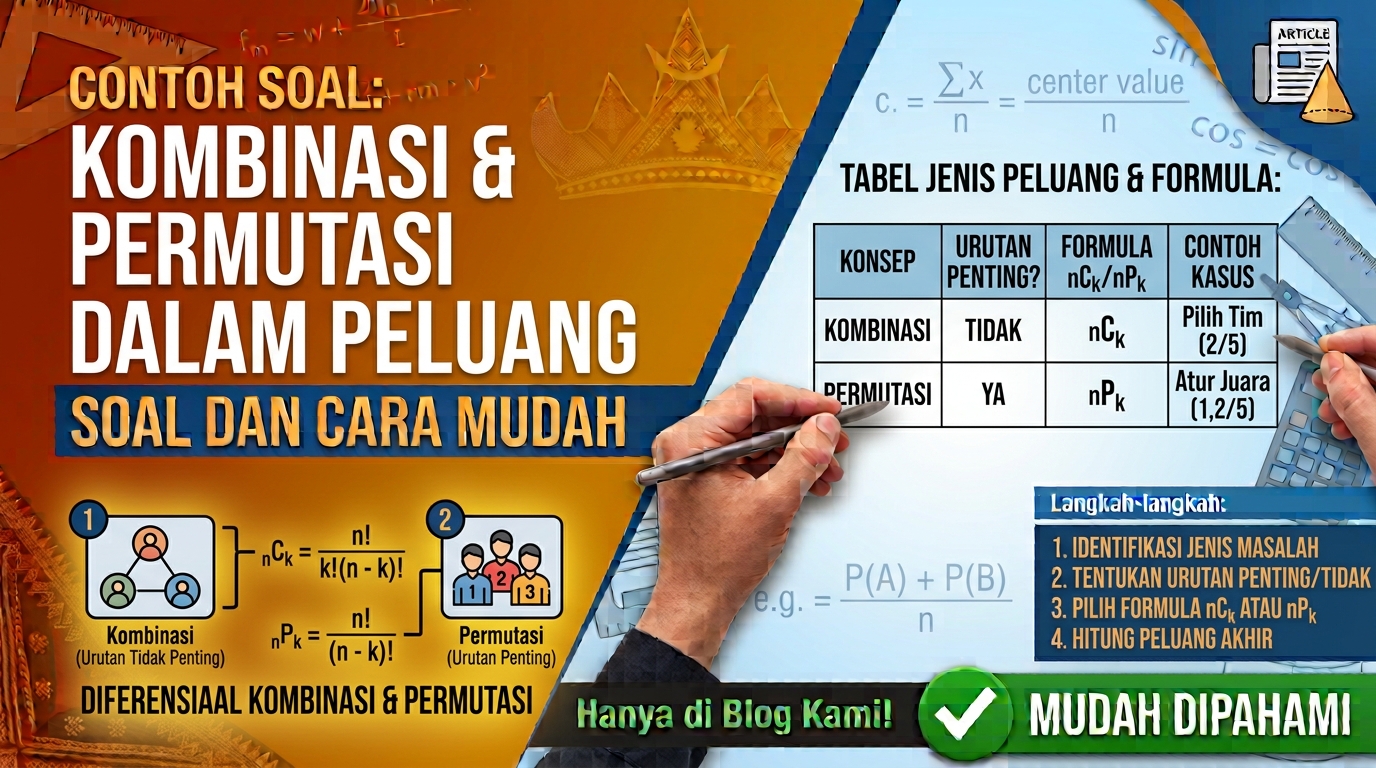
![Dalam materi statistika, simpangan baku dan varian data tunggal menjadi salah satu topik penting yang perlu dipahami. Keduanya digunakan untuk mengetahui seberapa besar penyebaran data terhadap nilai rata-ratanya. Jika data memiliki penyebaran yang kecil, nilai simpangan baku dan variannya juga cenderung kecil. Sebaliknya, semakin jauh data tersebar dari rata-rata, semakin besar pula nilai simpangan baku dan varian. Materi ini sering muncul dalam pembelajaran matematika, terutama ketika membahas statistika dasar. Untuk menguasainya, tidak cukup hanya menghafalkan rumus. Kita juga perlu memahami langkah-langkah menghitung mean, selisih setiap data dengan rata-rata, kuadrat selisih, varian, hingga simpangan baku. Artikel ini akan membahas pengertian, rumus, perbedaan, serta beberapa contoh soal simpangan baku dan varian data tunggal lengkap dengan cara mengerjakannya secara bertahap. Apa Itu Varian? Varian adalah ukuran statistik yang digunakan untuk mengetahui tingkat penyebaran data terhadap nilai rata-ratanya. Varian dihitung dengan mencari rata-rata dari kuadrat selisih setiap data terhadap mean. Dalam data tunggal, terdapat dua jenis rumus varian yang umum digunakan, yaitu varian populasi dan varian sampel. Untuk populasi, rumusnya adalah: σ² = Σ(xᵢ − μ)² / N Keterangan: σ² = varian populasi xᵢ = nilai setiap data μ = rata-rata populasi N = banyak data Σ = jumlah keseluruhan Sementara itu, untuk sampel, rumus varian adalah: s² = Σ(xᵢ − x̄)² / (n − 1) Keterangan: s² = varian sampel xᵢ = nilai setiap data x̄ = rata-rata sampel n = banyak data Dalam soal matematika sekolah, apabila soal menyebutkan sekumpulan data sebagai keseluruhan data yang sedang dianalisis, biasanya digunakan rumus varian populasi. Apa Itu Simpangan Baku? Simpangan baku atau standard deviation adalah akar kuadrat dari varian. Simpangan baku digunakan untuk mengetahui seberapa jauh penyebaran data dari nilai rata-ratanya. Rumus simpangan baku populasi adalah: σ = √[Σ(xᵢ − μ)² / N] Sedangkan untuk sampel: s = √[Σ(xᵢ − x̄)² / (n − 1)] Karena simpangan baku merupakan akar dari varian, keduanya memiliki hubungan yang sangat erat. Jika diketahui: Varian = 16 maka: Simpangan baku = √16 = 4 Jadi, semakin besar nilai varian, biasanya semakin besar pula simpangan bakunya. Perbedaan Varian dan Simpangan Baku Meskipun saling berkaitan, varian dan simpangan baku bukanlah hal yang sama. Varian merupakan rata-rata kuadrat penyimpangan data dari mean. Sementara itu, simpangan baku merupakan akar kuadrat dari varian. Contohnya, jika suatu kumpulan data memiliki varian sebesar 25, maka simpangan bakunya adalah: √25 = 5 Perbedaan lainnya terletak pada satuan. Varian menggunakan satuan yang dikuadratkan, sedangkan simpangan baku memiliki satuan yang sama dengan data aslinya. Karena alasan tersebut, simpangan baku sering kali lebih mudah digunakan untuk menginterpretasikan penyebaran data. Langkah-Langkah Menghitung Varian dan Simpangan Baku Data Tunggal Untuk menyelesaikan soal, terdapat beberapa langkah yang dapat dilakukan. 1. Hitung nilai rata-rata Jumlahkan seluruh data, kemudian bagi dengan banyaknya data. Mean = jumlah seluruh data / banyak data 2. Hitung selisih setiap data dengan mean Setiap nilai data dikurangi dengan rata-rata. xᵢ − x̄ 3. Kuadratkan setiap selisih Hasil pengurangan tadi kemudian dikuadratkan. (xᵢ − x̄)² 4. Jumlahkan seluruh kuadrat selisih Setelah semua data dihitung, jumlahkan hasil kuadrat tersebut. Σ(xᵢ − x̄)² 5. Hitung varian Untuk populasi, jumlah kuadrat selisih dibagi dengan banyak data. 6. Hitung simpangan baku Simpangan baku diperoleh dengan mencari akar kuadrat dari varian. Contoh Soal 1: Menghitung Varian Data Tunggal Soal: Diketahui data nilai ulangan matematika lima siswa sebagai berikut: 6, 7, 8, 9, 10 Tentukan nilai varian dari data tersebut! Pembahasan Langkah pertama adalah menghitung rata-rata. Jumlah data: 6 + 7 + 8 + 9 + 10 = 40 Banyak data: n = 5 Maka: Mean = 40 / 5 = 8 Selanjutnya, hitung selisih setiap data dengan rata-rata. Data (x) x − mean (x − mean)² 6 -2 4 7 -1 1 8 0 0 9 1 1 10 2 4 Jumlah 0 10 Jumlah kuadrat selisih adalah: Σ(x − x̄)² = 10 Karena data tersebut dianggap sebagai populasi, maka: Varian = 10 / 5 Varian = 2 Jadi, varian data tersebut adalah 2. Contoh Soal 2: Menghitung Simpangan Baku Data Tunggal Soal: Tentukan simpangan baku dari data berikut: 5, 6, 7, 8, 9 Pembahasan Pertama, tentukan rata-rata. Jumlah data: 5 + 6 + 7 + 8 + 9 = 35 Banyak data: 5 Maka: Mean = 35 / 5 = 7 Selanjutnya, buat tabel perhitungan. Data x − mean (x − mean)² 5 -2 4 6 -1 1 7 0 0 8 1 1 9 2 4 Jumlah 0 10 Varian: σ² = 10 / 5 = 2 Simpangan baku: σ = √2 Jadi, simpangan bakunya adalah: √2 ≈ 1,41 Dengan demikian, simpangan baku data tersebut sekitar 1,41. Contoh Soal 3: Varian dan Simpangan Baku Sekaligus Soal: Diketahui data tinggi tanaman dalam satu kelompok adalah: 10, 12, 14, 16, 18 Tentukan: Mean Varian Simpangan baku Pembahasan Langkah 1: Menghitung Mean Jumlah seluruh data: 10 + 12 + 14 + 16 + 18 = 70 Banyak data: 5 Maka: Mean = 70 / 5 = 14 Langkah 2: Menghitung Kuadrat Selisih Data x − 14 (x − 14)² 10 -4 16 12 -2 4 14 0 0 16 2 4 18 4 16 Jumlah 0 40 Langkah 3: Menghitung Varian Karena terdapat lima data: σ² = 40 / 5 σ² = 8 Jadi, variannya adalah 8. Langkah 4: Menghitung Simpangan Baku Simpangan baku merupakan akar dari varian. σ = √8 Karena: √8 = √(4 × 2) maka: σ = 2√2 Jika dibulatkan: σ ≈ 2,83 Jadi, hasil akhirnya adalah: Mean = 14 Varian = 8 Simpangan baku ≈ 2,83 Contoh Soal 4: Data dengan Nilai yang Lebih Bervariasi Soal: Perhatikan data berikut: 4, 6, 8, 10, 12, 14 Hitunglah varian dan simpangan bakunya! Pembahasan Jumlah data: 4 + 6 + 8 + 10 + 12 + 14 = 54 Banyak data: 6 Mean: 54 / 6 = 9 Selanjutnya: Data x − 9 (x − 9)² 4 -5 25 6 -3 9 8 -1 1 10 1 1 12 3 9 14 5 25 Jumlah 0 70 Maka varian: σ² = 70 / 6 σ² = 11,67 Kemudian simpangan baku: σ = √11,67 σ ≈ 3,42 Jadi, varian data adalah sekitar 11,67, sedangkan simpangan bakunya sekitar 3,42. Contoh Soal 5: Menghitung Simpangan Baku dari Data Nilai Siswa Soal: Nilai lima siswa dalam sebuah tes adalah: 70, 75, 80, 85, 90 Tentukan varian dan simpangan bakunya! Pembahasan Pertama, hitung rata-rata: Mean = (70 + 75 + 80 + 85 + 90) / 5 Mean = 400 / 5 Mean = 80 Kemudian hitung kuadrat selisih setiap data. Nilai Selisih dari Mean Kuadrat Selisih 70 -10 100 75 -5 25 80 0 0 85 5 25 90 10 100 Jumlah 0 250 Varian: σ² = 250 / 5 σ² = 50 Simpangan baku: σ = √50 σ = 5√2 σ ≈ 7,07 Jadi, varian data adalah 50 dan simpangan bakunya sekitar 7,07. Contoh Soal 6: Menentukan Varian Jika Simpangan Baku Diketahui Soal: Sebuah kumpulan data memiliki simpangan baku sebesar 6. Tentukan nilai variannya! Pembahasan Hubungan antara varian dan simpangan baku adalah: Simpangan baku = √Varian Karena simpangan baku diketahui sebesar 6, maka: Varian = 6² Varian = 36 Jadi, nilai variannya adalah 36. Soal seperti ini relatif lebih mudah karena tidak perlu menghitung mean dan penyimpangan masing-masing data. Contoh Soal 7: Membandingkan Penyebaran Dua Data Soal: Diketahui dua kelompok data berikut. Kelompok A: 7, 8, 9, 10, 11 Kelompok B: 3, 6, 9, 12, 15 Kelompok manakah yang memiliki penyebaran data lebih besar berdasarkan simpangan baku? Pembahasan Kedua kelompok memiliki mean yang sama. Kelompok A: Mean = 9 Kuadrat selisih: 4 + 1 + 0 + 1 + 4 = 10 Varian: 10 / 5 = 2 Simpangan baku: √2 ≈ 1,41 Untuk Kelompok B: Mean = 9 Kuadrat selisih: 36 + 9 + 0 + 9 + 36 = 90 Varian: 90 / 5 = 18 Simpangan baku: √18 ≈ 4,24 Dari hasil tersebut, terlihat bahwa kedua kelompok memiliki rata-rata yang sama, tetapi penyebarannya berbeda. Kelompok A memiliki simpangan baku sekitar 1,41, sedangkan Kelompok B sekitar 4,24. Artinya, nilai-nilai pada Kelompok B tersebar lebih jauh dari rata-ratanya dibandingkan Kelompok A. Tips Cepat Mengerjakan Soal Simpangan Baku dan Varian Agar tidak mudah salah ketika mengerjakan soal, ada beberapa hal yang perlu diperhatikan. 1. Jangan langsung menggunakan rumus simpangan baku Pastikan nilai rata-rata sudah benar terlebih dahulu. Kesalahan pada mean akan memengaruhi seluruh perhitungan berikutnya. 2. Perhatikan tanda negatif Ketika menghitung selisih data dengan mean, hasilnya bisa negatif. Namun, setelah dikuadratkan, hasilnya selalu positif. Misalnya: (6 − 8)² = (-2)² = 4 Bukan -4. 3. Bedakan varian dengan simpangan baku Varian dan simpangan baku memiliki hubungan, tetapi nilainya berbeda. Jika varian = 9, maka: Simpangan baku = √9 = 3 4. Perhatikan apakah data merupakan populasi atau sampel Jika soal meminta varian atau simpangan baku populasi, pembaginya adalah N. Jika soal meminta ukuran sampel dengan rumus sampel, pembaginya adalah n − 1. 5. Gunakan tabel untuk mengurangi kesalahan Untuk data yang cukup banyak, tabel dengan kolom data, selisih dari mean, dan kuadrat selisih akan membuat proses perhitungan lebih teratur. Kesalahan yang Sering Terjadi Ada beberapa kesalahan yang sering dilakukan saat mengerjakan soal simpangan baku dan varian. Pertama, salah menghitung mean. Karena mean menjadi dasar untuk mencari penyimpangan, kesalahan kecil pada tahap ini dapat membuat hasil akhir salah. Kedua, lupa mengkuadratkan selisih. Varian menggunakan kuadrat dari selisih data dengan rata-rata, bukan selisih biasa. Ketiga, salah menentukan pembagi. Untuk populasi digunakan N, sedangkan pada rumus sampel digunakan n − 1. Keempat, menganggap varian sama dengan simpangan baku. Padahal, simpangan baku adalah akar kuadrat dari varian. Kelima, terburu-buru melakukan pembulatan. Sebaiknya gunakan nilai yang lebih presisi selama proses perhitungan dan lakukan pembulatan pada hasil akhir. Kesimpulan Simpangan baku dan varian data tunggal merupakan ukuran yang digunakan untuk mengetahui tingkat penyebaran suatu kumpulan data terhadap nilai rata-ratanya. Varian diperoleh dengan menghitung rata-rata kuadrat selisih setiap data terhadap mean, sedangkan simpangan baku diperoleh dengan mengambil akar kuadrat dari varian. Untuk mengerjakan soal, langkah yang paling aman adalah menghitung mean terlebih dahulu, kemudian mencari selisih setiap data dengan mean, mengkuadratkan selisih tersebut, menjumlahkannya, dan membaginya sesuai jenis data yang digunakan. Setelah mendapatkan varian, simpangan baku dapat diperoleh dengan cara mengambil akar kuadratnya. Dengan memahami alur tersebut, berbagai contoh soal simpangan baku dan varian data tunggal dapat dikerjakan secara lebih mudah dan sistematis. Kunci utamanya bukan hanya menghafal rumus, tetapi memahami hubungan antara rata-rata, penyebaran data, varian, dan simpangan baku.](https://daftarsekolah.spmb.teknokrat.ac.id/wp-content/uploads/2026/09/Gemini_Generated_Image_stezgqstezgqstez.jpeg)





Post Comment