Introduction
Earth is home to an incredible diversity of wildlife, from majestic mammals and colorful birds to mysterious marine creatures. These animals play essential roles in maintaining healthy ecosystems, supporting biodiversity, and even helping regulate the global climate. Unfortunately, many species are now facing an uncertain future. Habitat destruction, climate change, pollution, illegal wildlife trade, and human expansion have pushed numerous animals to the brink of extinction.
According to global conservation organizations, thousands of species are classified as endangered or critically endangered. Without immediate action, some could disappear forever within the coming decades. Fortunately, conservation efforts around the world are making a difference by protecting habitats, reducing poaching, restoring ecosystems, and raising public awareness.
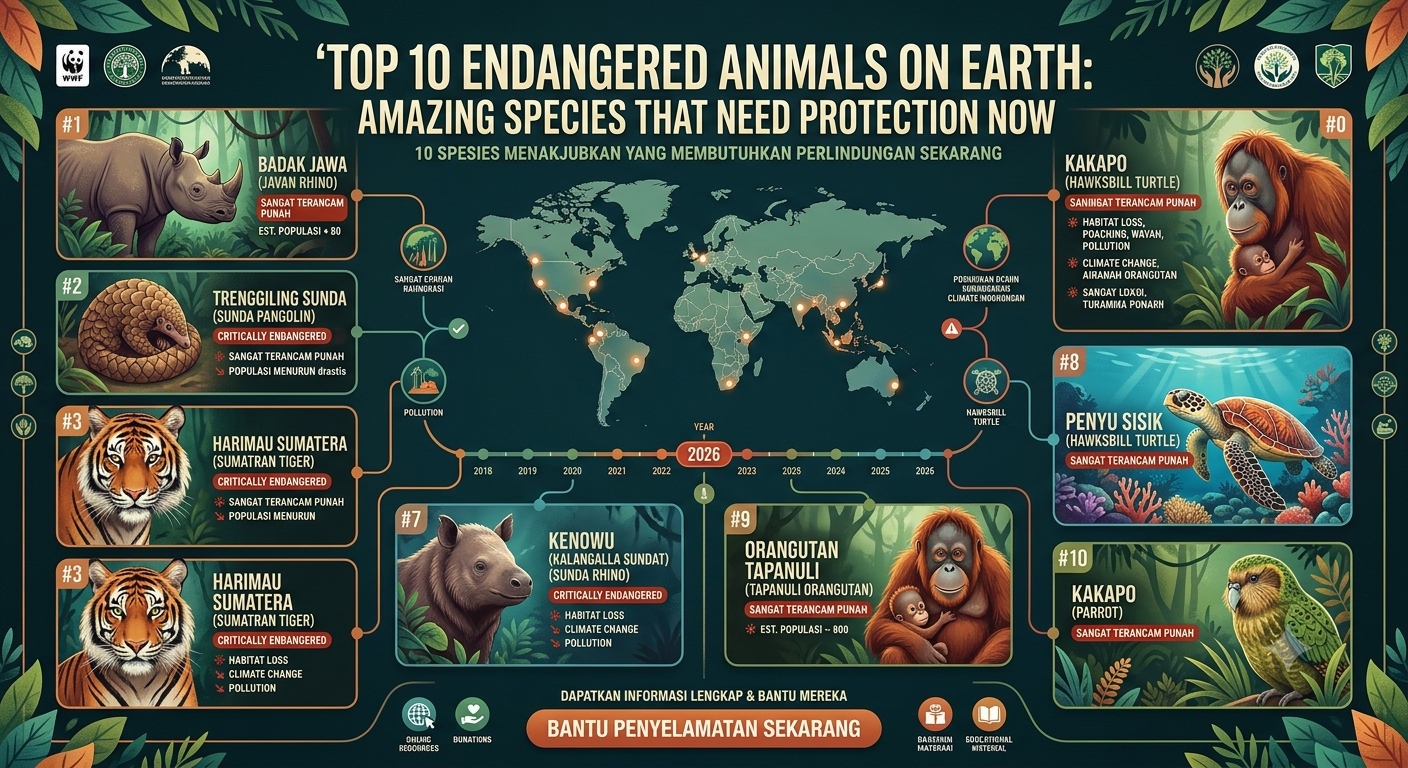
In this article, we’ll explore the top 10 endangered animals on Earth, discover why they are so remarkable, examine the threats they face, and learn how people everywhere can help protect them.
1. Javan Rhinoceros
The Javan Rhinoceros (Rhinoceros sondaicus) is one of the rarest large mammals on the planet. With fewer than 80 individuals remaining, every surviving rhino lives in Indonesia’s Ujung Kulon National Park.
Why It Is Amazing
Unlike other rhino species, the Javan Rhino is extremely shy and rarely seen by humans. It plays an important role in shaping forest ecosystems by feeding on vegetation and dispersing seeds.
Main Threats
- Extremely small population
- Habitat limitations
- Disease outbreaks
- Natural disasters
- Limited genetic diversity
Protection Efforts
Continuous monitoring, habitat management, and strict anti-poaching enforcement are helping ensure the species’ survival.
2. Vaquita
The Vaquita is the world’s smallest porpoise and one of the rarest marine mammals.
It exists only in Mexico’s northern Gulf of California, making it highly vulnerable to environmental changes.
Why It Is Amazing
Vaquitas are incredibly elusive and rely on sophisticated echolocation to navigate and hunt in murky waters.
Main Threats
- Illegal fishing nets
- Bycatch
- Declining habitat quality
Protection Efforts
Marine protected areas and fishing restrictions aim to eliminate dangerous gillnets and safeguard the remaining population.
3. Amur Leopard
The Amur Leopard is one of the most beautiful big cats in the world.
Its thick spotted coat allows it to survive harsh winters in eastern Russia and northeastern China.
Why It Is Amazing
This solitary predator can leap over 19 feet (6 meters) in a single bound and is an excellent climber.
Main Threats
- Poaching
- Habitat destruction
- Forest fires
- Low genetic diversity
Protection Efforts
Protected reserves and breeding programs have helped increase wild populations in recent years.
4. Sumatran Orangutan
The Sumatran Orangutan is among humanity’s closest relatives, sharing approximately 97% of human DNA.
Why It Is Amazing
Orangutans use tools, solve complex problems, and display impressive intelligence. They even build new nests in trees almost every evening.
Main Threats
- Deforestation
- Palm oil plantations
- Illegal wildlife trade
- Forest fires
Protection Efforts
Rescue centers rehabilitate orphaned orangutans, while conservation organizations work to preserve remaining rainforest habitats.
5. Hawksbill Sea Turtle
The Hawksbill Sea Turtle has existed since the age of dinosaurs.
Its narrow beak allows it to feed on sea sponges hidden within coral reefs.
Why It Is Amazing
By eating sponges, hawksbill turtles prevent coral reefs from being overgrown, helping thousands of marine species survive.
Main Threats
- Plastic pollution
- Illegal shell trade
- Fishing gear entanglement
- Coastal development
- Climate change
Protection Efforts
International trade bans and protected nesting beaches have contributed to population recovery in several regions.
6. African Forest Elephant
The African Forest Elephant inhabits dense rainforests across Central Africa.
Although smaller than African Savanna Elephants, they play an equally vital ecological role.
Why It Is Amazing
Forest elephants spread seeds across enormous distances, helping regenerate tropical forests and supporting biodiversity.
Main Threats
- Ivory poaching
- Logging
- Mining
- Habitat fragmentation
Protection Efforts
Protected forests, satellite tracking, and anti-poaching patrols are improving survival rates.
7. Sunda Pangolin
The Sunda Pangolin is covered in protective keratin scales, making it one of the most unique mammals on Earth.
Why It Is Amazing
When threatened, pangolins curl into a tight ball, using their scales as natural armor.
They also consume millions of ants and termites annually, naturally controlling insect populations.
Main Threats
- Illegal wildlife trafficking
- Hunting
- Habitat destruction
Protection Efforts
Law enforcement agencies are targeting wildlife trafficking networks while rescue centers rehabilitate confiscated animals.
8. Mountain Gorilla
The Mountain Gorilla lives in the volcanic forests of Rwanda, Uganda, and the Democratic Republic of Congo.
Why It Is Amazing
Mountain gorillas live in close family groups led by dominant silverback males and display remarkable social intelligence.
Main Threats
- Habitat loss
- Human diseases
- Conflict
- Agricultural expansion
Protection Efforts
Community-based conservation, veterinary care, and eco-tourism have helped increase mountain gorilla populations.
It is considered one of the world’s greatest wildlife conservation success stories.
9. Philippine Eagle
The Philippine Eagle is among the largest and most powerful eagles in the world.
Its enormous wings and strong talons make it an exceptional forest hunter.
Why It Is Amazing
Known as the “Monkey-Eating Eagle,” it can hunt monkeys, flying squirrels, snakes, and large birds.
Main Threats
- Illegal logging
- Habitat destruction
- Hunting
Protection Efforts
Captive breeding, forest restoration, and public education campaigns are helping protect this iconic bird.
10. Saola
The Saola, often called the “Asian Unicorn,” remains one of the world’s most mysterious mammals.
Discovered only in 1992, scientists have observed it very few times in the wild.
Why It Is Amazing
Its rarity has made it one of the least understood large mammals on Earth.
Main Threats
- Illegal snares
- Habitat fragmentation
- Extremely low population
Protection Efforts
Conservation organizations focus on removing traps, protecting forests, and working with local communities to preserve its habitat.
Why Are Endangered Animals So Important?
Every animal contributes to the stability of ecosystems.
Maintaining Biodiversity
Healthy ecosystems require a wide variety of species working together.
Predators regulate prey populations.
Herbivores shape vegetation.
Pollinators reproduce flowering plants.
Seed dispersers regenerate forests.
Removing one species often affects many others.
Supporting Climate Stability
Forests, wetlands, grasslands, and oceans absorb enormous amounts of carbon dioxide.
Many endangered animals help maintain these ecosystems, making them important allies in the fight against climate change.
Economic and Cultural Value
Wildlife supports tourism, scientific research, education, and cultural traditions worldwide.
Millions of people rely on healthy ecosystems for their livelihoods.
The Biggest Threats Facing Wildlife Today
Although each species faces unique challenges, several global threats affect nearly all endangered animals.
Habitat Loss
Urban expansion, agriculture, mining, and infrastructure development destroy natural habitats faster than many species can adapt.
Climate Change
Changing temperatures alter breeding seasons, migration routes, and food availability while increasing extreme weather events.
Illegal Wildlife Trade
Poaching remains one of the greatest threats to many iconic species, driven by demand for ivory, exotic pets, skins, scales, and traditional medicine.
Pollution
Plastic waste, pesticides, oil spills, and industrial chemicals contaminate habitats and threaten both terrestrial and marine wildlife.
Human-Wildlife Conflict
As human populations grow, encounters between people and wildlife become more frequent, often leading to injuries and habitat loss.
How You Can Help Protect Endangered Animals
Protecting wildlife is a shared responsibility, and everyone can contribute.
Here are several practical ways to make a difference:
- Support reputable wildlife conservation organizations.
- Reduce plastic use by choosing reusable products.
- Buy sustainably sourced wood, seafood, and palm oil.
- Never purchase products made from endangered species.
- Support eco-tourism that benefits local communities and conservation.
- Learn about endangered wildlife and share accurate information with others.
- Encourage governments and businesses to adopt stronger environmental policies.
Even small individual actions can have a meaningful impact when combined with global conservation efforts.
Looking Ahead: Hope for Wildlife Conservation
Despite the challenges, there are encouraging reasons for optimism. Conservation initiatives have already helped several species recover from the brink of extinction, including the giant panda, Arabian oryx, California condor, and mountain gorilla. These successes show that coordinated action can reverse population declines.
Emerging technologies such as drones, satellite tracking, artificial intelligence, and environmental DNA (eDNA) are enabling scientists to monitor wildlife more efficiently and detect threats before they become catastrophic. At the same time, international cooperation and community-led conservation programs continue to strengthen efforts to protect endangered habitats.
The future of endangered animals depends on the choices made by governments, businesses, conservation organizations, and individuals alike. By investing in sustainable development and protecting natural ecosystems, humanity can preserve biodiversity while ensuring a healthier planet for future generations.
Conclusion
The top 10 endangered animals on Earth featured in this article represent some of the planet’s most extraordinary and vulnerable wildlife. From the elusive Javan Rhinoceros and intelligent Sumatran Orangutan to the mysterious Saola and majestic Philippine Eagle, each species plays a vital role in maintaining the balance of nature.
Protecting these animals is about more than preventing extinction. It means preserving healthy forests, thriving oceans, resilient ecosystems, and the natural resources that all life depends on. Conservation efforts have already demonstrated that positive change is possible, but continued commitment is essential.
By supporting wildlife conservation, reducing environmental impacts, and spreading awareness, every individual can help ensure these amazing species continue to exist for generations to come. The actions we take today will shape the future of Earth’s biodiversity and determine whether these remarkable animals remain part of our living world rather than becoming memories in history.
Penulis AP





Post Comment