Introduction
Wildlife is one of the planet’s greatest treasures, yet many species are disappearing at an alarming rate. Scientists estimate that millions of plants and animals are at risk due to habitat destruction, climate change, pollution, illegal hunting, and unsustainable human activities. While the outlook may seem discouraging, there is also hope. Around the world, governments, conservation organizations, scientists, and local communities are working together to protect endangered species and restore their natural habitats.
Conservation efforts have already saved several species from extinction, proving that coordinated action can make a real difference. Protected areas, anti-poaching patrols, habitat restoration, captive breeding programs, and public education are helping wildlife populations recover in many regions.
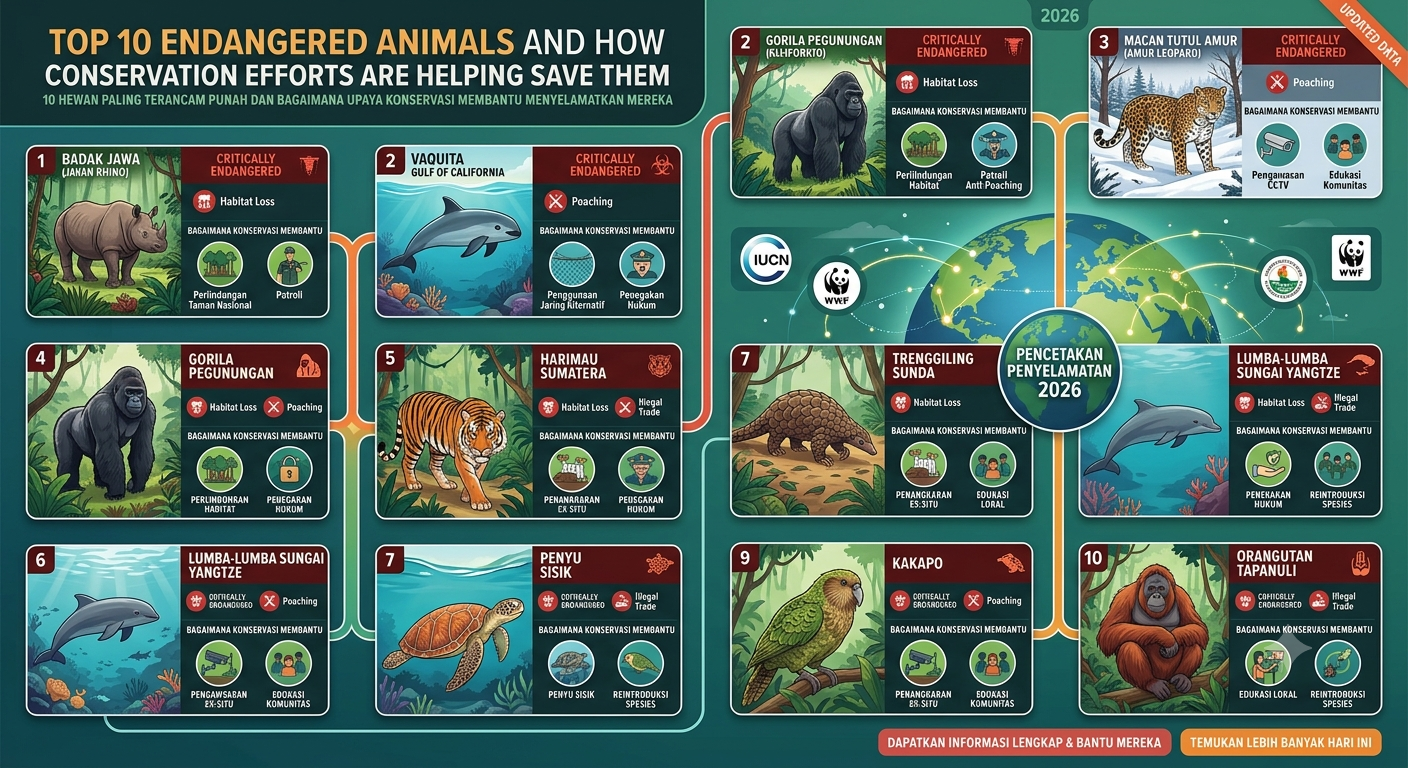
In this article, we’ll explore the top 10 endangered animals and discover how conservation initiatives are helping secure their future.
1. Javan Rhinoceros
The Javan Rhinoceros (Rhinoceros sondaicus) is one of the rarest large mammals on Earth. Fewer than 80 individuals remain, all living in Indonesia’s Ujung Kulon National Park.
Why It’s Endangered
- Extremely small population
- Habitat limitations
- Natural disasters
- Disease risks
Conservation Efforts
Conservation teams monitor every known rhino using camera traps and regular field surveys. Habitat restoration projects improve food availability, while strict anti-poaching laws ensure the remaining rhinos are protected.
Positive Impact
Although the population remains small, intensive protection has prevented poaching and provided the species with a chance to recover.
2. Amur Leopard
The Amur Leopard is one of the world’s rarest big cats, found primarily in eastern Russia and northeastern China.
Threats
- Poaching
- Habitat destruction
- Forest fires
- Limited genetic diversity
Conservation Efforts
Governments have established protected reserves, increased anti-poaching patrols, and promoted cross-border cooperation. Captive breeding programs also help preserve genetic diversity.
Positive Impact
Wild populations have gradually increased over the past decade thanks to sustained conservation efforts.
3. Vaquita
The Vaquita is the smallest porpoise in the world and is found only in Mexico’s Gulf of California.
Scientists estimate that fewer than 20 individuals remain.
Biggest Threat
Illegal fishing nets used to catch totoaba fish accidentally trap vaquitas.
Conservation Efforts
Authorities have banned gillnets in critical habitats, increased marine patrols, and promoted safer fishing techniques.
Positive Impact
Although challenges remain, continued enforcement offers the best hope for preventing extinction.
4. Sumatran Orangutan
The Sumatran Orangutan shares approximately 97% of its DNA with humans and lives exclusively on Indonesia’s Sumatra Island.
Threats
- Deforestation
- Palm oil plantation expansion
- Illegal wildlife trade
- Forest fires
Conservation Efforts
Wildlife rescue centers rehabilitate injured and orphaned orangutans before releasing them into protected forests. Organizations also work with local communities to promote sustainable farming and reduce deforestation.
Positive Impact
Thousands of hectares of rainforest have been protected, giving orangutans safer habitats.
5. African Forest Elephant
The African Forest Elephant plays a vital role in maintaining Central Africa’s tropical forests.
Threats
- Ivory poaching
- Mining
- Logging
- Habitat fragmentation
Conservation Efforts
Protected forest reserves, stronger anti-poaching operations, and satellite tracking help monitor elephant populations.
Positive Impact
Several protected landscapes have become safer for elephant migration and reproduction.
6. Hawksbill Sea Turtle
The Hawksbill Sea Turtle has inhabited Earth’s oceans for more than 100 million years.
Threats
- Plastic pollution
- Illegal shell trade
- Fishing gear
- Climate change
- Coastal development
Conservation Efforts
Governments protect nesting beaches, while volunteers monitor nests and safely release hatchlings into the ocean. International trade restrictions have significantly reduced illegal shell markets.
Positive Impact
Some nesting populations are showing encouraging signs of recovery.
7. Sunda Pangolin
The Sunda Pangolin is widely recognized as the world’s most trafficked mammal.
Threats
- Illegal wildlife trade
- Habitat loss
- Hunting
Conservation Efforts
Law enforcement agencies are cracking down on trafficking networks. Rescue centers rehabilitate confiscated pangolins before returning them to the wild whenever possible.
Positive Impact
International awareness campaigns have increased support for pangolin conservation.
8. Mountain Gorilla
The Mountain Gorilla is one of conservation’s greatest success stories.
Found in Rwanda, Uganda, and the Democratic Republic of Congo, its population has gradually increased over recent decades.
Threats
- Habitat loss
- Disease transmission
- Human conflict
Conservation Efforts
Eco-tourism generates funding for conservation while providing income for local communities. Veterinary teams monitor gorilla health, and protected national parks safeguard their habitat.
Positive Impact
Mountain gorilla populations have grown steadily, demonstrating that conservation works.
9. Philippine Eagle
The Philippine Eagle is among the largest and rarest eagles in the world.
Threats
- Illegal logging
- Hunting
- Forest destruction
Conservation Efforts
Captive breeding programs, habitat restoration, and education campaigns encourage local communities to protect eagle habitats.
Positive Impact
Conservation breeding has successfully produced young eagles for future release.
10. Saola
Known as the Asian Unicorn, the Saola remains one of the world’s most mysterious mammals.
Scientists rarely encounter this elusive species in the forests of Vietnam and Laos.
Threats
- Illegal snares
- Habitat fragmentation
- Extremely small population
Conservation Efforts
Organizations remove thousands of illegal traps from protected forests every year while expanding habitat conservation efforts.
Positive Impact
Although the species remains critically endangered, protecting its habitat also benefits hundreds of other forest animals.
Why Are Endangered Animals Important?
Every species contributes to healthy ecosystems. Losing one animal can create ripple effects that impact countless other plants and animals.
Ecosystem Balance
Predators regulate prey populations.
Herbivores shape vegetation.
Pollinators help plants reproduce.
Seed dispersers regenerate forests.
Together, these relationships maintain biodiversity.
Climate Protection
Healthy forests, wetlands, and oceans absorb large amounts of carbon dioxide.
Animals that maintain these ecosystems indirectly help combat climate change.
Economic Benefits
Wildlife supports tourism, scientific research, education, and sustainable livelihoods for millions of people worldwide.
Conservation Strategies Making a Difference
Conservation efforts are becoming more innovative and effective through science and international cooperation.
Protected Areas
National parks and wildlife reserves provide safe habitats where endangered species can reproduce with minimal human disturbance.
Anti-Poaching Patrols
Rangers use drones, GPS tracking, camera traps, and satellite monitoring to detect illegal hunting activities.
Habitat Restoration
Reforestation projects reconnect fragmented habitats, allowing wildlife to move safely between protected areas.
Captive Breeding Programs
Zoos and conservation centers breed endangered animals under controlled conditions before reintroducing them into suitable habitats.
Community-Based Conservation
Local communities are increasingly involved in protecting wildlife through sustainable agriculture, eco-tourism, and conservation education.
When communities benefit economically from conservation, they become powerful partners in protecting biodiversity.
How Individuals Can Help
You do not have to be a scientist to make a positive impact. Small everyday actions contribute to wildlife conservation.
Reduce Plastic Waste
Using reusable bags, bottles, and containers helps reduce pollution in rivers and oceans.
Support Ethical Businesses
Choose products certified as sustainable, especially wood, seafood, and palm oil.
Never Buy Wildlife Products
Avoid purchasing ivory, exotic pets, turtle shell jewelry, or products made from endangered species.
Donate to Conservation Organizations
Financial support helps fund research, habitat restoration, wildlife rescues, and anti-poaching operations.
Spread Awareness
Sharing accurate information encourages more people to support wildlife protection efforts.
The Future of Wildlife Conservation
Conservation science continues to evolve rapidly. New technologies such as artificial intelligence, environmental DNA (eDNA), satellite imagery, and drones allow researchers to monitor endangered animals more effectively than ever before.
International cooperation is also improving through stronger environmental agreements and coordinated efforts to combat wildlife trafficking. Governments are expanding protected areas, while Indigenous peoples and local communities play an increasingly important role in managing natural resources sustainably.
Although many species still face serious threats, conservation success stories show that extinction is not inevitable. With continued investment, education, and public support, more endangered animals can recover.
Conclusion
The top 10 endangered animals featured in this article highlight both the fragility of Earth’s biodiversity and the remarkable impact of conservation efforts. From the Javan Rhinoceros and Sumatran Orangutan to the Mountain Gorilla and Hawksbill Sea Turtle, each species demonstrates the importance of protecting habitats and reducing human pressures on wildlife.
Conservation is a shared responsibility. Governments can strengthen environmental laws, scientists can develop innovative solutions, organizations can lead restoration projects, and individuals can make sustainable choices in their daily lives.
By supporting conservation efforts today, we help ensure that future generations will inherit a world where these extraordinary animals continue to thrive. Every protected forest, restored coral reef, rescued animal, and informed decision brings us one step closer to preserving the rich diversity of life on Earth.
Penulis AP





Post Comment