Daftar Isi
- Introduction
- Why It’s Endangered
- Why It Matters
- Biggest Threat
- Why It Matters
- Threats
- Why It Matters
- Major Threats
- Why It Matters
- Other Threats
- Why It Matters
- Why It’s Endangered
- Why It Matters
- Main Threats
- Why It Matters
- Why It’s Endangered
- Why It Matters
- Threats
- Why It Matters
- Threats
- Why It Matters
- Habitat Loss
- Climate Change
- Illegal Wildlife Trade
- Pollution
- Human-Wildlife Conflict
- They Maintain Healthy Ecosystems
- They Support Human Life
- They Advance Science and Medicine
- They Have Cultural and Economic Value
- Support Conservation Organizations
- Choose Sustainable Products
- Reduce Plastic Waste
- Never Buy Wildlife Products
- Spread Awareness
Introduction
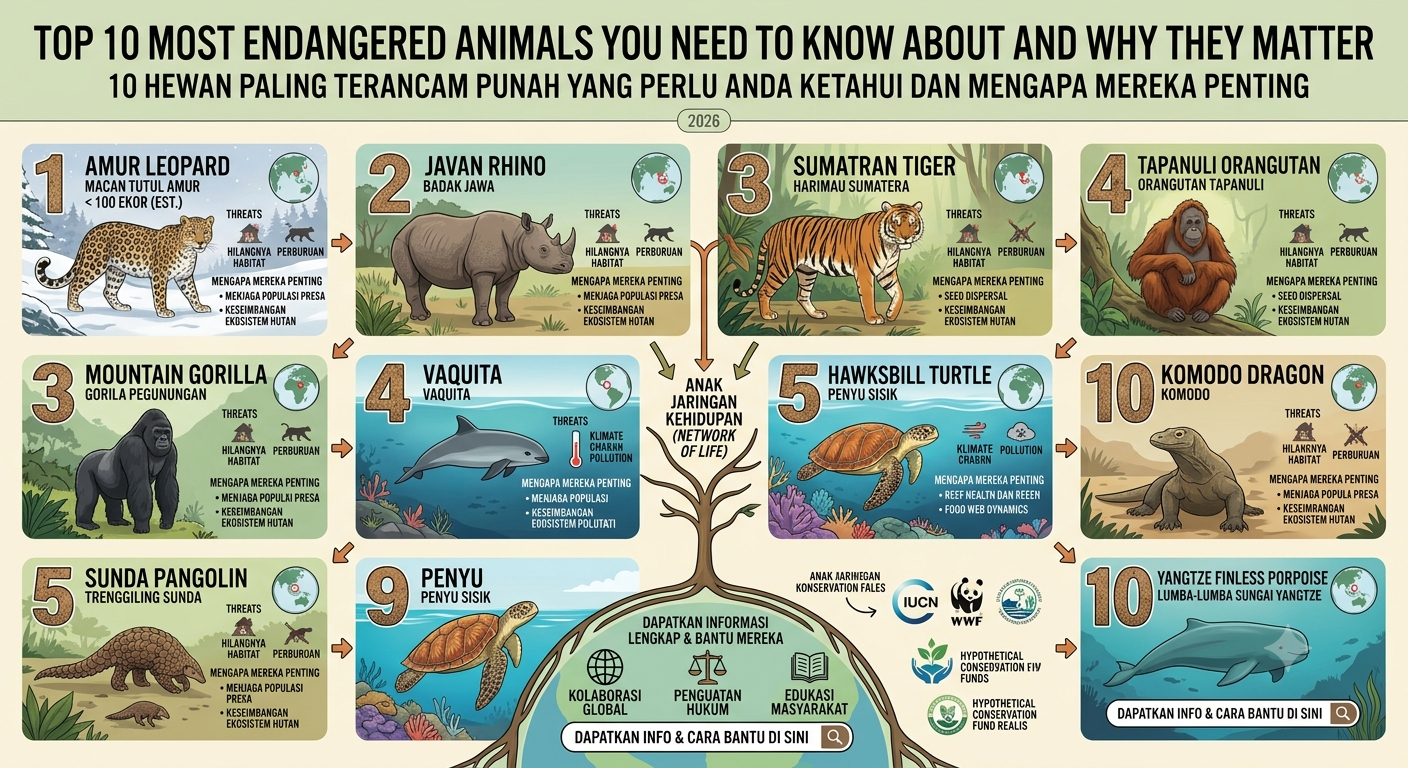
Earth is experiencing one of the fastest biodiversity declines in history. Scientists estimate that thousands of animal species are at risk of extinction due to habitat destruction, climate change, pollution, illegal wildlife trade, and other human activities. Every species plays a unique role in maintaining healthy ecosystems, and losing even one can have lasting consequences for nature and humanity.
Endangered animals are more than just rare creatures—they are indicators of the health of our planet. Protecting them helps preserve forests, oceans, grasslands, and countless other ecosystems that humans rely on for clean air, fresh water, food, and climate stability.
In this article, we’ll explore the top 10 most endangered animals you need to know about, why they are facing extinction, and why saving them is essential for future generations.
1. Javan Rhinoceros
The Javan Rhinoceros (Rhinoceros sondaicus) is one of the rarest mammals on Earth. Today, fewer than 80 individuals survive, all living within Indonesia’s Ujung Kulon National Park.
Why It’s Endangered
- Habitat loss
- Small and isolated population
- Natural disasters
- Disease outbreaks
Because the entire population exists in one location, a single volcanic eruption, tsunami, or disease outbreak could threaten the species.
Why It Matters
Javan rhinos help maintain healthy forest ecosystems by dispersing seeds and shaping vegetation through their feeding habits.
2. Vaquita
The Vaquita is the world’s smallest porpoise and one of the most critically endangered marine mammals.
Native only to Mexico’s Gulf of California, scientists estimate that fewer than 20 remain in the wild.
Biggest Threat
Vaquitas become accidentally trapped in illegal fishing nets used to catch totoaba fish.
Why It Matters
The vaquita represents the health of one of the world’s richest marine ecosystems. Losing it would signal serious ecological imbalance.
3. Amur Leopard
The Amur Leopard is one of the rarest big cats on the planet.
Its natural range includes forests in eastern Russia and northeastern China.
Threats
- Poaching
- Habitat destruction
- Forest fires
- Low genetic diversity
Why It Matters
As a top predator, the Amur leopard helps regulate prey populations and maintain ecological balance.
Conservation efforts have slowly increased its numbers, but the species remains critically endangered.
4. Sumatran Orangutan
The Sumatran Orangutan shares nearly 97% of its DNA with humans and is found only on Indonesia’s Sumatra Island.
Major Threats
- Deforestation
- Palm oil plantations
- Illegal wildlife trade
- Forest fires
Thousands of hectares of rainforest disappear every year, reducing orangutan habitat.
Why It Matters
Orangutans are known as “gardeners of the forest” because they disperse seeds that help regenerate tropical rainforests.
5. Hawksbill Sea Turtle
The Hawksbill Sea Turtle has lived in Earth’s oceans for over 100 million years.
Unfortunately, illegal trade in its beautiful shell has dramatically reduced populations worldwide.
Other Threats
- Plastic pollution
- Fishing nets
- Coastal development
- Climate change
Why It Matters
Hawksbill turtles help maintain healthy coral reefs by feeding on sponges that compete with corals for space.
Healthy coral reefs support thousands of marine species and protect coastlines from storms.
6. African Forest Elephant
Smaller than the African Savanna Elephant, the African Forest Elephant inhabits dense rainforests across Central Africa.
Why It’s Endangered
- Ivory poaching
- Deforestation
- Mining
- Human encroachment
Why It Matters
Forest elephants disperse seeds over vast distances, helping forests regenerate naturally.
Without them, many tree species would struggle to reproduce.
7. Sunda Pangolin
The Sunda Pangolin is often called the world’s most trafficked mammal.
Its scales are illegally sold despite having no scientifically proven medicinal value.
Main Threats
- Wildlife trafficking
- Illegal hunting
- Habitat destruction
Why It Matters
Pangolins consume millions of ants and termites every year, naturally controlling insect populations.
This helps protect forests and agricultural land.
8. Saola
Nicknamed the “Asian Unicorn,” the Saola is among the rarest mammals ever discovered.
Scientists only identified the species in 1992.
Why It’s Endangered
- Illegal snares
- Habitat fragmentation
- Extremely limited population
Very few people have ever seen a living saola in the wild.
Why It Matters
The saola symbolizes the incredible biodiversity still hidden within Southeast Asia’s forests.
Protecting its habitat benefits hundreds of other species as well.
9. Red Wolf
The Red Wolf is one of North America’s most endangered carnivores.
Wild populations remain extremely small.
Threats
- Habitat loss
- Vehicle collisions
- Hybridization with coyotes
- Human persecution
Why It Matters
Predators like red wolves help control deer and other prey populations, preventing overgrazing and supporting healthier ecosystems.
10. Philippine Eagle
The Philippine Eagle is one of the largest and most powerful eagles in the world.
It exists only in the Philippines and is considered the country’s national bird.
Threats
- Illegal logging
- Hunting
- Habitat destruction
Why It Matters
As an apex predator, the Philippine Eagle helps maintain balanced forest ecosystems by regulating prey populations.
Its survival also reflects the health of the country’s remaining rainforests.
Why Are These Animals Endangered?
Although every species faces different challenges, most endangered animals are threatened by similar human-driven factors.
Habitat Loss
Forests are cleared for agriculture, roads, mining, and urban development, leaving animals with fewer places to live and reproduce.
Climate Change
Changing temperatures and weather patterns affect migration, breeding seasons, food supplies, and habitats.
Polar species, coral reefs, and mountain ecosystems are especially vulnerable.
Illegal Wildlife Trade
Poaching remains one of the biggest threats to endangered animals.
Animals are hunted for:
- Ivory
- Fur
- Traditional medicine
- Exotic pets
- Meat
- Decorative products
Pollution
Plastic waste, pesticides, oil spills, and industrial chemicals contaminate ecosystems worldwide.
Marine animals are especially affected by ocean pollution.
Human-Wildlife Conflict
As human populations expand, wildlife increasingly comes into conflict with agriculture and settlements, often resulting in injury or death for both people and animals.
Why Endangered Animals Matter
Many people ask why protecting endangered animals is so important.
The answer goes far beyond saving individual species.
They Maintain Healthy Ecosystems
Predators regulate prey populations.
Herbivores shape vegetation.
Pollinators help plants reproduce.
Seed dispersers regenerate forests.
Every species contributes to ecological balance.
They Support Human Life
Healthy ecosystems provide:
- Clean drinking water
- Fresh air
- Fertile soil
- Fisheries
- Crop pollination
- Climate regulation
Without biodiversity, these natural services become less reliable.
They Advance Science and Medicine
Many medical discoveries originate from studying wildlife.
Protecting biodiversity preserves opportunities for future scientific breakthroughs.
They Have Cultural and Economic Value
Wildlife supports tourism, education, and cultural traditions around the world.
Millions of jobs depend on healthy ecosystems and nature-based tourism.
How You Can Help Protect Endangered Animals
Conservation is not limited to governments and scientists. Individuals can make a meaningful difference through everyday choices.
Support Conservation Organizations
Donate or volunteer with reputable wildlife conservation groups that protect endangered species and restore habitats.
Choose Sustainable Products
Buy products certified as sustainably sourced, including responsibly produced wood, seafood, and palm oil.
Reduce Plastic Waste
Carry reusable bags, bottles, and containers to reduce pollution that harms marine life.
Never Buy Wildlife Products
Avoid purchasing ivory, exotic pets, turtle shell jewelry, or products made from endangered animals.
Spread Awareness
Educate friends and family about endangered species and support conservation initiatives in your community.
Hope for the Future
Despite the challenges, conservation success stories prove that extinction is not inevitable. Species such as the mountain gorilla, California condor, and giant panda have shown encouraging population recoveries thanks to habitat protection, captive breeding, anti-poaching measures, and international cooperation.
Advances in satellite monitoring, wildlife genetics, drone surveillance, and community-led conservation are giving scientists new tools to protect vulnerable species. Governments, conservation organizations, Indigenous communities, and local residents are increasingly working together to preserve biodiversity.
The future of endangered animals depends on sustained commitment, stronger environmental policies, and public support.
Conclusion
The top 10 most endangered animals highlighted in this article are more than rare species—they are essential parts of Earth’s ecosystems. From the critically endangered Javan Rhinoceros and Vaquita to the majestic Philippine Eagle and elusive Saola, each animal plays a vital role in maintaining biodiversity.
Protecting these species means protecting forests, oceans, rivers, and the countless ecosystems that sustain life on our planet. Every action, whether reducing plastic waste, supporting conservation organizations, or advocating for stronger environmental protections, contributes to a healthier future.
By learning about endangered animals and understanding why they matter, we take the first step toward ensuring that these extraordinary creatures continue to thrive for generations to come.
Penulis AP







Post Comment