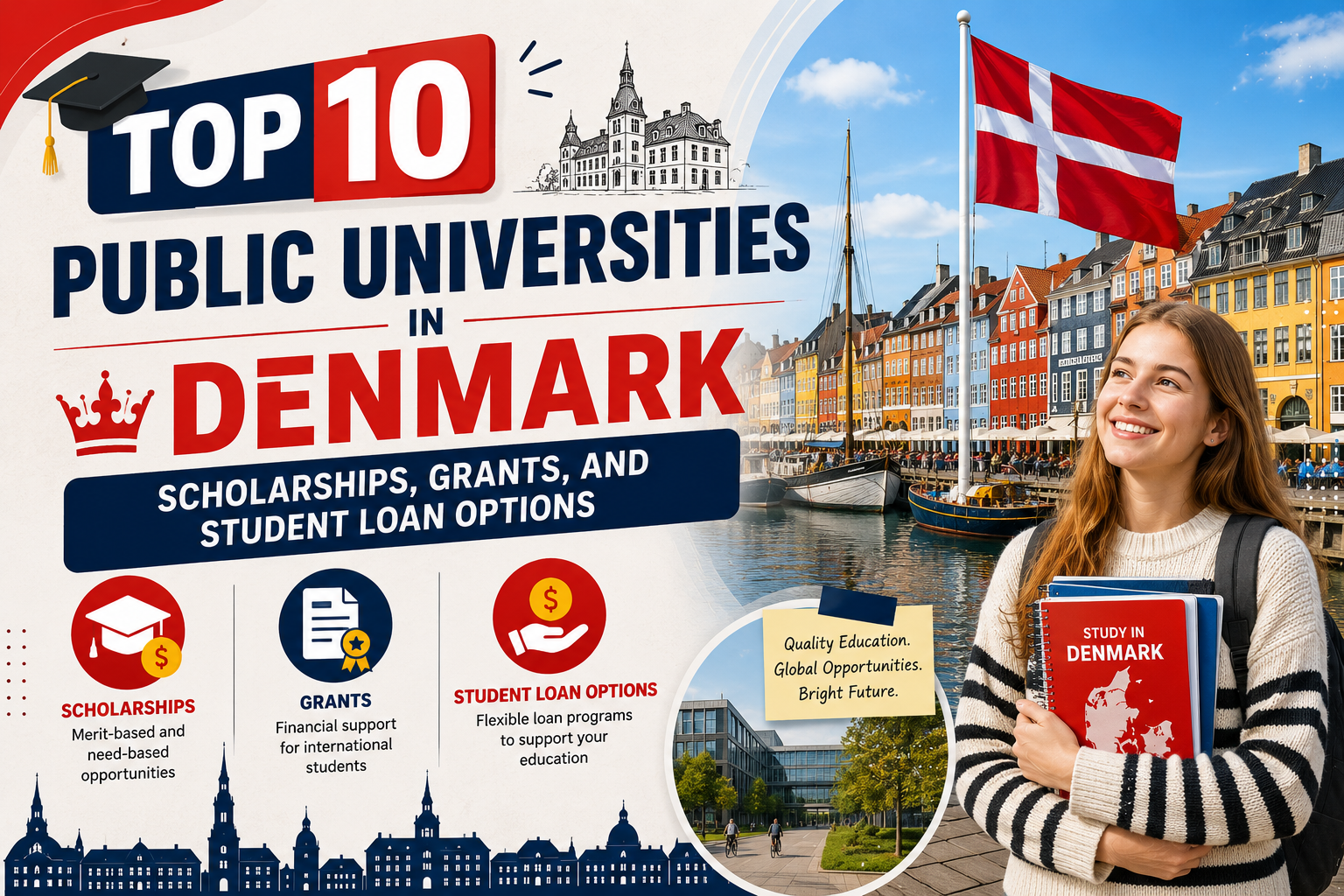
Denmark has emerged as a powerhouse for international higher education in Northern Europe. Famed for its innovative teaching methods, high quality of life, progressive societal values, and focus on sustainability, the country attracts thousands of global scholars every year. The Danish education system emphasizes collaborative project-based learning, critical thinking, and strong industry partnerships, making its graduates highly sought after in the European and global labor markets.
If you are planning to pursue a Bachelor’s, Master’s, or Doctoral degree in Scandinavia, identifying the best university—and understanding how to navigate tuition, state grants, and university-specific scholarships—is vital.
While students from the EU/EEA and Switzerland study tuition-free, non-EU/EEA international students are required to pay tuition fees. However, generous Danish Government Scholarships, European mobility schemes, and state financial support make studying in Denmark achievable and high-value.
Here is a comprehensive breakdown of the Top 10 Public Universities and Institutions in Denmark, complete with institutional profiles, popular academic disciplines, tuition costs, and key funding options.
1. University of Copenhagen (Københavns Universitet – UCPH)
Founded in 1479, the University of Copenhagen is Denmark’s oldest and largest institution for research and higher education. Regularly ranking among the top universities in continental Europe, UCPH is spread across four vibrant urban campuses in the capital city.
-
Location: Copenhagen
-
Top Disciplines: Life Sciences, Veterinary Medicine, Environmental Sciences, Law, Humanities, Public Health.
-
Average Tuition (Non-EU/EEA): €10,000 – €17,000 per year (varies by faculty).
-
Tuition for EU/EEA/Swiss: 100% Free.
-
Key Scholarships & Funding:
-
Danish Government Scholarships at UCPH: Awarded as full or partial tuition fee waivers and/or living stipends to outstanding non-EU/EEA Master’s candidates.
-
Faculty-Specific Merit Waivers: The Faculty of Science and Faculty of Health and Medical Sciences offer merit-based tuition reductions for top-tier international applicants.
-
2. Aarhus University (Aarhus Universitet – AU)
Located in Denmark’s second-largest city, Aarhus University is a world-class public research university known for its lush central campus park and lively student atmosphere. AU hosts over 38,000 students and offers a wide array of Master’s degrees taught entirely in English.
-
Location: Aarhus
-
Top Disciplines: Archaeology, Environmental Studies, Agriculture, Business Administration, Molecular Biology.
-
Average Tuition (Non-EU/EEA): €8,000 – €15,300 per year.
-
Tuition for EU/EEA/Swiss: 100% Free.
-
Key Scholarships & Funding:
-
Danish State Scholarships at AU: Highly competitive scholarships that cover full tuition fees and provide a monthly living stipend (approx. DKK 6,000/month) for select Master’s programs.
-
Danish-American Fullbright Grants: Available for U.S. citizens undertaking study or research at AU.
-
3. Technical University of Denmark (Danmarks Tekniske Universitet – DTU)
Located just north of Copenhagen in Kongens Lyngby, DTU is recognized as Scandinavia’s leading technical university. DTU maintains state-of-the-art research laboratories and collaborates closely with global engineering and pharmaceutical leaders like Novo Nordisk, Microsoft, and Ørsted.
-
Location: Kongens Lyngby (Copenhagen area)
-
Top Disciplines: Renewable Energy Engineering, Biotechnology, Artificial Intelligence, Civil Engineering, Environmental Technology.
-
Average Tuition (Non-EU/EEA): €15,000 per year.
-
Tuition for EU/EEA/Swiss: 100% Free.
-
Key Scholarships & Funding:
-
DTU Government Honors Scholarships: Granted to top-ranked Master of Science applicants, covering full tuition fees and monthly living allowances.
-
Erasmus Mundus Joint Master Scholarships: Full funding available for participants in joint engineering Master’s programs.
-
4. Aalborg University (Aalborg Universitet – AAU)
Aalborg University is globally celebrated for its unique educational methodology: the Aalborg PBL Model (Problem-Based and Project-Based Learning). Students spend half of their time working in team projects addressing real-world industrial or societal challenges.
-
Location: Aalborg (with campuses in Copenhagen and Esbjerg)
-
Top Disciplines: Engineering, Energy Systems, Cyber Security, Urban Planning, Media Technology.
-
Average Tuition (Non-EU/EEA): €10,000 – €16,000 per year.
-
Tuition for EU/EEA/Swiss: 100% Free.
-
Key Scholarships & Funding:
-
Danish Government Scholarships at AAU: Awarded as tuition fee waivers and grants to exceptional non-EU applicants admitted to Master’s degree studies.
-
Aalborg University Talent Scholarships: Departmental grants awarded based on GPA and project portfolio quality.
-
5. University of Southern Denmark (Syddansk Universitet – SDU)
With campuses across Funen and Jutland (headquartered in Odense), SDU offers modern infrastructure, high-tech research centers, and strong connections to Denmark’s robotics and manufacturing corridors.
-
Location: Odense, Sønderborg, Slagelse, Esbjerg
-
Top Disciplines: Mechatronics, Robotics Engineering, International Business, Biomedicine, Public Health.
-
Average Tuition (Non-EU/EEA): €6,500 – €13,900 per year.
-
Tuition for EU/EEA/Swiss: 100% Free.
-
Key Scholarships & Funding:
-
SDU Danish Government Scholarship: Offers full tuition fee waivers and living stipends specifically for Master’s engineering and technical programs (e.g., Electronics, Mechatronics, Software Engineering in Sønderborg).
-
6. Copenhagen Business School (CBS)
Established in 1917, Copenhagen Business School is one of Europe’s largest and most prestigious triple-accredited business schools (EQUIS, AMBA, AACSB). CBS attracts ambitious business, finance, and management students from every corner of the globe.
-
Location: Frederiksberg (Copenhagen)
-
Top Disciplines: Finance, International Business, Digital Management, Sustainability & Economics, Supply Chain Management.
-
Average Tuition (Non-EU/EEA): €15,200 per year.
-
Tuition for EU/EEA/Swiss: 100% Free.
-
Key Scholarships & Funding:
-
CBS Danish Government Scholarship: Highly selective tuition fee waivers paired with monthly maintenance grants for non-EU/EEA Master’s candidates.
-
7. Roskilde University (Roskilde Universitet – RUC)
Located just 30 kilometers west of Copenhagen, Roskilde University favors interdisciplinary studies, student autonomy, and group-based research. RUC focuses on training students to solve complex modern challenges using multi-faceted perspectives.
-
Location: Roskilde
-
Top Disciplines: Global Studies, Environmental Biology, Communication, Social Entrepreneurship, Public Administration.
-
Average Tuition (Non-EU/EEA): €8,800 – €14,000 per year.
-
Tuition for EU/EEA/Swiss: 100% Free.
-
Key Scholarships & Funding:
-
RUC Tuition Waivers & Grants: Danish government-funded tuition waivers available for international students accepted into selected full-degree Master’s programs.
-
8. IT University of Copenhagen (ITU)
IT University of Copenhagen is a specialized public university focused exclusively on information technology, computer science, and the digital economy. Located in Copenhagen’s IT cluster, ITU maintains high graduate employment rates.
-
Location: Copenhagen
-
Top Disciplines: Software Engineering, Data Science, Games Development, Digital Innovation, Cybersecurity.
-
Average Tuition (Non-EU/EEA): €13,000 – €15,000 per year.
-
Tuition for EU/EEA/Swiss: 100% Free.
-
Key Scholarships & Funding:
-
ITU State Scholarships: Full tuition waivers and monthly living stipends awarded to a select group of top MSc applicants outside the EU/EEA.
-
9. Royal Danish Academy (Det Kongelige Akademi)
The Royal Danish Academy of Fine Arts, Architecture, Design, and Conservation is a premier public institution for creative research and practical design education. It has played a pivotal role in shaping legendary Scandinavian architecture and product design.
-
Location: Copenhagen / Bornholm
-
Top Disciplines: Architecture, Industrial Design, Spatial Design, Strategic Design, Furniture Design.
-
Average Tuition (Non-EU/EEA): €12,000 – €18,000 per year.
-
Tuition for EU/EEA/Swiss: 100% Free.
-
Key Scholarships & Funding:
-
Danish State Scholarships for Creative Arts: Tuition assistance and grants distributed annually to exceptional Master of Arts and Architecture candidates.
-
10. VIA University College
As one of Denmark’s largest university colleges, VIA offers professionally-focused Bachelor’s degrees that directly combine academic instruction with mandatory corporate internships.
-
Location: Aarhus, Horsens, Viborg
-
Top Disciplines: Architectural Technology, Civil Engineering, Global Business Development, Animation, Fashion Design.
-
Average Tuition (Non-EU/EEA): €7,500 – €12,000 per year.
-
Tuition for EU/EEA/Swiss: 100% Free.
-
Key Scholarships & Funding:
-
Danish State Scholarships for Applied Sciences: Merit-based tuition fee waivers awarded to top international applicants entering specialized Bachelor’s programs.
-
Summary Comparison Table
| University | Location | Primary Focus Area | Non-EU/EEA Tuition (Yearly) | EU/EEA Tuition |
| Univ. of Copenhagen (UCPH) | Copenhagen | Comprehensive / Medicine | €10,000 – €17,000 | Free |
| Aarhus University (AU) | Aarhus | Research & Social Sciences | €8,000 – €15,300 | Free |
| Technical Univ. of Denmark (DTU) | Kongens Lyngby | Engineering & Tech | €15,000 | Free |
| Aalborg University (AAU) | Aalborg | Problem-Based Engineering | €10,000 – €16,000 | Free |
| Univ. of Southern Denmark (SDU) | Odense | Robotics & Biomedicine | €6,500 – €13,900 | Free |
| Copenhagen Business School (CBS) | Copenhagen | Business & Finance | €15,200 | Free |
| Roskilde University (RUC) | Roskilde | Interdisciplinary Studies | €8,800 – €14,000 | Free |
| IT University of Copenhagen (ITU) | Copenhagen | Computer Science & IT | €13,000 – €15,000 | Free |
| Royal Danish Academy | Copenhagen | Architecture & Design | €12,000 – €18,000 | Free |
| VIA University College | Aarhus / Horsens | Applied Sciences & Business | €7,500 – €12,000 | Free |
Scholarships, Grants, and Financial Support in Denmark
Navigating educational funding in Denmark involves exploring government programs, university waivers, and working benefits.
1. Danish Government Scholarships for Non-EU/EEA Students
The Danish Ministry of Higher Education and Science administers annual state scholarship pools directly to Danish universities.
-
Coverage: Can be awarded as a full/partial tuition fee waiver, a grant toward living expenses, or both.
-
How to Apply: There is usually no separate application; students are automatically considered when applying for degree admission before the deadline (typically February 1 for Master’s programs).
2. The SU Grant (Statens Uddannelsesstøtte)
The SU is Denmark’s famous state educational grant system. While primarily designed for Danish nationals, international EU/EEA students can qualify for monthly SU grants if they work part-time alongside their studies.
-
SU Amount: Up to approx. DKK 6,800 per month (before tax).
-
Eligibility Rule for EU/EEA Students: You must work an average of 10 to 12 hours per week in a legal job in Denmark.
3. Erasmus+ and International Exchange Grants
Students coming to Denmark via bilateral exchange agreements between home universities and Danish institutions pay zero tuition and often qualify for monthly Erasmus+ mobility grants (€400–€600/month).
Student Loan Options & Financial Planning
When scholarships do not cover all expenses, loans and student work provide essential financial bridges.
1. Danish State Student Loans (SU-Lån)
-
For EU/EEA Students: If you qualify for the SU Grant via part-time work, you are also eligible to take out a supplementary government loan (SU-Lån). This provides an additional ~DKK 3,300 per month at low interest rates.
-
Repayment: Repayment begins after graduation with generous flexible payoff terms.
2. International Student Loans & Private Lending
Non-EU students often turn to international student loans provided in their home countries:
-
US Federal Direct Loans (FAFSA): Major Danish universities (such as UCPH, AU, and CBS) are certified by the U.S. Department of Education, allowing American students to use Title IV Federal Direct Loans.
-
Prodigy Finance & MPOWER Financing: Private international lenders that offer collateral-free loans to Master’s students attending top-ranked Danish institutions (like CBS or DTU).
3. Part-Time Work Permissions & Earning Potential
International students in Denmark are permitted to work while studying:
-
Work Limits: Non-EU students can legally work up to 20 hours per week during term time and full-time during June, July, and August.
-
Wages: Denmark has no statutory national minimum wage, but strong union collective agreements keep student wages high—typically between DKK 120 and DKK 160 per hour (~€16–€21/hour).
Estimated Monthly Cost of Living for Students in Denmark
While Denmark offers exceptional educational value, living costs require realistic budgeting:
| Expense Category | Estimated Monthly Cost |
| Student Housing (Dormitory/Shared Flat) | DKK 3,500 – DKK 6,500 |
| Groceries & Food | DKK 2,000 – DKK 3,000 |
| Public Transport (Rejsekort Student Discount) | DKK 400 – DKK 800 |
| Books & Academic Materials | DKK 300 – DKK 600 |
| Personal Expenses & Leisure | DKK 1,200 – DKK 2,000 |
| Total Monthly Budget | DKK 7,400 – DKK 12,900 (~€1,000 – €1,700) |
Step-by-Step Application Process
-
Explore Programmes: Search for English-taught programmes via official portals like Optagelse.dk (for Bachelor’s) or individual university portals (for Master’s).
-
Review Deadlines:
-
Non-EU/EEA Applicants: Apply between December and January 15 / February 1.
-
EU/EEA Applicants: Apply between December and March 1 / March 15.
-
-
Submit Documentation: Upload academic transcripts, English proficiency test results (IELTS/TOEFL), CV, and statement of purpose.
-
Scholarship Assessment: University admissions committees automatically evaluate eligible international applicants for Danish State Tuition Waivers.
-
Apply for Residence Permit / Visa: Non-EU students must pay their first semester tuition fee to receive their official acceptance letter, which is required to apply for the Danish ST1 Student Residence Permit.
Can non-EU international students study in Denmark for free?
No, non-EU/EEA students must pay tuition fees at public universities. However, securing a Danish Government Scholarship or an Erasmus Mundus Scholarship can fully cover tuition costs and living stipends.
Is English widely spoken in Denmark?
Yes. Over 85% of the Danish population speaks fluent English. While learning basic Danish is helpful for local integration and daily life, you can study, live, and work part-time using English.
How do EU/EEA students get the SU Grant in Denmark?
EU/EEA students qualify for the state grant (SU) by securing a legal part-time job in Denmark and working a minimum of 10–12 hours per week throughout their studies.
Final Thoughts
Public universities in Denmark combine cutting-edge facilities, project-based learning, and global research recognition with high standards of living. Whether you benefit from tuition-free education as an EU citizen, secure a Danish State Scholarship as a non-EU candidate, or fund your journey through part-time work and SU grants, studying in Denmark is an extraordinary investment in your academic and professional future.
Penulis: W.S







Post Comment