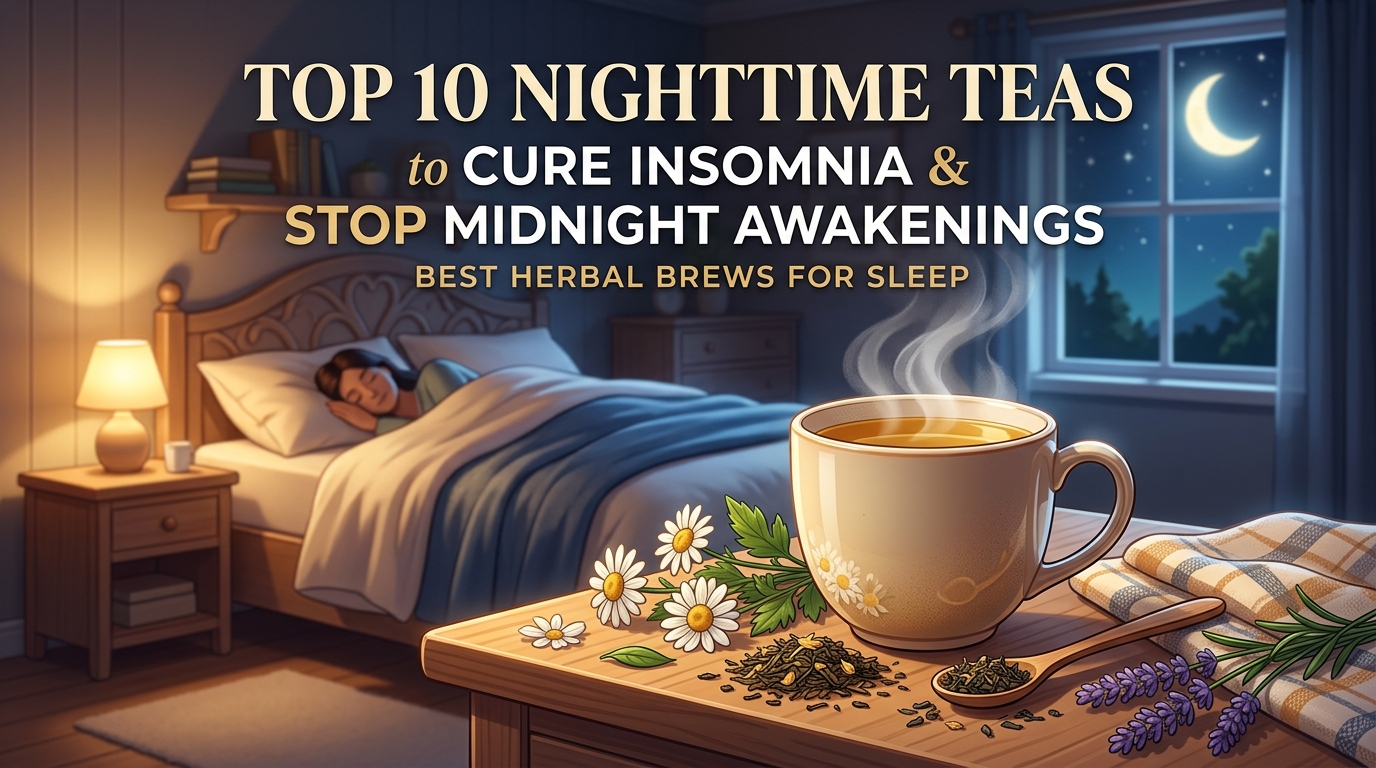
Getting a good night’s sleep is an important part of maintaining overall health and well-being. However, falling asleep can sometimes be difficult, and some people regularly wake up during the night. While there is no herbal tea that can guarantee a cure for insomnia, certain caffeine-free teas may help create a calming bedtime routine.
Nighttime tea can be especially useful when it replaces caffeinated beverages, sugary drinks, or stimulating activities before bed. The relaxing ritual of preparing and drinking a warm beverage may also help signal that the day is coming to an end.
Below are 10 nighttime teas that can be incorporated into a healthy sleep routine.
1. Chamomile Tea
Chamomile tea is one of the most popular herbal beverages associated with bedtime. It is naturally caffeine-free and has a mild, floral flavor.
Chamomile contains a plant compound called apigenin, which has attracted scientific interest because of its interaction with certain receptors in the brain. Some research has investigated chamomile in relation to sleep and relaxation, although evidence is not strong enough to consider it a treatment for chronic insomnia.
For a simple nighttime drink, steep chamomile tea in hot water for several minutes and enjoy it without added sugar.
2. Lavender Tea
Lavender is traditionally associated with relaxation and calming aromas. Lavender tea can provide a gentle floral flavor that works well as part of a quiet evening routine.
Much of the research surrounding lavender and relaxation involves aromatherapy or other preparations rather than drinking lavender tea specifically. Therefore, it should be viewed as a relaxing beverage rather than a proven insomnia treatment.
Avoid highly concentrated herbal preparations unless recommended by a healthcare professional.
3. Lemon Balm Tea
Lemon balm is a member of the mint family and has traditionally been used as a calming herb.
Its mild lemon-like flavor makes it pleasant as a warm evening beverage. Some research has explored lemon balm in relation to stress and sleep, although more evidence is needed to establish how effective the tea itself may be.
Enjoying lemon balm tea while reading, listening to quiet music, or preparing for bed may help create a consistent wind-down routine.
4. Valerian Root Tea
Valerian root has a long history of traditional use as an herbal preparation for relaxation and sleep.
Research on valerian and sleep has produced mixed findings, meaning it should not be presented as a guaranteed solution for insomnia.
Valerian may also interact with certain medications and can cause unwanted effects in some people. If you take medication or have an underlying health condition, speak with a healthcare professional before using valerian regularly.
5. Peppermint Tea
Peppermint tea is naturally caffeine-free and has a refreshing flavor. Many people enjoy it after dinner because of its cooling sensation and strong aroma.
Peppermint is more commonly associated with digestive comfort than with sleep itself. Nevertheless, a caffeine-free herbal tea can be a useful replacement for coffee, black tea, or other caffeinated beverages later in the day.
People who experience acid reflux may find that peppermint makes their symptoms worse, so it may not be suitable for everyone.
6. Passionflower Tea
Passionflower is another herb traditionally associated with relaxation. Passionflower tea can be consumed as part of an evening routine, although research regarding its effects on sleep remains limited.
Some studies have investigated passionflower in relation to anxiety and sleep quality, but more research is needed.
Because herbal products can interact with medications, consult a healthcare professional before regularly using passionflower, especially if you take prescription medicines.
7. Ginger Tea
Ginger tea is widely consumed for its distinctive flavor and digestive qualities. It is naturally caffeine-free and can be a comforting drink after an evening meal.
Ginger is not specifically a sleep-inducing herb, but it can fit into a relaxing nighttime routine for people who enjoy its warm, spicy flavor.
Try combining fresh ginger with lemon or a small amount of cinnamon. Avoid adding large amounts of sugar if you are trying to establish a healthier bedtime beverage habit.
8. Rooibos Tea
Rooibos is made from the leaves of a South African plant and is naturally caffeine-free.
It has a smooth, slightly sweet flavor and can be enjoyed hot or cold. Because it contains no caffeine naturally, rooibos is a convenient alternative to black or green tea in the evening.
Rooibos does not have to be considered a sleep medicine. Its main advantage at bedtime is that it allows tea lovers to enjoy a warm beverage without consuming caffeine.
9. Cinnamon Herbal Tea
Cinnamon tea can provide a naturally sweet and warming flavor without requiring much added sugar.
Cinnamon itself is not a proven treatment for insomnia, but it can make a caffeine-free nighttime beverage more enjoyable.
Try steeping a cinnamon stick in hot water and combining it with ginger or a caffeine-free herbal blend.
If consuming cinnamon frequently, avoid excessive amounts, particularly of cassia cinnamon, which contains coumarin. Normal culinary quantities are generally much different from concentrated supplements.
10. Decaffeinated Herbal Blends
Many bedtime tea blends combine ingredients such as chamomile, lemon balm, lavender, rooibos, or other caffeine-free herbs.
These blends can be convenient for people who enjoy variety. However, always check the ingredient list because some tea products may contain green tea, black tea, or other naturally caffeinated ingredients.
Choose a simple unsweetened blend and make it part of a consistent wind-down routine.
Can Nighttime Tea Cure Insomnia?
It is important to distinguish between supporting relaxation and treating insomnia.
Occasional difficulty sleeping can happen because of stress, changes in schedule, travel, caffeine consumption, environmental disturbances, or other temporary factors.
Chronic insomnia is different. Persistent problems falling asleep, staying asleep, or waking too early may require professional evaluation.
A cup of herbal tea may be comforting, but it should not replace evidence-based treatment for ongoing sleep problems.
How to Use Tea as Part of a Bedtime Routine
Timing and quantity can make a difference.
Drinking a large amount of liquid immediately before bed may cause some people to wake up to use the bathroom. Instead, consider having a moderate cup of caffeine-free tea earlier in your evening routine.
Create a consistent sequence such as preparing tea, dimming the lights, putting away stimulating devices, reading quietly, and going to bed at approximately the same time each night.
The goal is to make the routine predictable and relaxing.
Watch Your Caffeine Intake
One of the most important beverage-related factors affecting sleep is caffeine.
Coffee, energy drinks, black tea, green tea, and some other beverages contain caffeine. Depending on the individual, caffeine consumed later in the day can make it harder to fall asleep or reduce sleep quality.
Switching to caffeine-free herbal tea in the evening can therefore be a practical change.
Remember that “tea” does not automatically mean caffeine-free. Always check the label when choosing a bedtime beverage.
Avoid Excessive Sugar at Night
Adding large amounts of sugar, honey, syrups, or sweetened creamers can turn a simple herbal tea into a high-sugar drink.
If you prefer sweetness, use a small amount or gradually reduce the amount over time. You can also choose naturally aromatic teas containing cinnamon, vanilla, ginger, or fruit flavors.
An unsweetened beverage is usually the simplest option for a regular nighttime routine.
Other Habits That May Improve Sleep
Tea works best as part of a broader sleep-friendly lifestyle.
Maintain a consistent sleep and wake schedule whenever possible. Keep the bedroom quiet, dark, and comfortable.
Limit stimulating activities close to bedtime and reduce exposure to bright light during your wind-down period.
Regular daytime physical activity can also support healthy sleep patterns. However, intense exercise immediately before bed may be stimulating for some people.
Large meals, nicotine, alcohol, and caffeine close to bedtime may also interfere with sleep for some individuals.
When to Seek Professional Help
Occasional nighttime awakenings are common. However, persistent sleep disruption deserves attention.
Consider speaking with a healthcare professional if sleep difficulties happen regularly, continue for an extended period, or affect concentration, mood, school, work, or daily activities.
Frequent nighttime awakening can have many possible causes, including stress, sleep disorders, medication effects, environmental factors, and other health conditions.
Rather than relying solely on herbal remedies, identifying the underlying cause can lead to more appropriate treatment.
Final Thoughts
Chamomile, lavender, lemon balm, valerian, peppermint, passionflower, ginger, rooibos, cinnamon, and caffeine-free herbal blends can all be enjoyable nighttime beverages.
Some herbs have traditional associations with relaxation, while others are simply useful caffeine-free alternatives to stimulating drinks. However, no tea can guarantee a cure for insomnia or completely prevent midnight awakenings.
For better sleep, combine a calming beverage with consistent sleep times, a comfortable bedroom, reduced evening stimulation, sensible caffeine habits, and a relaxing bedtime routine.
If sleep problems persist, seek professional advice rather than depending on herbal tea alone. A healthy nighttime routine can support better rest, but persistent insomnia may require a more comprehensive approach.
Penulis: Shofiya M.P






Post Comment