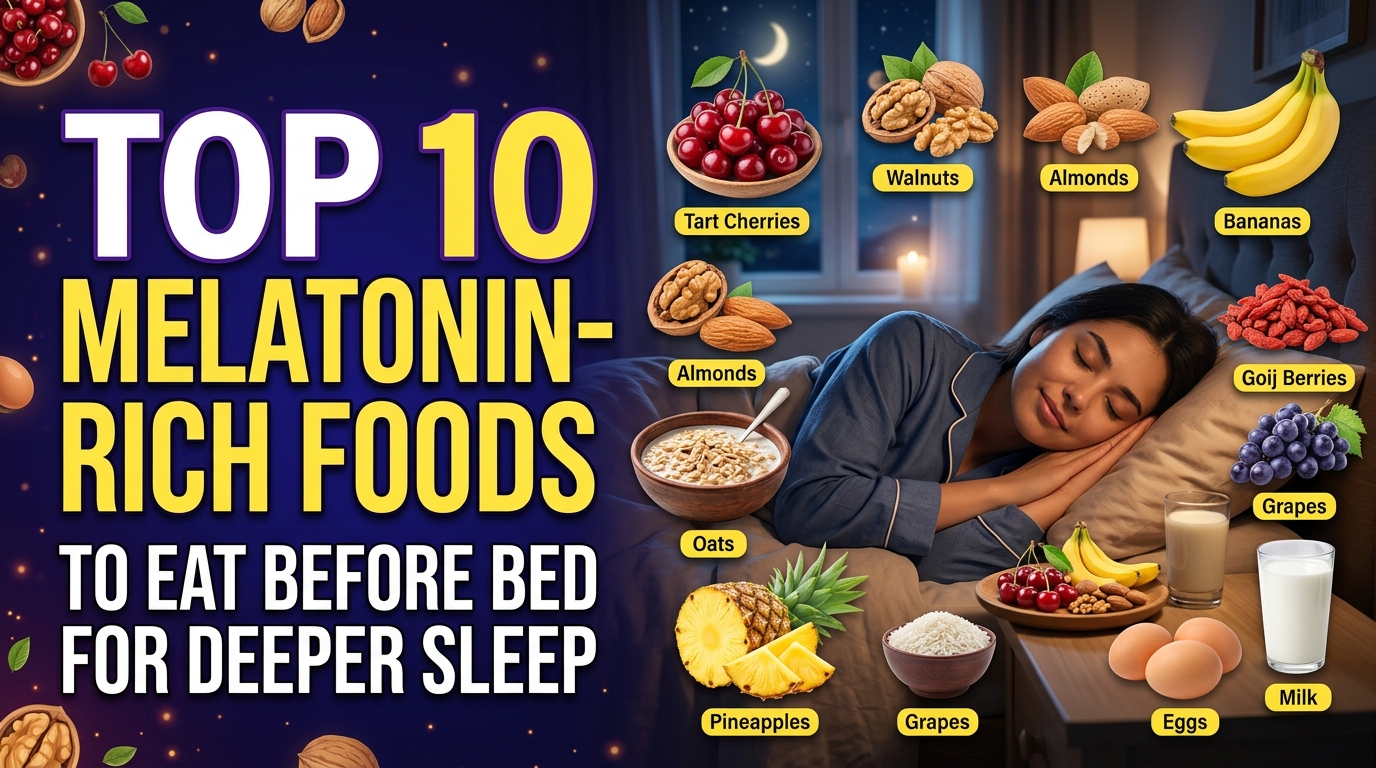
Getting enough quality sleep is essential for physical health, concentration, mood, and daily performance. While many people focus on sleep schedules and bedroom environments, nutrition can also play a role in maintaining healthy sleep habits.
Melatonin is a hormone naturally produced by the body that helps regulate the sleep-wake cycle. It is released primarily in response to darkness and helps signal that it is time to prepare for sleep. Certain foods also contain naturally occurring melatonin or nutrients involved in normal sleep-related processes.
However, eating a melatonin-containing food does not guarantee deeper or longer sleep. The amount of melatonin in foods can vary considerably depending on the variety, growing conditions, processing, and storage. A balanced diet and consistent sleep routine remain more important.
Here are 10 foods that can be included in a nutritious evening routine.
1. Tart Cherries
Tart cherries are among the foods most commonly discussed in connection with melatonin. They naturally contain melatonin along with polyphenols and other plant compounds.
Some research has examined tart cherry products in relation to sleep duration and quality, although evidence is not strong enough to consider cherries a treatment for insomnia.
Enjoy a small serving of fresh or frozen tart cherries in the evening. If using tart cherry juice, choose an unsweetened product and watch portion sizes because juice contains less fiber than whole fruit.
2. Walnuts
Walnuts provide healthy fats, plant-based omega-3 fatty acids, protein, fiber, and various micronutrients. They have also been studied for their naturally occurring melatonin content.
A small serving of unsalted walnuts can make a convenient evening snack. Combine them with plain yogurt or a piece of fruit for a balanced option.
Because nuts are calorie-dense, a moderate portion is generally sufficient.
3. Pistachios
Pistachios contain protein, healthy fats, fiber, and various nutrients. They have also attracted attention because of their naturally occurring melatonin content.
Choose unsalted pistachios when possible. They can be eaten alone or paired with plain yogurt and fresh fruit.
A simple snack containing pistachios may provide more nutritional value than highly processed sweets consumed late at night.
4. Kiwi
Kiwi fruit is not necessarily one of the highest dietary sources of melatonin, but it has been studied in relation to sleep quality. Kiwi provides vitamin C, fiber, potassium, and other nutrients.
Its naturally sweet and slightly tangy flavor makes it a refreshing evening snack.
Try eating one or two kiwis with plain yogurt or adding sliced kiwi to a small bowl of oatmeal.
5. Bananas
Bananas provide carbohydrates, potassium, magnesium, and vitamin B6. Vitamin B6 participates in several biological processes, including the metabolism of certain neurotransmitters.
Although bananas are not a concentrated source of melatonin, their nutrient profile makes them a convenient addition to a balanced evening snack.
Pair a banana with a small amount of nut butter or plain yogurt for a more satisfying combination.
6. Oats
Oats are whole grains that provide complex carbohydrates, fiber, vitamins, and minerals. They can also contain small amounts of naturally occurring melatonin.
A warm bowl of plain oatmeal can be a comforting evening meal or snack. Add a few berries, walnuts, chia seeds, or banana slices for additional nutrients.
Avoid large amounts of added sugar, particularly close to bedtime, as highly sweetened foods may not be the best choice for a regular evening routine.
7. Milk
Milk has traditionally been associated with bedtime routines. Dairy products can provide protein, calcium, and other nutrients.
Some studies have investigated the presence of melatonin and related compounds in milk, although levels can vary based on factors such as the animal’s feeding and milking conditions.
A small glass of warm or chilled milk can be a simple evening beverage. If you prefer plant-based alternatives, choose an unsweetened fortified option that provides suitable nutrition.
8. Eggs
Eggs are a convenient source of high-quality protein and provide nutrients such as vitamin B6 and other micronutrients.
They are not generally considered a major dietary source of melatonin, but they can contribute to an overall nutrient-rich eating pattern.
A simple boiled egg can be paired with whole-grain toast or vegetables for an evening snack if you are genuinely hungry before bed.
Large or heavy meals immediately before sleeping may feel uncomfortable for some people, so portion size matters.
9. Rice
Rice, particularly certain whole-grain varieties, can be part of a balanced diet and provides carbohydrates that contribute to daily energy needs.
Some varieties of rice have been investigated for naturally occurring melatonin and other compounds, although levels vary.
Instead of eating a large meal late at night, choose a moderate portion of rice alongside vegetables and an appropriate protein source if rice is part of your evening meal.
Brown rice and other whole grains can provide additional fiber.
10. Tomatoes
Tomatoes contain a variety of plant compounds, vitamins, and antioxidants. Some tomato varieties have also been reported to contain naturally occurring melatonin.
Fresh tomatoes can be incorporated into salads, vegetable dishes, or light evening meals.
Combining tomatoes with leafy greens, beans, whole grains, or eggs can create a nutrient-rich meal without relying on heavily processed ingredients.
How Melatonin Works
Melatonin is produced primarily by the pineal gland in the brain. Its production is strongly influenced by the body’s internal clock and exposure to light.
Melatonin levels normally rise in the evening as the environment becomes darker. This helps signal to the body that it is approaching the usual sleep period.
Food contains much smaller and more variable amounts of melatonin than pharmaceutical or supplemental preparations. Therefore, eating a melatonin-containing food should not be expected to have the same effect as taking a melatonin supplement.
For most people, consistent sleep habits remain fundamental.
Do Melatonin-Rich Foods Really Improve Sleep?
Some foods have been studied in relation to sleep, but research findings vary. Individual responses can also differ.
Foods may support sleep indirectly by providing nutrients, reducing hunger before bedtime, or replacing highly processed snacks.
For example, a small serving of fruit and nuts may be more suitable for an evening snack than a large dessert or sugary beverage.
The overall quality of the diet is more important than focusing exclusively on melatonin content.
Best Time to Eat Before Bed
There is no universal bedtime meal schedule that works for everyone. Some people sleep comfortably after a small snack, while others prefer to finish eating several hours before bed.
If you are hungry in the evening, choose a modest snack that is easy to digest. Options include kiwi with yogurt, a banana with a small serving of nuts, or oatmeal with berries.
Avoid very large, greasy, or spicy meals immediately before lying down if they cause discomfort or reflux.
Other Ways to Support Better Sleep
Food is only one part of good sleep hygiene.
Try to maintain a consistent bedtime and wake-up schedule, even on weekends. Keep your bedroom dark, quiet, and comfortable.
Reducing bright light exposure before bedtime can also support the body’s natural circadian rhythm. Electronic devices may be particularly stimulating when used immediately before bed, so consider creating a relaxing nighttime routine.
Regular daytime physical activity can also support overall sleep quality.
Caffeine timing is another important consideration. Coffee, energy drinks, and other caffeinated beverages consumed later in the day can interfere with sleep in some people.
What About Melatonin Supplements?
Melatonin supplements are different from naturally occurring melatonin in food. Supplements provide a concentrated amount and may not be appropriate for everyone.
If you are considering a melatonin supplement, especially if you take medication or have a health condition, talk with a qualified healthcare professional first.
Persistent difficulty falling asleep, staying asleep, or feeling rested may also require professional evaluation rather than simply adding a food or supplement.
Final Thoughts
Tart cherries, walnuts, pistachios, kiwi, bananas, oats, milk, eggs, rice, and tomatoes can all fit into a balanced diet that supports healthy sleep habits.
Some contain naturally occurring melatonin, while others provide nutrients that may contribute to overall nutritional and metabolic health. However, no food can guarantee deeper sleep by itself.
For better nighttime rest, focus on the complete picture: maintain a consistent sleep schedule, create a relaxing bedtime routine, manage caffeine intake, stay physically active, and choose nutritious foods.
If sleep problems persist regularly or interfere with daily life, consider speaking with a qualified healthcare professional. Healthy eating can support good sleep, but persistent sleep difficulties deserve proper attention and individualized care.
Penulis: Shofiya M.P








Post Comment