Food waste is one of the quietest thieves of household budgets and environmental resources. Every week, millions of households toss out forgotten produce, freezer-burned meats, and spoiled herbs simply because ingredients spoil faster than they can be consumed.
Learning how to preserve food effectively is an invaluable life skill. Beyond saving money, proper food preservation locks in vital nutrients, enhances natural flavors, reduces kitchen waste, and allows you to enjoy seasonal produce all year round.
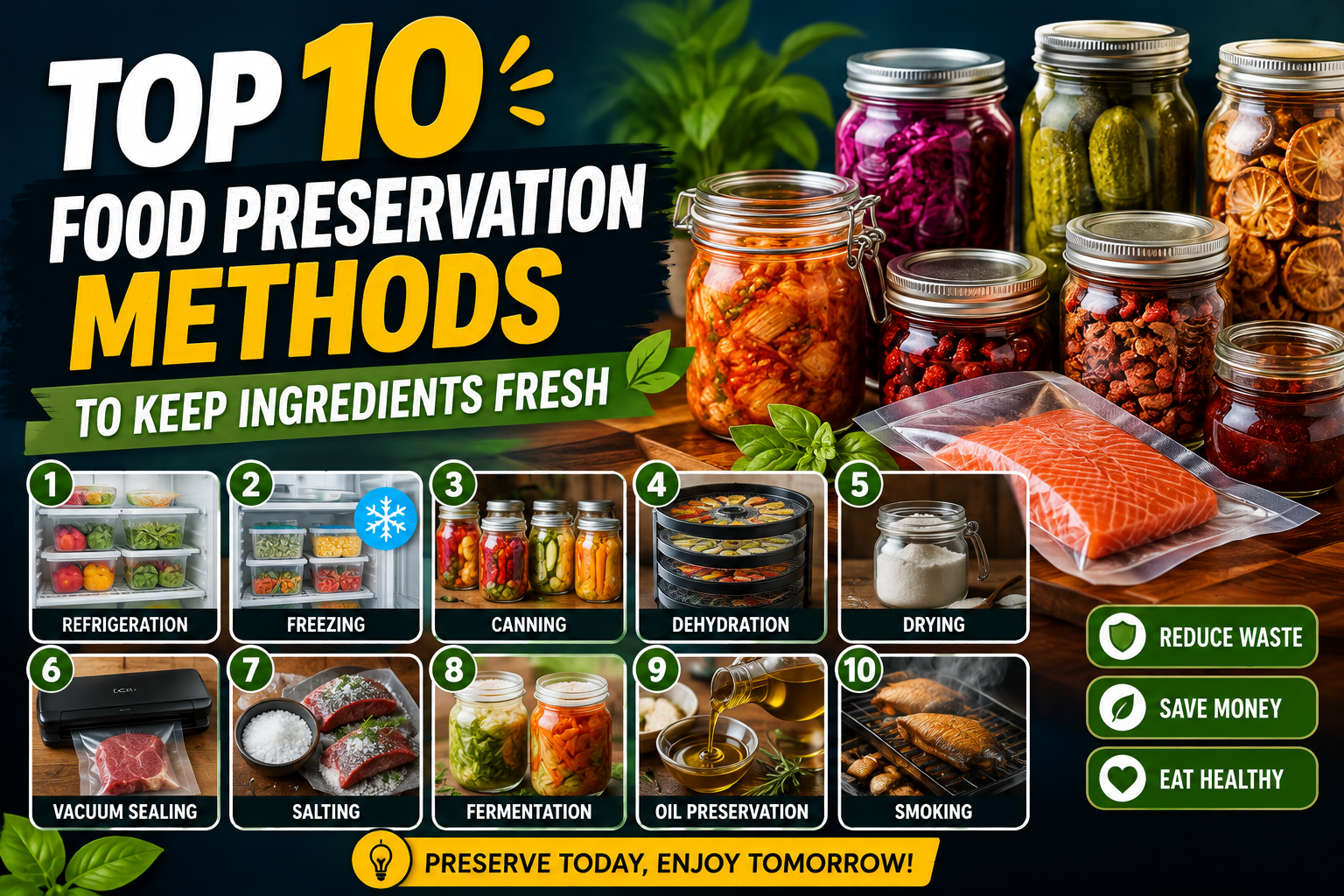
Whether you want to store a massive backyard garden harvest, buy ingredients in bulk, or simply extend the shelf life of your weekly groceries, mastering the right techniques makes all the difference. To help you transform your kitchen workflow, we have put together the ultimate guide to the top 10 food preservation methods to keep ingredients fresh.
The Science Behind Food Preservation
Food spoils primarily due to two factors: microbial growth (bacteria, yeasts, and molds) and enzymatic decay (natural chemical reactions within the food). Microorganisms require specific conditions to thrive: moisture, oxygen, warmth, and a neutral or low-acid environment.
Food preservation methods work by eliminating or controlling one or more of these conditions:
- Removing Moisture: Dehydrating, drying, and salting.
- Controlling Temperature: Freezing, chilling, and root cellaring.
- Altering pH Levels: Pickling and fermenting.
- Eliminating Oxygen & Heat Treating: Canning and vacuum sealing.
Quick Comparison: Top Food Preservation Techniques
| Preservation Method | Best Used For | Shelf Life Extension | Difficulty Level |
| 1. Freezing | Meats, berries, soups, blanched veggies | Months to a Year | Very Easy |
| 2. Canning (Water Bath / Pressure) | Tomatoes, jams, pickles, stews, sauces | 1 to 2+ Years | Intermediate |
| 3. Dehydration / Drying | Herbs, fruits, jerky, mushrooms | Months to Years | Easy |
| 4. Pickling | Cucumbers, onions, carrots, peppers | Weeks (quick) to 1+ Year (canned) | Easy to Intermediate |
| 5. Fermentation | Cabbage, radishes, dairy, chili peppers | Months (Refrigerated) | Intermediate |
| 6. Vacuum Sealing | Meats, cheese, coffee, dry pantry goods | 3x to 5x normal lifespan | Easy |
| 7. Cold Storage / Root Cellaring | Potatoes, apples, onions, winter squash | Months | Easy |
| 8. Salting & Curing | Pork, fish, beef | Months to Years | Advanced |
| 9. Oil Immersion & Confit | Garlic, herbs, slow-cooked meats | Weeks to Months | Intermediate |
| 10. Freeze-Drying | Whole meals, fruits, dairy, emergency rations | Up to 25+ Years | Advanced (Requires Equipment) |
The 10 Best Food Preservation Methods Explained
1. Freezing & Flash-Freezing
- Best For: Berries, chopped vegetables, meats, stocks, and cooked meals.
- Shelf Life: 3 to 12 months (depending on food type).
Freezing is by far the most accessible and popular preservation method in modern kitchens. Cold temperatures (at or below 0°F / -18°C) put microbial activity into total hibernation, stopping spoilage in its tracks.
Pro Tip for Best Results: Practice flash-freezing. Spread items like fresh berries, chopped peppers, or sliced bananas on a single layer on a baking sheet and freeze them solid for two hours before transferring them into a bag. This prevents the pieces from clumping into one solid frozen block!
2. Canning (Water Bath & Pressure Canning)
- Best For: High-acid foods (fruits, jams, tomatoes, pickles) and low-acid foods (meats, poultry, seafood, un-pickled veggies).
- Shelf Life: 1 to 2+ years stored in a cool, dark place.
Canning involves placing food in glass jars and heating them to a temperature that destroys spoilage microorganisms while driving out air to create a vacuum seal.
- Water Bath Canning: Used for high-acid foods (pH under 4.6). The jars are submerged in boiling water.
- Pressure Canning: Essential for low-acid foods like meats, beans, and vegetables. High pressure heats the jars to 240°F (116°C), which is necessary to eliminate dangerous spores like Clostridium botulinum.
Properly canned foods remain shelf-stable for years without requiring any electricity.
3. Dehydration and Air Drying
- Best For: Fresh herbs, apples, bananas, tomatoes, mushrooms, and beef jerky.
- Shelf Life: Several months to several years.
Since microorganisms cannot grow without water, removing moisture is one of the oldest and most effective preservation methods in human history.
You can dehydrate food using specialized electric food dehydrators, a low-temperature oven setting, or simply hanging herbs in a warm, dry room with good airflow. Dried food takes up significantly less storage space and creates intense, concentrated flavors ideal for cooking.
4. Pickling (Vinegar Bath)
- Best For: Cucumbers, red onions, carrots, green beans, and jalapenos.
- Shelf Life: 2–4 weeks (quick refrigerator pickles) or up to 1 year (heat-processed canned pickles).
Pickling preserves food by immersing it in an acidic liquid—typically vinegar (acetic acid) combined with salt, sugar, and spices. The high acidity creates an inhospitable environment for harmful bacteria while infusing vegetables with a sharp, tangy flavor and a satisfying crunch.
Quick pickling red onions or cucumbers takes under 15 minutes of prep work and elevates simple sandwiches, tacos, and salads.
5. Lacto-Fermentation
- Best For: Cabbage (sauerkraut/kimchi), cucumbers, radishes, and hot sauces.
- Shelf Life: Months when kept cold in the refrigerator.
Unlike vinegar pickling, fermentation relies on beneficial bacteria (primarily Lactobacillus) that naturally exist on the skin of raw fruits and vegetables. When submerged in a saltwater brine without oxygen, these good bacteria convert natural sugars into lactic acid.
This lactic acid acts as a natural preservative, inhibiting bad bacteria while enriching the food with beneficial probiotics, vitamins, and complex sour flavors.
6. Vacuum Sealing
- Best For: Bulk meats, cheeses, coffee beans, nuts, and dry pantry staples.
- Shelf Life: Extends fresh and frozen lifespan by 3x to 5x.
Oxygen is a primary cause of food degradation; it leads to oxidation, rancidity in fats, color changes, and freezer burn.
A vacuum sealer extracts air from a specialized plastic bag before heat-sealing it tight. Combining vacuum sealing with freezing completely prevents freezer burn, keeping steaks, fish, and chicken tasting fresh for up to two years.
7. Cold Storage and Root Cellaring
- Best For: Root vegetables (potatoes, carrots, beets), onions, garlic, apples, and winter squash.
- Shelf Life: 2 to 6 months.
Long before refrigerators existed, households relied on root cellars—unheated underground spaces that provided cool, dark, and humid conditions naturally.
You don’t need a formal cellar to use this method. Storing unwashed potatoes, onions, or winter squash in a cool, dark, well-ventilated space (like an unheated basement, pantry, or garage) keeps them dormant and fresh for months without any electricity or processing.
8. Salting and Curing
- Best For: Pork belly (bacon), prosciutto, salmon (gravlax), and cod.
- Shelf Life: Weeks to months.
Salting is a time-tested technique that draws moisture out of meat and fish through osmosis while creating a high-salt environment that harmful bacteria cannot survive in.
- Dry Curing: Coating raw meat in salt, herbs, and spices, then letting it air-dry under controlled temperature and humidity.
- Wet Curing (Brining): Submerging meat in a concentrated saltwater liquid solution.
This technique transforms raw protein into delicious, flavorful delicacies like cured hams and gravlax.
9. Oil Immersion and Confit
- Best For: Garlic, fresh herbs, tomatoes, duck, and pork.
- Shelf Life: Weeks (refrigerated) to months.
Submerging food in high-quality oil creates a physical barrier that prevents exposure to air and oxygen.
Confit is a classic French culinary method where meat (or garlic) is cooked low and slow submerged in fat, then stored covered in that same fat.
Important Safety Note: Raw garlic submerged in oil stored at room temperature can pose a risk of botulism. Always keep garlic-in-oil preparations refrigerated and consume them within 4 to 7 days, or freeze them for long-term storage!
10. Freeze-Drying (Lyophilization)
- Best For: Complete meals, fruits, ice cream, dairy, and long-term emergency rations.
- Shelf Life: Up to 25+ years.
Freeze-drying is the gold standard of modern food preservation. Food is first frozen, then placed in a high-vacuum chamber where ice changes directly into water vapor (sublimation) without turning back into liquid.
Unlike traditional heat dehydration, freeze-drying preserves nearly 97% of the original nutrients, color, shape, and cellular structure. When rehydrated with water, freeze-dried food tastes almost identical to fresh food.
Essential Safety Rules for Food Preservation
Preserving food at home is safe and rewarding, provided you follow proper hygiene and guidelines:
- Keep Equipment Sterile: Always sanitize jars, lids, knives, and cutting boards before processing food.
- Follow Verified Recipes: When canning or fermenting, strictly stick to tested recipes (such as USDA or University Extension guidelines) to ensure correct acid and salt ratios.
- Inspect Before Eating: Always check preserved foods before eating. Discard any jars with broken seals, bulging lids, off-odors, or visible mold.
- Label Everything: Always write the product name and the date of preservation on your jars, bags, and containers.
Final Thoughts
Mastering food preservation changes how you shop, cook, and manage your kitchen. By combining simple, everyday methods like freezing and quick-pickling with long-term options like canning or dehydrating, you can eat seasonally, reduce your home food waste, and enjoy fresh, delicious ingredients all year round.
Pick one or two methods that suit your lifestyle and start building a resilient, sustainable kitchen today!
Penulis: W.S





Post Comment