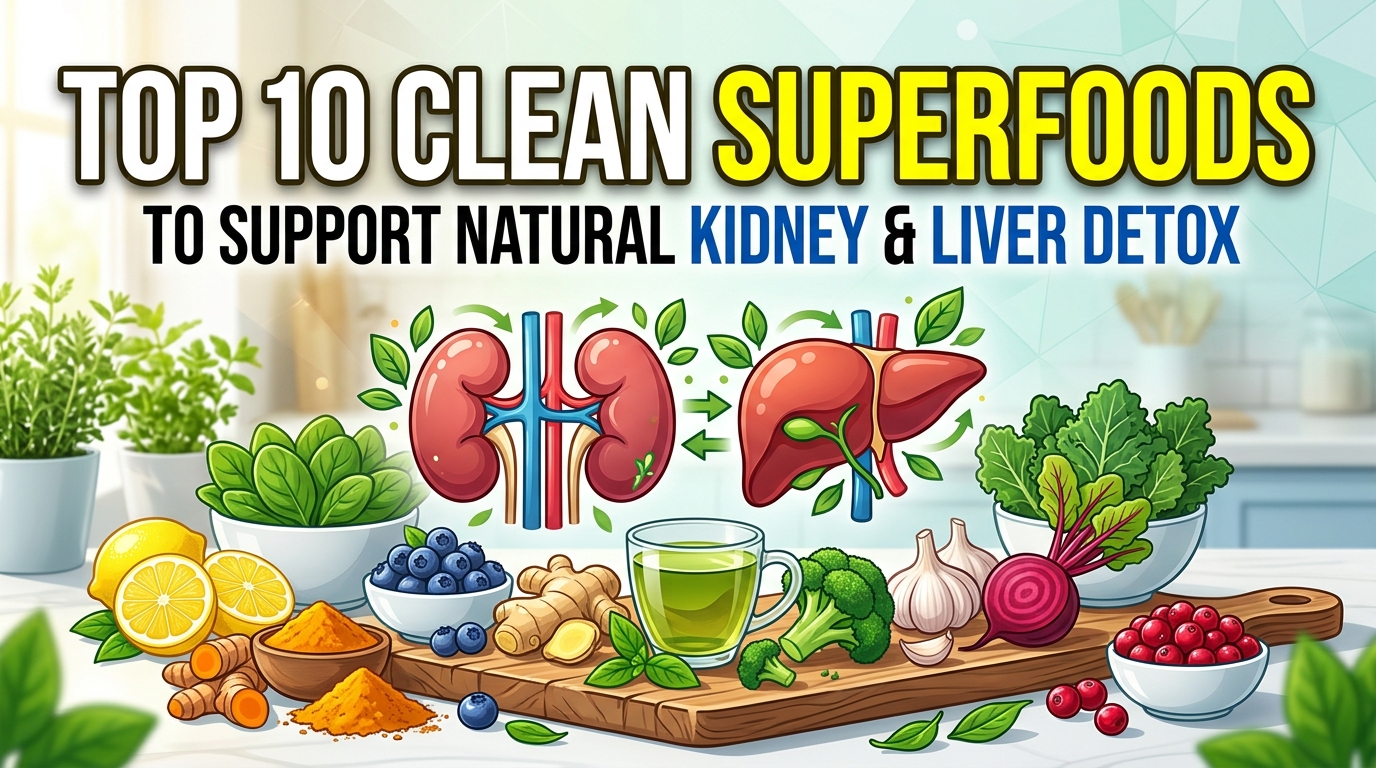
The kidneys and liver are two of the body’s most important organs for maintaining internal balance. The liver helps process nutrients, metabolize substances, and perform numerous chemical reactions, while the kidneys filter blood, regulate fluids and electrolytes, and remove waste through urine.
Because of these functions, “kidney and liver detox” diets have become increasingly popular. However, the body does not need a special cleanse to remove toxins. Healthy kidneys and a healthy liver already perform these jobs continuously.
Instead of relying on detox programs or expensive supplements, a better approach is to build a balanced eating pattern around whole, minimally processed foods. Certain nutrient-rich foods can provide fiber, antioxidants, healthy fats, vitamins, and minerals that support overall metabolic health.
Here are 10 clean superfoods that can be part of a diet designed to support natural kidney and liver function.
1. Berries
Blueberries, strawberries, raspberries, and blackberries are rich in fiber and naturally occurring plant compounds such as anthocyanins and other polyphenols.
These compounds contribute to the antioxidant content of berries, while their fiber supports digestive health.
Berries are also an excellent alternative to highly processed desserts. Add them to oatmeal, plain yogurt, or smoothies, or enjoy them as a simple snack.
Choose fresh or frozen berries without added sugar whenever possible.
2. Leafy Green Vegetables
Spinach, kale, arugula, and other leafy greens provide vitamins, minerals, fiber, and numerous plant compounds.
Adding leafy vegetables to meals can improve overall diet quality and increase the variety of nutrients consumed throughout the week.
Use leafy greens in salads, soups, stir-fries, omelets, or sandwiches. However, people with certain kidney conditions may need to monitor potassium or other nutrients, so individualized medical advice is important.
3. Garlic
Garlic is a flavorful ingredient that contains sulfur-containing compounds and various plant chemicals.
One advantage of garlic is that it can add substantial flavor without requiring large amounts of salt. This can be particularly useful for people trying to reduce sodium intake.
Fresh garlic can be added to roasted vegetables, soups, beans, fish, whole grains, and homemade sauces.
Garlic should be viewed as a nutritious ingredient rather than a liver or kidney “cleanse.”
4. Cruciferous Vegetables
Broccoli, cauliflower, cabbage, Brussels sprouts, and bok choy are members of the cruciferous vegetable family.
They provide fiber, vitamins, minerals, and naturally occurring phytochemicals. Including different vegetables in the diet can help provide a broad range of nutrients and plant compounds.
Try roasting broccoli and cauliflower with olive oil and garlic, or add cabbage and bok choy to vegetable stir-fries.
5. Apples
Apples are convenient sources of fiber and plant compounds. Their natural sweetness can make them a useful replacement for processed snacks and desserts.
Eating whole apples provides more fiber than drinking apple juice. Fiber contributes to digestive health and can help make meals and snacks more satisfying.
Enjoy an apple on its own or pair it with unsalted nuts or plain yogurt for a more balanced snack.
6. Fatty Fish
Salmon, sardines, trout, and mackerel provide high-quality protein and omega-3 fatty acids.
Omega-3 fats are widely studied for their relationship with cardiovascular and metabolic health. Including fish as part of a balanced diet can also provide an alternative to foods that are high in saturated fat.
Try baking or grilling fish with herbs, lemon, and vegetables. Avoid heavily breaded or deep-fried preparations if you are aiming for a minimally processed diet.
7. Olive Oil
Extra virgin olive oil is a source of monounsaturated fat and contains various naturally occurring plant compounds.
It is commonly used in Mediterranean-style eating patterns, which emphasize vegetables, legumes, whole grains, fish, nuts, and minimally processed foods.
Use olive oil in homemade salad dressings or drizzle a modest amount over cooked vegetables.
Although olive oil is considered a healthy fat, it is still calorie-dense, so reasonable portions are appropriate.
8. Oats
Oats provide soluble fiber and other nutrients that can support a balanced diet.
A bowl of plain oatmeal can be an easy breakfast foundation. Add berries, chia seeds, walnuts, or sliced apple for additional fiber and nutrients.
Choose plain oats instead of highly sweetened instant varieties when possible. This allows you to control the amount of added sugar in your breakfast.
9. Avocado
Avocado provides monounsaturated fat, fiber, potassium, and other nutrients.
It can be used as a replacement for some highly processed spreads and sauces. Add sliced avocado to salads, grain bowls, sandwiches, or whole-grain toast.
However, avocado contains a significant amount of potassium. People with chronic kidney disease or other conditions requiring potassium restriction should follow individualized dietary advice before increasing high-potassium foods.
10. Legumes
Beans, lentils, chickpeas, and peas provide plant-based protein, fiber, vitamins, and minerals.
They can serve as the foundation of nutritious meals while reducing reliance on highly processed foods.
Add lentils to soups, chickpeas to salads, or black beans to grain bowls. If using canned legumes, choose low-sodium or no-salt-added varieties when available, or rinse them before eating.
As with other foods, individual kidney conditions can affect whether certain legumes are appropriate in large amounts.
How the Liver Naturally Detoxifies the Body
The liver performs many complex metabolic functions. It helps process nutrients and modifies various substances so that they can be used, stored, or eliminated.
This process does not require a special juice, tea, or supplement. A balanced diet supplies the nutrients required for normal cellular and metabolic functions.
Some foods contain antioxidants and other compounds that support general health, but describing them as “detox foods” can be misleading.
Instead, think of nutritious foods as supporting the body’s normal systems rather than flushing toxins from the liver.
How the Kidneys Naturally Remove Waste
The kidneys filter blood and help regulate fluid balance, electrolytes, and blood pressure. They also produce urine, which allows the body to eliminate various waste products.
Adequate hydration is important, but drinking excessive amounts of water does not make the kidneys “cleaner.” Fluid needs vary depending on body size, activity, climate, and medical conditions.
People with kidney disease may actually have individualized fluid or nutrient requirements. Therefore, anyone with kidney problems should follow guidance from a healthcare professional.
Foods to Limit for Better Kidney and Liver Health
A diet that supports organ health generally emphasizes whole and minimally processed foods while limiting excessive amounts of added sugar, sodium, and highly processed ingredients.
Sugar-sweetened beverages, heavily processed snacks, and frequent fast-food meals can contribute to poor overall diet quality.
Excessive alcohol consumption can also negatively affect liver health.
Instead of focusing on strict “detox” rules, make gradual substitutions. Replace sugary drinks with water, choose whole fruit instead of many sweetened snacks, and prepare more meals using fresh ingredients.
Do Detox Diets Really Clean the Kidneys and Liver?
There is no strong reason to rely on commercial detox diets or juice cleanses to “clean” healthy kidneys and livers.
Some extreme detox programs can actually make it more difficult to obtain adequate protein, fiber, calories, or essential nutrients. Certain supplements may also interact with medications or cause unwanted effects.
A sustainable eating pattern is generally a better long-term strategy than a short detox program.
Building a Natural Kidney and Liver-Friendly Diet
A simple plate can include vegetables, an appropriate protein source, a whole-food carbohydrate, and a source of healthy fat.
For example, try grilled salmon with broccoli and brown rice. Another option is a lentil bowl with leafy greens, avocado, tomatoes, and a small amount of olive oil.
For breakfast, oatmeal with berries and walnuts can provide fiber and healthy fats.
The goal is variety. No single superfood provides every nutrient the body needs.
Final Thoughts
Berries, leafy greens, garlic, cruciferous vegetables, apples, fatty fish, olive oil, oats, avocado, and legumes can all contribute to a nutrient-rich diet that supports overall kidney and liver health.
However, these foods do not “detox” the body in the way many commercial products claim. The kidneys and liver already have sophisticated systems for processing and eliminating waste.
The most effective strategy is to focus on consistent healthy habits: eat a varied diet based on whole foods, stay appropriately hydrated, limit excessive added sugar and sodium, remain physically active, and avoid excessive alcohol.
If you have liver disease, chronic kidney disease, kidney stones, abnormal laboratory results, or another medical condition, speak with a qualified healthcare professional before making major dietary changes. Individual nutritional needs can vary considerably, and a personalized plan is safer than following a generic detox program.
penulis: shofiya m.p








Post Comment