
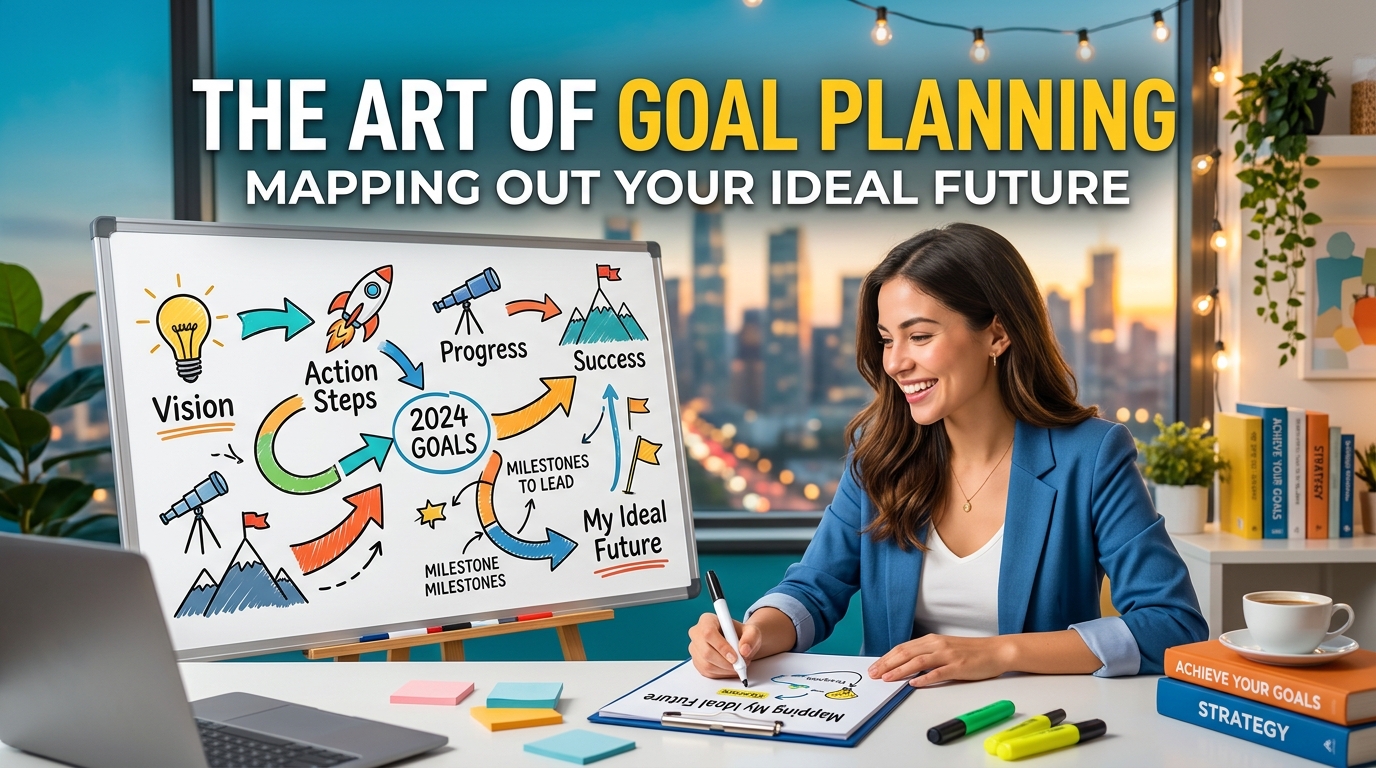
Creating a better future often starts with a simple question: What kind of life do I want to build? While it is impossible to predict exactly what will happen, having meaningful goals can help you create a clearer direction.
The art of goal planning is not about controlling every detail of your future. Instead, it is about understanding your priorities, identifying what you want to accomplish, and creating practical steps that can move you forward.
Whether you are planning your education, career, personal development, finances, relationships, or lifestyle, a thoughtful goal-planning strategy can turn a general vision into an actionable roadmap.
What Is Goal Planning?
Goal planning is the process of identifying objectives and creating a structured approach for achieving them.
A goal describes what you want to accomplish, while a plan explains how you intend to move toward it.
For example, saying “I want to develop my technology skills” is a goal. Creating a schedule to study, practice projects, and review your progress turns that goal into a plan.
Effective goal planning connects your long-term vision with smaller actions that you can take regularly.
Start by Imagining Your Ideal Future
Before creating a detailed plan, spend some time thinking about the future you would like to build.
Imagine yourself several years from now.
What would you like to be learning? What type of work would interest you? What skills would you have? What activities would you enjoy? What kind of relationships and routines would be important to you?
You do not need to predict every detail.
The purpose of this exercise is to identify the general direction you would like to explore.
Identify Your Core Values
Your goals are more meaningful when they reflect your values.
Values are principles or priorities that influence what matters to you.
Examples include:
- Learning
- Creativity
- Independence
- Family
- Education
- Career development
- Community
- Personal growth
Think about which values are most important to you.
If learning is a major value, education and skill development may become important goals. If creativity matters to you, you may want to include creative projects in your future plans.
Divide Your Vision Into Life Areas
An ideal future usually involves more than one area of life.
Consider creating goals for different categories, such as:
Education
Think about what knowledge, qualifications, or learning experiences you would like to pursue.
Career
Consider the types of work, skills, or professional experiences that interest you.
Personal Development
Identify habits, abilities, or qualities you would like to develop.
Relationships
Think about how you want to maintain meaningful connections with family, friends, and your community.
Financial Awareness
Consider learning about budgeting, saving, and responsible financial decision-making.
Hobbies and Creativity
Make room for activities that allow you to explore interests outside school or work.
You do not need goals in every category. Choose areas that are relevant to your life.
Set Long-Term Goals
Once you understand your broader vision, create a few long-term goals.
Long-term goals can take years to accomplish.
Examples include:
- Completing an educational program
- Developing expertise in a field
- Building a professional portfolio
- Learning a complex skill
- Creating a sustainable career path
- Developing a meaningful personal project
Long-term goals should provide direction without requiring you to know exactly how everything will happen.
Turn Long-Term Goals Into Milestones
A large objective becomes easier to manage when it is divided into milestones.
Suppose your long-term goal is to become highly skilled in a particular area.
You could create milestones such as:
Year 1: Learn fundamental concepts.
Year 2: Complete practical projects.
Year 3: Develop more advanced abilities and experience.
These milestones create a sense of progression.
They also allow you to evaluate whether your current strategy is working.
Create Short-Term Goals
Short-term goals connect your long-term vision with your current life.
These goals might take days, weeks, or months.
For example, if your long-term goal involves improving your technical abilities, a short-term goal might be completing a beginner project within a month.
Short-term goals should be specific enough to produce clear actions.
Use the SMART Framework
The SMART framework is a useful method for creating structured goals.
SMART means:
Specific: Clearly explain what you want to accomplish.
Measurable: Identify how you will track progress.
Achievable: Make sure the objective is realistic.
Relevant: Connect the goal to your broader priorities.
Time-bound: Set a reasonable deadline.
For example, instead of writing:
“I want to improve my writing.”
You could create a more structured objective:
“I will practice writing regularly and complete several articles over the next three months.”
The second version provides clearer direction.
Create a Goal Roadmap
A goal roadmap shows how different objectives connect.
Start with your long-term vision.
Then identify:
Vision → Long-term goals → Milestones → Short-term goals → Daily actions
For example:
Vision: Build a career in technology.
Long-term goal: Develop strong technical skills.
Milestone: Complete several practical projects.
Short-term goal: Finish one beginner project this month.
Daily action: Spend regular time studying and practicing.
This structure makes your future vision feel more connected to your present actions.
Focus on Actions You Can Control
You cannot control every outcome.
Unexpected events, opportunities, and circumstances can influence your results.
Therefore, focus on actions within your control.
Instead of worrying about whether you will achieve a particular outcome at a specific time, focus on learning, practicing, preparing, and making thoughtful decisions.
Process-focused goals can help you remain productive even when results take longer than expected.
Build Habits Around Your Goals
Goals describe the destination, while habits support the journey.
If you want to learn a new skill, create a regular practice routine.
If you want to become more organized, develop a habit of reviewing your tasks.
If you want to improve your knowledge, establish a consistent learning routine.
Small actions repeated over time can contribute to significant progress.
Prioritize Your Goals
Trying to pursue too many major goals simultaneously can become overwhelming.
Choose the objectives that matter most right now.
Ask:
- Which goal has the greatest impact?
- Which goal is most relevant to my current situation?
- Which goal supports other goals?
- What requires attention first?
Prioritization allows you to focus your energy where it can be most useful.
Track Your Progress
A goal plan becomes more useful when you monitor your progress.
You can use a notebook, calendar, spreadsheet, planner, or digital task system.
Track milestones, completed actions, and lessons learned.
Regular tracking can help you recognize progress and identify areas that need improvement.
Expect Your Plan to Change
Your ideal future may evolve.
You may discover new interests, develop different priorities, or encounter opportunities that change your direction.
Your goal plan should be flexible enough to adapt.
Review your goals regularly and make changes when necessary.
Changing your plan is not necessarily a failure. It can be an important part of learning and personal growth.
Learn From Setbacks
Setbacks are a normal part of long-term planning.
You may miss a deadline, encounter an unexpected challenge, or discover that your original strategy does not work.
Instead of abandoning your entire plan, ask what you can learn.
Perhaps you need a smaller goal, a different schedule, or additional preparation.
Every challenge can provide information that helps improve your approach.
Avoid Comparing Your Future With Others
Everyone’s ideal future looks different.
Social media and other forms of comparison can make it seem as though everyone else has a perfect plan.
Remember that your goals should reflect your own values and circumstances.
Focus on building a future that is meaningful to you rather than trying to reproduce someone else’s lifestyle.
Review Your Roadmap Regularly
Set aside time every few months to review your goals.
Ask yourself:
- What progress have I made?
- What have I learned?
- Are my goals still relevant?
- Which priorities have changed?
- What should I focus on next?
Regular reviews help keep your roadmap connected to your current reality.
Final Thoughts
The art of goal planning is about turning an ideal future into a practical direction.
Start by imagining the kind of life you want to build, identifying your values, and dividing your vision into important life areas. Then create long-term goals, break them into milestones, and turn those milestones into short-term actions.
Use realistic timelines, build supportive habits, track your progress, and remain flexible when circumstances change.
You do not need to know exactly what your future will look like. You only need enough direction to take the next meaningful step.
With thoughtful planning and consistent action, your goals can become more than ideas. They can serve as a roadmap for continuous learning, personal growth, and a future shaped by your own priorities.
penulis: shofiya m.p