
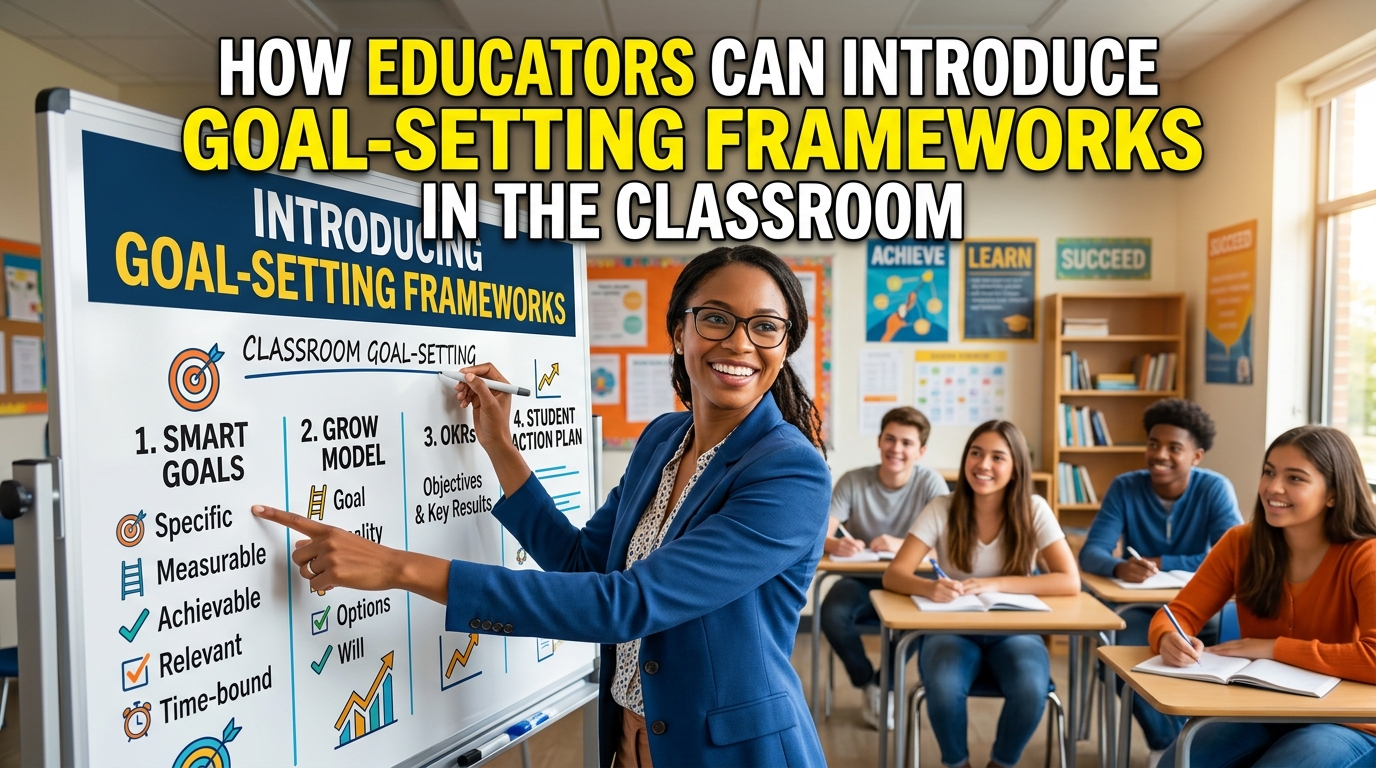
Goal setting is an important skill that can help students become more organized, motivated, and independent learners. When students understand how to create meaningful goals, they can take a more active role in their education and learn how to monitor their own progress.
However, simply telling students to “set a goal” may not be enough. Educators can introduce structured goal-setting frameworks that give students a practical way to define objectives, plan actions, and evaluate their progress.
From SMART goals to short-term learning targets, goal-setting frameworks can be adapted to different ages, subjects, and classroom environments. With the right approach, teachers can make goal setting a useful part of everyday learning.
Why Goal Setting Matters in Education
Students often have academic objectives but may not know how to turn those objectives into actionable plans. A goal-setting framework provides structure and helps students understand the steps required to make progress.
Effective goal setting can encourage students to:
- Identify what they want to accomplish
- Break larger objectives into manageable tasks
- Monitor their progress
- Recognize areas that need improvement
- Develop greater responsibility for their learning
- Reflect on their achievements
These skills can be useful beyond the classroom. Students can apply goal-setting strategies to projects, extracurricular activities, personal development, and future academic or career plans.
Introduce the Concept With Simple Examples
Before asking students to create their own goals, educators should explain what makes a goal effective.
Start with familiar examples. Instead of saying, “I want to get better at math,” demonstrate how the statement could become more specific.
For example, a student might create a goal focused on improving their understanding of a particular mathematical topic by completing practice activities and reviewing mistakes.
The example should show students that a goal is more useful when it identifies what they want to improve and how they plan to work toward it.
Teach the SMART Goal Framework
One of the most widely recognized goal-setting frameworks is the SMART method. SMART stands for Specific, Measurable, Achievable, Relevant, and Time-bound.
Specific
Students should understand exactly what they want to accomplish.
A goal such as “study harder” is vague. A more specific goal could identify a particular subject, skill, or learning task.
Measurable
Students need a way to determine whether they are making progress. This could involve completing assignments, practicing a skill, reviewing a certain number of topics, or monitoring performance.
Achievable
Goals should be challenging but realistic. Educators can help students consider their current abilities, available time, and other responsibilities.
Relevant
A goal should connect to something meaningful. Students are often more engaged when they understand why the goal matters.
Time-Bound
A deadline gives students a timeframe for action. Short-term deadlines can make larger objectives feel more manageable.
Teachers can demonstrate each element and then allow students to practice creating SMART goals of their own.
Break Long-Term Goals Into Short-Term Targets
Large academic goals can seem overwhelming. Educators can help students divide them into smaller targets.
For example, instead of focusing only on a major semester project, students can identify weekly tasks that contribute to completing the project.
Short-term targets provide frequent opportunities for students to check their progress.
This approach also makes it easier to identify problems early. If a student is falling behind, they can adjust their plan before the final deadline approaches.
Create a Classroom Goal-Setting Activity
Goal setting does not have to be a complicated exercise. Teachers can dedicate a short classroom session to the process.
Begin by asking students what they would like to improve. After discussing possible goals, introduce the selected framework and demonstrate how to turn a broad objective into a structured goal.
Students can then write their own goals and identify the actions they need to take.
A simple worksheet can include sections such as:
- My goal
- Why this goal matters
- Actions I will take
- Resources I need
- Target date
- How I will measure progress
- What I will do if I face difficulties
This format encourages students to think beyond the goal itself.
Encourage Students to Track Progress
Goal setting becomes more effective when students regularly review their progress.
Teachers can provide simple tracking tools such as checklists, progress charts, journals, or digital documents.
Students can record completed tasks and reflect on what is working.
The purpose of tracking should not be to create excessive pressure. Instead, it should help students become more aware of their learning habits.
Teach Reflection as Part of Goal Setting
Reflection is an important part of the goal-setting process. At regular intervals, educators can ask students to evaluate their goals.
Useful reflection questions include:
- What progress have I made?
- Which strategies worked well?
- What challenges did I experience?
- What could I do differently?
- Does my goal still make sense?
- What should my next step be?
Reflection helps students understand that goals can be adjusted when circumstances change.
Use Peer Support and Collaboration
Goal setting does not always have to be an individual activity. Educators can incorporate peer discussions to encourage students to share strategies and ideas.
For example, students can work in pairs to review each other’s goals and determine whether they are specific and realistic.
Teachers should establish clear guidelines so that peer feedback remains supportive rather than competitive.
The objective is to encourage collaboration and help students learn from different approaches.
Connect Goals to Different Subjects
Goal-setting frameworks can be used across the curriculum.
In language classes, students might set goals related to writing, reading, vocabulary, or communication skills.
In science, students could create goals around understanding specific concepts or completing research activities.
In mathematics, students could focus on mastering particular problem-solving skills.
The framework can remain consistent while the content changes according to the subject.
Make Goals Student-Centered
Students are more likely to engage with goals when they have some ownership of the process.
Rather than giving every student identical targets, educators can provide guidelines while allowing students to identify areas they personally want to improve.
Teachers can support students by asking questions, offering suggestions, and helping them make their goals realistic.
This approach encourages students to become active participants in their education.
Avoid Turning Goals Into a Competition
Goal setting should support learning rather than encourage unhealthy comparisons.
Students have different abilities, experiences, learning styles, and circumstances. Comparing one student’s goal or progress with another’s may create unnecessary pressure.
Instead, encourage students to focus on personal improvement.
The question should be, “Am I making progress toward my goal?” rather than, “Am I doing better than someone else?”
Review and Adjust Goals Regularly
Goals should not be treated as permanent commitments. Students may discover that a target is too easy, too difficult, or no longer relevant.
Teachers can schedule regular goal reviews throughout the semester.
During these reviews, students can decide whether to continue, modify, or replace their goals.
This teaches an important lesson: adjusting a plan is a normal part of problem-solving and learning.
Celebrate Progress
Recognition can help reinforce positive learning behaviors. Teachers can acknowledge students when they demonstrate persistence, thoughtful planning, or meaningful improvement.
Celebration does not have to involve prizes or rankings. A simple acknowledgment of effort and progress can be meaningful.
The focus should remain on the learning process rather than perfection.
Common Challenges Educators May Face
Introducing goal-setting frameworks can present challenges. Some students may struggle to create realistic goals, while others may initially have difficulty tracking their progress.
Teachers can address these challenges by providing examples, templates, guided practice, and regular feedback.
It is also important to avoid introducing too many frameworks at once. Students may benefit more from learning one practical method thoroughly before exploring additional approaches.
Final Thoughts
Learning how educators can introduce goal-setting frameworks in the classroom is valuable because goal setting can help students develop organization, responsibility, and self-reflection skills.
Teachers can begin with simple examples, introduce a structured framework such as SMART goals, and help students break larger objectives into manageable actions. Regular tracking, reflection, feedback, and goal adjustments can make the process even more effective.
Most importantly, goal setting should be student-centered and focused on meaningful progress rather than competition or perfection.
When integrated thoughtfully into everyday learning, goal-setting frameworks can give students practical skills they can use not only in school but also in future academic, professional, and personal pursuits.
penulis: shofiya m.p