
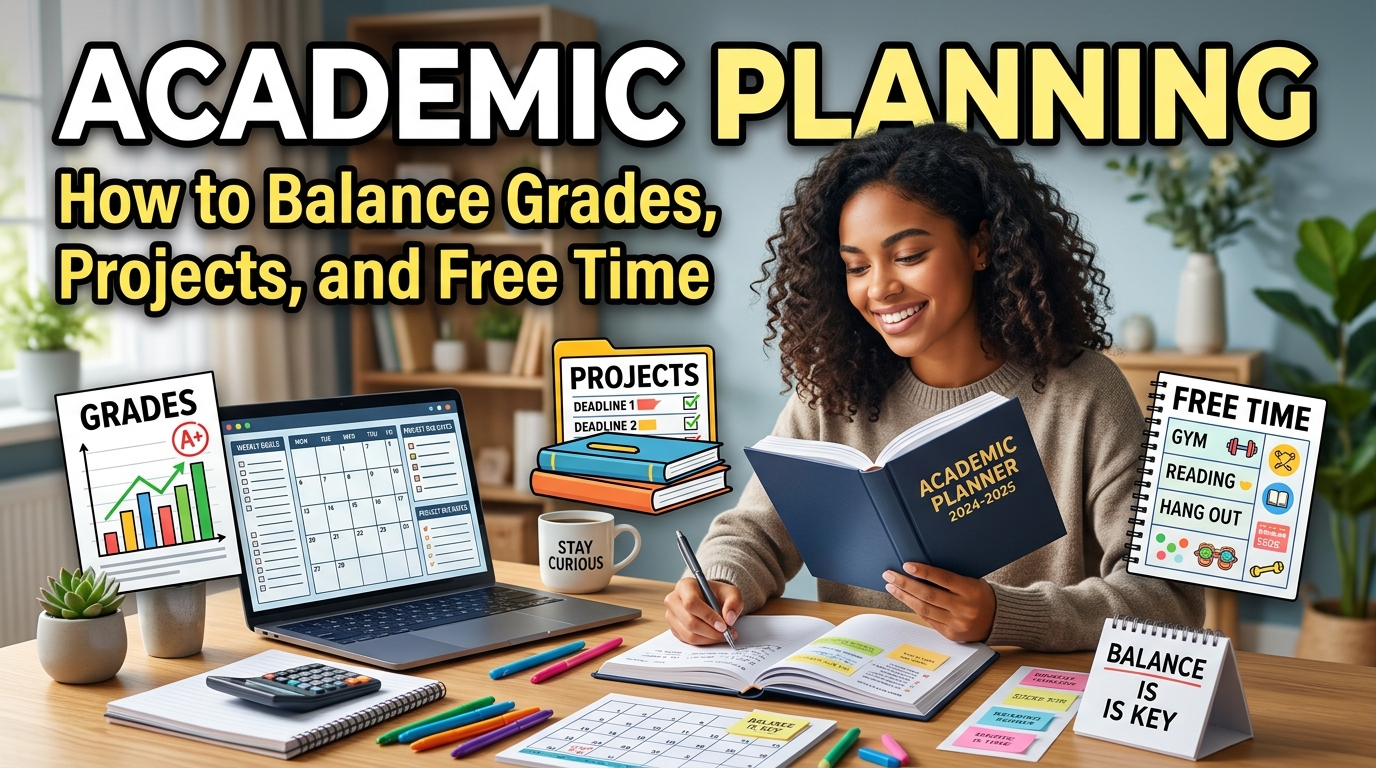
Academic life can become challenging when students have to manage grades, projects, assignments, extracurricular activities, and personal time at the same time. Without proper planning, it is easy to feel overwhelmed or spend too much time on one responsibility while neglecting another.
Academic planning can help students organize their priorities, manage deadlines, and create a healthier balance between schoolwork and free time. The goal is not to study every available hour but to use time effectively while leaving enough room for rest, hobbies, family, and social activities.
What Is Academic Planning?
Academic planning is the process of organizing school responsibilities and setting priorities to achieve academic goals. It can include creating study schedules, tracking assignments, preparing for exams, and allocating time for projects.
A good academic plan should be realistic and flexible. Every student has different subjects, schedules, learning styles, and responsibilities. Therefore, there is no single planning method that works for everyone.
The most effective system is one that helps you understand what needs to be done and when it needs to be completed.
Why Academic Planning Is Important
Without a clear plan, students may rely on memory to remember assignments and deadlines. This can lead to missed work, rushed projects, and unnecessary stress.
Academic planning provides a structured way to manage responsibilities. When tasks are organized, you can see which assignments require immediate attention and which can be completed later.
Planning can also help prevent procrastination. Instead of waiting until the night before a deadline, you can divide larger projects into smaller tasks and complete them gradually.
Set Clear Academic Goals
The first step in effective academic planning is deciding what you want to achieve.
Your goals might include improving your performance in a particular subject, completing assignments earlier, preparing more effectively for exams, or developing better study habits.
Try to make your goals specific and realistic. Instead of saying, “I want better grades,” identify the actions that can support that goal.
For example, you might decide to review class material regularly, complete assignments before their deadlines, or spend additional time practicing difficult topics.
Clear goals give your daily activities a sense of direction.
Prioritize Your Tasks
Not every school task has the same level of urgency or importance. Learning how to prioritize can make your schedule much easier to manage.
Start by identifying tasks with approaching deadlines. Then consider which assignments require the most time or preparation.
You can divide tasks into categories such as:
- Urgent assignments
- Long-term projects
- Exam preparation
- Regular homework
- Optional or extracurricular activities
Completing high-priority tasks first can prevent important deadlines from becoming last-minute emergencies.
Create a Weekly Academic Schedule
A weekly schedule can provide a simple overview of your responsibilities. At the beginning of each week, write down classes, assignments, projects, exams, and other important activities.
Then identify available study periods.
You do not need to schedule every minute of your day. Leaving some flexibility allows you to handle unexpected tasks or changes.
A practical schedule might include specific blocks for homework, project work, revision, hobbies, exercise, and relaxation.
Break Large Projects Into Smaller Tasks
Large academic projects can seem intimidating when viewed as one enormous assignment. Breaking them into smaller steps makes them easier to manage.
For example, a research project might be divided into:
- Understanding the assignment
- Choosing a topic
- Researching information
- Creating an outline
- Writing the first draft
- Revising the work
- Checking the final version
- Preparing the submission
Assigning smaller deadlines to each step can help prevent last-minute work.
Use Study Time Efficiently
Spending more hours studying does not automatically mean you are studying effectively. The quality of your study time matters.
Before beginning a study session, decide what you want to accomplish. Having a specific objective can help you stay focused.
Reduce distractions when possible. Put unnecessary notifications aside and keep only the materials you need nearby.
You can also experiment with different study techniques to discover what works best for you. Active recall, practice questions, summaries, and explaining concepts in your own words can make study sessions more purposeful.
Protect Your Free Time
Academic planning should not eliminate free time. Rest and recreational activities are important parts of a balanced student lifestyle.
Schedule time for hobbies, friends, family, entertainment, and relaxation. Having something enjoyable to look forward to can also make demanding academic periods feel more manageable.
Free time should not always be viewed as wasted time. Taking appropriate breaks can help you return to your responsibilities with a clearer mind.
Learn to Manage Procrastination
Procrastination is one of the biggest obstacles to effective academic planning. Students may delay tasks because an assignment seems difficult, boring, or overwhelming.
One useful strategy is to start with a small action. Instead of thinking about completing an entire project, focus on opening the document, reading the instructions, or writing the first few sentences.
Once you begin, continuing may feel easier.
Another strategy is to set short work periods followed by planned breaks. This can make large assignments feel less demanding.
Balance Grades With Overall Well-Being
Grades are an important part of academic life, but they should not become the only measure of success.
Students also need time for sleep, relationships, hobbies, physical activity, and personal development.
Trying to achieve perfect results in every subject can create unnecessary pressure. Instead, focus on learning, consistent effort, and realistic improvement.
If you are struggling academically, consider asking a teacher, counselor, parent, or another trusted adult for support.
Review Your Progress Regularly
An academic plan should be reviewed and adjusted regularly. At the end of each week, take a few minutes to consider what worked and what did not.
Ask yourself:
- Did I complete my important assignments?
- Which tasks took longer than expected?
- Did I leave enough time for rest?
- Which subjects need more attention?
- What can I change next week?
This simple review can help you improve your planning system over time.
Avoid Overloading Your Schedule
A common academic planning mistake is creating an unrealistic schedule. Students sometimes fill every hour with schoolwork because they believe that being constantly busy means being productive.
In reality, an overloaded schedule can make it difficult to maintain focus and motivation.
When planning your week, leave room for unexpected assignments, breaks, and personal activities. A flexible schedule is often more sustainable than a perfect schedule that is impossible to follow.
Use Digital and Traditional Planning Tools
There are many tools that can help with academic organization. Students can use digital calendars, reminder applications, note-taking platforms, spreadsheets, or traditional notebooks and planners.
The specific tool is less important than using it consistently.
Choose a system that allows you to quickly record deadlines and review upcoming responsibilities. Keeping important information in one organized place can reduce the chance of forgetting assignments.
Build a Sustainable Routine
Academic planning becomes more effective when it develops into a routine. Instead of creating a completely new schedule every day, establish consistent habits.
For example, you might review your assignments after school, plan the next day’s priorities in the evening, and set aside regular periods for studying.
Small routines can reduce decision-making and make academic responsibilities feel more manageable.
Final Thoughts
Effective academic planning is about finding the right balance between grades, projects, responsibilities, and free time. A good plan helps you understand your priorities without requiring you to sacrifice your entire personal life.
Set clear academic goals, prioritize important tasks, divide large projects into smaller steps, and create a realistic weekly schedule. At the same time, protect your free time and allow yourself opportunities to rest and enjoy activities outside school.
Remember that the best academic schedule is not necessarily the busiest one. It is the one that helps you stay organized, complete your responsibilities, maintain healthy habits, and make steady progress without becoming overwhelmed.
With consistent planning and regular adjustments, you can develop time-management skills that benefit you not only in school but also in future education, work, and everyday life.
Penulis: Shofiya M.P