
Setting goals is one of the most powerful ways to take control of your future, maintain motivation, and achieve meaningful growth. However, many people set goals that are too broad, unrealistic, or unorganized, such as “I want to get a promotion” or “I want to live a healthier life.” While these represent positive intentions, they lack the clarity, structure, and actionable steps needed for execution.
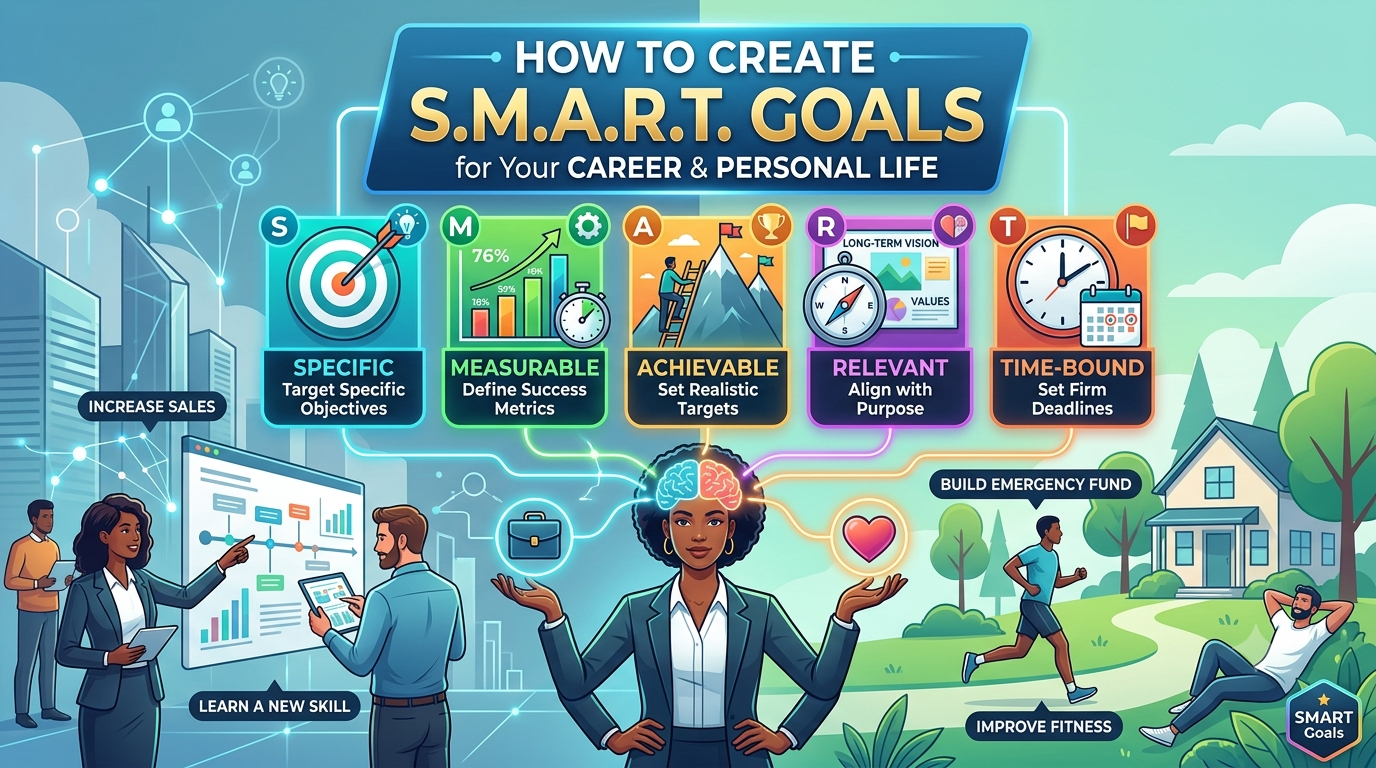
This is where the SMART goal framework becomes essential. By organizing your ambitions into goals that are Specific, Measurable, Achievable, Relevant, and Time-bound, you convert vague desires into precise, actionable roadmaps.
Whether you want to climb the corporate ladder, launch a business, build personal wealth, or improve your health, learning how to create SMART goals for both your career and personal life is the key to sustainable success.
Understanding the SMART Framework
Before applying SMART goals to specific areas of your life, it is crucial to understand what each element of the acronym requires:
┌─────────────────────────────────────────────────────────────────┐
│                     THE S.M.A.R.T. CHECKLIST                    │
├─────────────────────────────────────────────────────────────────┤
│  S ─── SPECIFIC       │ Clearly defined outcome with zero ambiguity │
│  M ─── MEASURABLE     │ Concrete numbers or metrics to track progress│
│  A ─── ACHIEVABLE     │ Realistic given your resources and timeframe│
│  R ─── RELEVANT       │ Aligned with long-term values and vision │
│  T ─── TIME-BOUND     │ Clear start dates, milestones, and deadlines│
└─────────────────────────────────────────────────────────────────┘
-
Specific: Clearly outline what you want to accomplish, why it matters, and how you will carry it out.
-
Measurable: Define quantitative metrics (e.g., percentages, dollar amounts, hours) so you can objectively track your progress.
-
Achievable: Ensure the target stretches your skills while remaining feasible based on your current bandwidth, budget, and resources.
-
Relevant: Align your goal with your core personal values or long-term career strategy so your efforts stay focused on what truly matters.
-
Time-Bound: Set a firm completion deadline and regular milestones to create urgency and prevent procrastination.
Part 1: How to Create SMART Goals for Your Career
Career goals help you maintain direction, gain new competencies, expand your network, and qualify for advancements. Here is a step-by-step breakdown of how to build effective professional SMART goals, along with concrete examples.
Step 1: Identify Your Professional Target
Focus on one specific area of your career you want to develop. This could be obtaining a certification, securing a promotion, improving team efficiency, or building an industry presence.
Step 2: Apply the SMART Criteria
Transform your general ambition by defining exact numbers, required tools, and a deadline.
Detailed Career Example: Securing a Promotion
-
Vague Idea: “I want to move into management soon.”
-
SMART Goal Transformation:
-
Specific: Transition from Mid-Level Developer to Lead Technical Project Manager by taking ownership of the cross-functional mobile app redesign project.
-
Measurable: Deliver the project with a 95%+ client approval rating and complete two internal leadership training modules.
-
Achievable: Leverages 4 years of existing development experience alongside current mentorship support from the Engineering Director.
-
Relevant: Aligns with a multi-year career path toward becoming a CTO.
-
Time-Bound: Achieve promotion within the next 8 months, with quarterly reviews scheduled at months 3 and 6.
-
Part 2: How to Create SMART Goals for Your Personal Life
Personal goals cover areas like fitness, mental well-being, personal finance, relationships, and lifelong learning. Applying the SMART framework to your personal life prevents burnout and keeps daily habits aligned with your well-being.
Step 1: Pinpoint Personal Priorities
Determine what area of your personal life needs structure right now. Are you looking to build an emergency fund, run a distance race, improve your sleep quality, or read more books?
Step 2: Define Clear Boundaries and Metrics
Avoid vague promises like “I’m going to get in shape” or “I’ll spend less money.” Instead, assign concrete parameters.
[ Broad Intent ] ──> [ Set Numeric Target ] ──> [ Schedule Daily Habit ] ──> [ Establish Deadline ]
Detailed Personal Example: Financial Freedom
-
Vague Idea: “I want to pay off my credit card.”
-
SMART Goal Transformation:
-
Specific: Eliminate $3,600 of high-interest credit card debt using the debt snowball method.
-
Measurable: Pay down $400 per month toward the principal balance.
-
Achievable: Feasible by cutting non-essential dining out by $250/month and taking on 5 hours of weekend freelance work.
-
Relevant: Frees up monthly cash flow to begin investing for retirement.
-
Time-Bound: Fully clear the debt balance within 9 months.
-
Balancing Career and Personal Goals
One common mistake when setting SMART goals is over-focusing on career milestones while neglecting personal health and relationships—or vice versa. To maintain long-term balance and avoid burnout, use these strategies:
-
Limit Your Active Focus: Focus on 2 major career goals and 2 major personal goals at any given time. Setting too many goals spreads your energy thin and reduces your chances of success.
-
Align Personal Habits with Career Energy: If your career goal requires intense mental output (e.g., studying for professional exams), ensure your personal goals support recovery (e.g., prioritizing 8 hours of sleep and regular exercise).
-
Harmonize Timelines: Stagger your start dates. Avoid launching a massive new work project in the exact same week you start an aggressive new fitness regimen.
Best Practices to Keep Your SMART Goals on Track
Creating SMART goals is the blueprint, but daily execution determines the outcome. Use these practical strategies to maintain continuous momentum:
[ Write Goals Down ] ──> [ Deconstruct into Weekly Actions ] ──> [ Audit Progress Weekly ]
-
Document and Display Your Goals: Keep your SMART goals written down and visible—on your workspace desk, in your digital planner, or pinned on your phone screen.
-
Deconstruct Goals into Micro-Habits: Break down annual or quarterly goals into monthly targets, weekly milestones, and daily non-negotiable actions.
-
Conduct Weekly Progress Audits: Spend 15 minutes every Sunday reviewing your progress:
-
Which metrics did I meet this week?
-
What friction or obstacles emerged?
-
What minor adjustments do I need to make for the upcoming week?
-
-
Never Miss Twice: If unexpected work or life disruptions throw off your schedule for a day, recommit immediately on the next day. A single slip is an anomaly; two consecutive days off is the start of a new habit.
Final Thoughts: Design Your Life by Intentional Design
Creating SMART goals for your career and personal life transforms abstract dreams into structured, manageable actions. By ensuring every objective is Specific, Measurable, Achievable, Relevant, and Time-bound, you eliminate guesswork, beat decision fatigue, and build lasting momentum.
Take time today to evaluate where you want to go. Pick one professional target and one personal priority, run them through the SMART framework, and begin taking daily steps toward building the future you want.
Penulis: W.S