
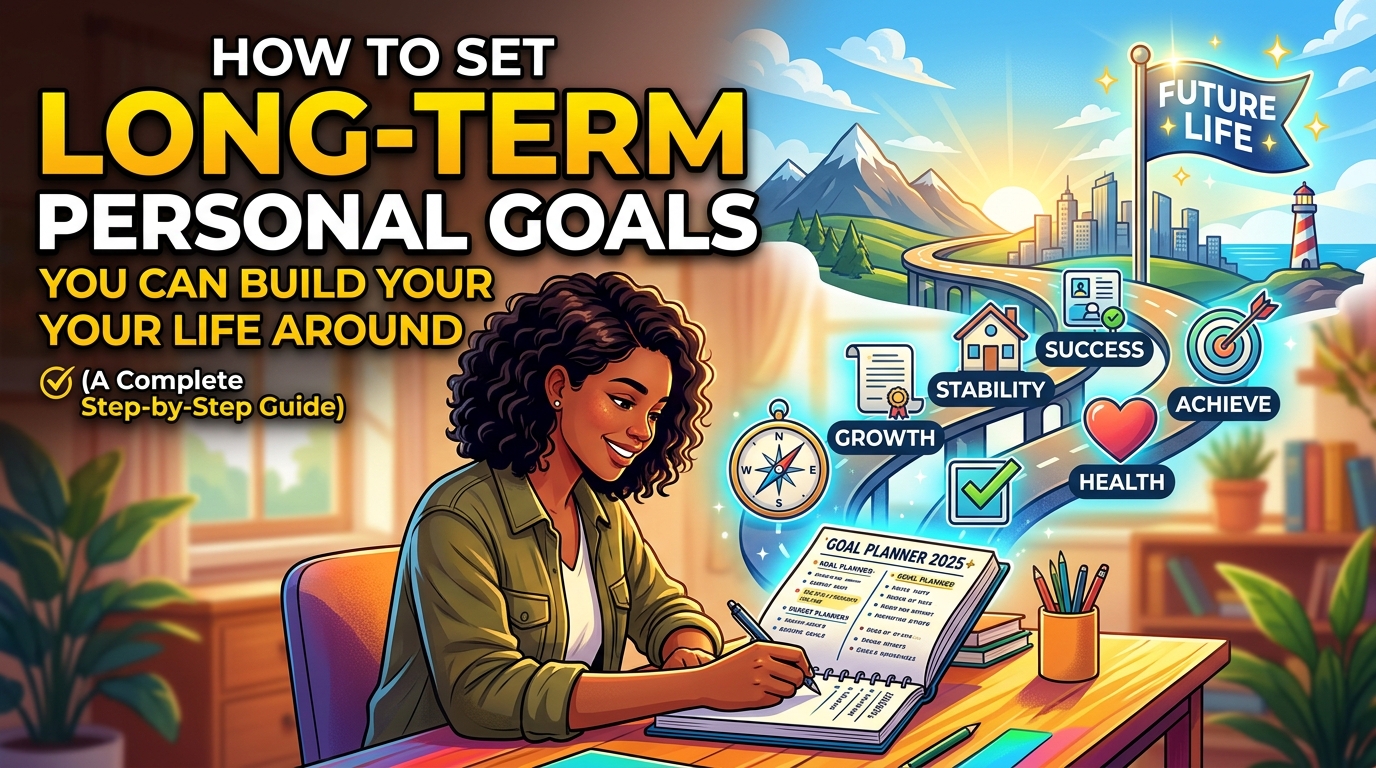
Long-term personal goals can give your life a sense of direction and help you make more intentional decisions. Instead of simply reacting to whatever happens each day, clear goals can provide a framework for deciding where you want to go and what steps you need to take.
Learning how to set long-term personal goals is not about planning every detail of your future. Life can change, and your priorities may evolve over time. The purpose of long-term goal setting is to establish a meaningful direction while remaining flexible enough to adapt.
Whether you want to develop a career, learn valuable skills, improve your education, build meaningful relationships, or create a more balanced lifestyle, thoughtful goal setting can help turn your vision into practical action.
What Are Long-Term Personal Goals?
Long-term personal goals are objectives that generally require an extended period of time to accomplish. They can take several years or more, depending on their complexity.
Examples include:
- Completing higher education
- Building a career in a chosen field
- Learning advanced professional skills
- Starting a business
- Developing financial independence
- Building meaningful relationships
- Becoming more organized and productive
- Pursuing creative or personal interests
Long-term goals are different from short-term tasks because they require sustained effort and often involve multiple stages.
Start With Your Personal Vision
Before creating specific goals, think about the kind of future you would like to build.
Imagine your life several years from now. What would you like to be doing? What skills would you have? What experiences would be important to you?
You do not need to predict your future perfectly.
Instead, identify broad themes that matter to you.
For example, you might value:
- Learning
- Creativity
- Independence
- Career development
- Family
- Community
- Personal growth
- Meaningful experiences
These values can serve as a foundation for your long-term goals.
Identify Your Core Priorities
Trying to improve every area of life at the same time can become overwhelming.
Start by identifying the areas that matter most to you.
Consider categories such as:
Education: What knowledge or qualifications would you like to gain?
Career: What type of work would you like to pursue?
Skills: What abilities would you like to develop?
Relationships: What kind of relationships do you want to build and maintain?
Financial planning: What financial objectives are important to your future?
Personal development: What habits or qualities would you like to strengthen?
You do not need a goal in every category. Choose the areas that genuinely matter to you.
Make Your Goals Specific
A long-term goal should be clear enough to guide your decisions.
Instead of saying, “I want to have a successful career,” define what success means to you.
For example, you might want to develop expertise in a particular field, complete certain educational milestones, or work toward a specific type of professional role.
Specific goals give you something concrete to work toward.
Break Long-Term Goals Into Milestones
A long-term goal can feel distant if you only focus on the final result.
Breaking it into milestones makes the journey easier to manage.
For example, if your long-term goal is to develop expertise in technology, your milestones might include:
- Learn fundamental concepts.
- Complete introductory courses.
- Practice through small projects.
- Develop more advanced skills.
- Build a portfolio.
- Gain practical experience.
Each milestone becomes a stepping stone toward the larger objective.
Turn Milestones Into Short-Term Actions
Long-term goals become achievable through everyday actions.
Once you have established your milestones, identify what you can do this month, this week, or even today.
For example, a goal of learning a new skill could become:
Long-term goal: Become proficient in a new technical skill.
Yearly milestone: Complete several structured learning projects.
Monthly objective: Finish one learning module.
Weekly action: Practice several times during the week.
This structure connects your long-term vision with your daily routine.
Build Habits Around Your Goals
Habits can make long-term progress more consistent.
If your goal is to improve your knowledge, create a regular learning routine.
If your goal involves developing a skill, schedule consistent practice.
If your goal involves career development, dedicate time to learning, networking, or building relevant experience.
The specific habit depends on the goal, but the principle is the same: create repeatable actions that support your long-term direction.
Create a Realistic Timeline
Long-term goals need realistic time frames.
Avoid choosing deadlines simply because they sound impressive.
Consider your current responsibilities, available time, resources, and starting point.
A realistic timeline should provide enough time for meaningful progress without making the goal so distant that it becomes difficult to stay motivated.
You can divide a long-term timeline into yearly, quarterly, monthly, and weekly milestones.
Expect Your Goals to Change
One important part of long-term planning is accepting that your goals may change.
You may discover new interests, encounter unexpected opportunities, or realize that an old goal no longer matches your priorities.
Changing a goal does not automatically mean failure.
Sometimes changing direction is a sign that you have learned something important about yourself.
Review your long-term goals periodically and determine whether they still reflect your current values and circumstances.
Avoid Building Your Life Around Someone Else’s Expectations
A long-term goal should be meaningful to you.
Family, friends, teachers, coworkers, and society can influence what people believe they should accomplish. Their opinions can be valuable, but they should not automatically determine your life direction.
Ask yourself whether a goal reflects your own interests and values.
The most sustainable goals are often those that you genuinely care about.
Measure Progress Without Obsessing Over Numbers
Tracking progress can be useful, but not everything needs to be measured constantly.
For some goals, progress can be measured through completed projects, new skills, milestones, or experiences.
For others, progress may be less obvious.
Focus on meaningful indicators rather than trying to quantify every aspect of your personal development.
Regular reflection can help you recognize progress that might otherwise go unnoticed.
Learn From Setbacks
Long-term goals rarely follow a perfectly straight path.
You may miss a deadline, lose motivation, or encounter circumstances that require you to change your plan.
Instead of treating setbacks as proof that you cannot achieve your goal, examine what happened.
Ask:
- What caused the setback?
- What can I learn from it?
- Does my strategy need to change?
- Is the timeline realistic?
- What is the next useful action?
Learning from difficulties can make your long-term plan stronger.
Avoid Setting Too Many Long-Term Goals
Having too many major goals can divide your attention.
Choose a manageable number of long-term priorities and focus on the ones that matter most.
You can always introduce new goals later.
A smaller number of meaningful goals may be easier to connect with your daily habits and responsibilities.
Review Your Goals Regularly
Set aside time to review your long-term goals.
A quarterly or annual review can help you evaluate your progress and make necessary adjustments.
Consider asking:
- What progress have I made?
- What have I learned?
- Are my priorities still the same?
- What obstacles are affecting my progress?
- What should I focus on next?
Regular reviews keep long-term goals connected to your current life.
Focus on Direction, Not Perfection
The purpose of long-term personal goals is not to create a perfect life plan.
Instead, goals provide direction.
You may not know exactly where you will be several years from now, and that is completely normal. What matters is having a general direction and taking actions that move you toward it.
Your plan can change as you gain experience and learn more about yourself.
Final Thoughts
Learning how to set long-term personal goals can help you build a clearer direction for your future. Start by identifying your values, choosing meaningful priorities, and creating specific objectives.
Then break those objectives into milestones, habits, and short-term actions that fit into your everyday life.
Remember to create realistic timelines and remain flexible. Your goals may evolve as your interests, responsibilities, and circumstances change.
Most importantly, do not measure your life solely by how quickly you reach a destination. Long-term growth is a process.
When your daily actions are connected to meaningful long-term goals, even small steps can contribute to a life that feels more intentional, purposeful, and aligned with what matters to you.
Penulis: Shofiya M.P