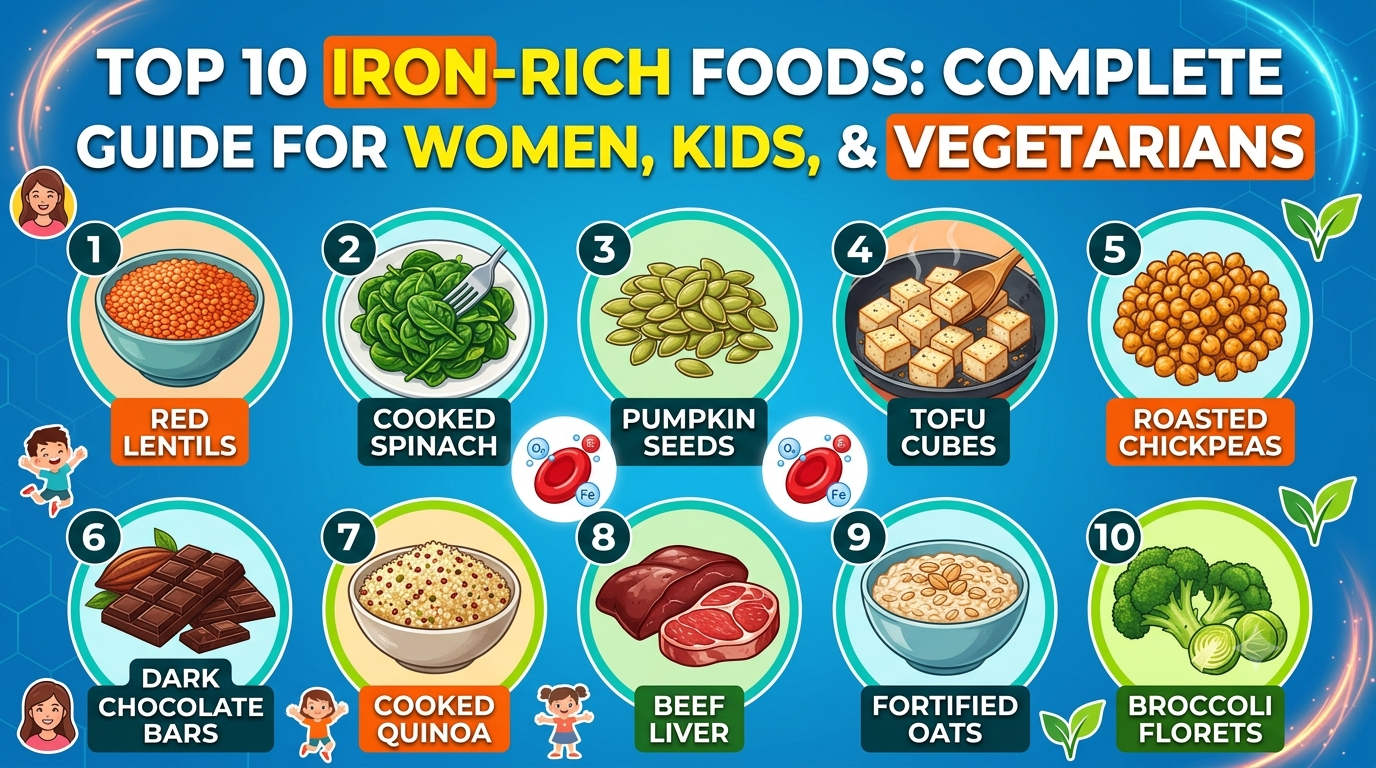
Iron is one of the most critical essential minerals required for optimal human health. It acts as the functional engine inside red blood cells, binding to a protein called hemoglobin to transport oxygen from your lungs to every organ, tissue, and muscle in your body. Without adequate iron levels, cellular energy production slows down, resulting in persistent fatigue, brain fog, weakened immunity, and a general loss of vitality.
Despite its vital role, iron deficiency remains the most widespread nutritional deficit worldwide. Three specific demographic groups face a significantly elevated risk of iron deficiency and iron deficiency anemia: women of reproductive age, growing children, and vegetarians or vegans.
This comprehensive guide explores the top 10 iron-rich foods, explains how iron absorption works, breaks down daily target recommendations, and provides actionable dietary strategies to keep your energy high and health thriving.
Daily Recommended Dietary Allowance (RDA) for Iron
Iron requirements fluctuate depending on age, biological sex, life stage, and overall diet. Because plant-based (non-heme) iron is absorbed less efficiently than animal-derived (heme) iron, health organizations recommend that vegetarians consume roughly 1.8 times more iron than non-vegetarians.
| Life Stage / Group | Daily Recommended Iron Intake (Non-Vegetarian) | Daily Recommended Iron Intake (Vegetarian/Vegan) |
| Infants (7–12 months) | 11 mg | 11–20 mg |
| Children (1–3 years) | 7 mg | 12 mg |
| Children (4–8 years) | 10 mg | 18 mg |
| Teens (9–13 years) | 8 mg | 14 mg |
| Adult Men (19–50+ years) | 8 mg | 14 mg |
| Adult Women (19–50 years) | 18 mg | 32 mg |
| Pregnant Women | 27 mg | 48 mg |
| Postmenopausal Women (50+ years) | 8 mg | 14 mg |
Note: Pregnant women require double the standard intake to support fetal growth and expanding maternal blood volume. Women who experience heavy menstrual bleeding also require higher daily iron amounts to replace monthly blood loss.
Top 10 Iron-Rich Foods
To optimize intake, it is beneficial to combine both plant and animal sources (if your diet allows) alongside absorption enhancers. Here are the top 10 nutrient-dense iron foods.
1. Lentils and Pulses
- Iron Content: ~6.6 mg per 1 cup cooked (37% Daily Value)
- Best For: Vegetarians, vegans, meal preppers, and budget-conscious families.
Lentils are a nutritional powerhouse for plant-based eaters. Beyond their high non-heme iron content, lentils deliver generous amounts of folate, potassium, dietary fiber, and complex carbohydrates that provide sustained, non-spiking energy.
- How to Serve: Combine brown or red lentils with diced tomatoes, bell peppers, and lemon juice. The high Vitamin C in tomatoes and citrus dramatically boosts the absorption of the non-heme iron in the lentils.
2. Spinach and Dark Leafy Greens
- Iron Content: ~6.4 mg per 1 cup cooked (35% Daily Value)
- Best For: Women, bodybuilders, and plant-based diets.
Raw spinach is packed with nutrition, but cooking or steaming spinach breaks down oxalic acid—a naturally occurring compound that binds to minerals and inhibits iron absorption. Cooking renders the iron significantly more bioavailable while reducing the total volume, allowing you to consume more greens per serving.
- How to Serve: Sauté fresh spinach in olive oil with minced garlic and a squeeze of fresh lemon juice, or blend cooked spinach into fruit smoothies containing high-vitamin C fruits like berries or mango.
3. Pumpkin Seeds (Pepitas) and Chia Seeds
- Iron Content: ~2.5 mg to 4.2 mg per 1 oz / 28g serving (14%–23% Daily Value)
- Best For: Kids, snacks on the go, and nut-free school lunches.
Pumpkin seeds are among the most concentrated plant sources of iron, zinc, magnesium, and healthy omega-3 fatty acids. Just a small handful provides a substantial portion of a child’s daily iron requirement.
- How to Serve: Sprinkle roasted pumpkin seeds over oatmeal, mix them into trail mixes, or grind chia seeds into morning yogurt or plant milk puddings.
4. Organic Tofu and Tempeh
- Iron Content: ~3.4 mg to 6.6 mg per 3.5 oz / 100g serving (19%–36% Daily Value)
- Best For: Vegetarians, vegans, and plant-based athletes.
Soy-based foods like firm tofu and fermented tempeh are excellent substitutes for meat. In addition to delivering a complete amino acid profile (all nine essential amino acids), tofu offers a rich supply of iron, calcium, and manganese.
- How to Serve: Marinate cubed firm tofu in a tangy citrus-soy sauce and stir-fry with bell peppers, broccoli, and snap peas for an iron-boosting dinner.
5. Chickpeas (Garbanzo Beans)
- Iron Content: ~4.7 mg per 1 cup cooked (26% Daily Value)
- Best For: Picky kids, vegetarians, and salad lovers.
Chickpeas are incredibly versatile legumes. Loaded with iron, plant protein, and soluble fiber, they promote healthy digestion, stabilize blood sugar levels, and keep you feeling full longer.
- How to Serve: Blend cooked chickpeas with tahini, garlic, and fresh lemon juice to make homemade hummus, or roast them with paprika and salt until crispy for a child-friendly crunchy snack.
6. Dark Chocolate (70% Cacao or Higher)
- Iron Content: ~3.3 mg per 1 oz / 28g serving (18% Daily Value)
- Best For: Women, teenagers, and healthy dessert lovers.
Dark chocolate is not just a treat; it is a genuine superfood when consumed in moderation. High-quality dark chocolate made with at least 70% cocoa solid content is rich in iron, copper, magnesium, and prebiotic fibers, along with potent antioxidant flavanols that support heart health.
- How to Serve: Enjoy a square or two of 70–85% dark chocolate post-dinner, or shave it over fresh strawberries and oranges to pair iron with natural Vitamin C.
7. Quinoa
- Iron Content: ~2.8 mg per 1 cup cooked (15% Daily Value)
- Best For: Individuals with gluten sensitivity, kids, and clean eaters.
Unlike wheat or rice, quinoa is a pseudo-cereal that is naturally gluten-free and acts as a complete protein containing all essential amino acids. It delivers a solid dose of iron, magnesium, copper, and folate without causing digestive distress.
- How to Serve: Substitute white rice with cooked quinoa in grain bowls, or mix cooked quinoa into child-friendly turkey or veggie meatball recipes.
8. Organ Meats (Liver) and Lean Red Meat
- Iron Content: ~6.5 mg per 3 oz beef liver (36% Daily Value); ~2.7 mg per 3 oz lean beef (15% Daily Value)
- Best For: Non-vegetarians, pregnant women, and severe anemia recovery.
For non-vegetarians, grass-fed beef and organ meats like chicken or beef liver represent the highest yield of heme iron. Heme iron is derived from hemoglobin and myoglobin, meaning the human gut absorbs it at an efficiency rate of 15% to 35% without requiring vitamin C assistance.
- How to Serve: Prepare lean beef strips with sliced bell peppers, or blend small portions of ground liver into conventional ground beef dishes like bolognese or chili to boost iron discreetly.
9. Fortified Whole-Grain Cereals and Oats
- Iron Content: ~4.5 mg to 18 mg per serving (25%–100% Daily Value depending on fortification)
- Best For: Young children, picky eaters, and busy morning routines.
Fortified breakfast cereals, whole-grain oatmeal, and cream of wheat are heavily relied upon to satisfy the high iron requirements of infants and young children. Iron-fortified baby cereals are often an infant’s primary solid food source to prevent early developmental iron deficits.
- How to Serve: Serve iron-fortified whole-grain cereal with sliced strawberries, kiwi, or orange slices instead of dairy milk right away, as excessive dairy calcium can inhibit non-heme iron absorption.
10. Broccoli and Brussels Sprouts
- Iron Content: ~1.0 mg to 1.5 mg per 1 cup cooked (6%–8% Daily Value)
- Best For: Overall family nutrition and immune support.
While broccoli’s absolute iron number appears modest compared to legumes, it possesses a massive physiological advantage: broccoli is packed with Vitamin C (over 100% of the Daily Value per serving). The high Vitamin C content acts as a chemical catalyst, converting non-heme iron into a form your body absorbs with maximum efficiency.
- How to Serve: Steam or roast broccoli with olive oil, garlic, and sliced almonds for a nutrient-dense side dish.
Heme vs. Non-Heme Iron: What’s the Difference?
To manage your diet effectively, you must understand the two dietary forms of iron:
                      DIETARY IRON
                           |
         +-----------------+-----------------+
         |                                   |
     HEME IRON                         NON-HEME IRON
  (Animal Sources)                   (Plant Sources)
  • Meat, Poultry, Fish              • Beans, Greens, Seeds, Grains
  • Absorption Rate: 15% - 35%       • Absorption Rate: 2% - 20%
  • Direct bioavailability           • Bioavailability boosted by Vitamin C
- Heme Iron: Found exclusively in animal proteins (red meat, poultry, seafood, organ meats). It is bound to hemoglobin molecules and is absorbed effortlessly by the human body regardless of what else you eat during the meal.
- Non-Heme Iron: Found in plant foods (grains, legumes, nuts, seeds, dark greens) and fortified products. Its absorption rate is lower (2% to 20%) because plant compounds like phytates and tannins can bind to it inside the digestive tract. However, you can significantly increase non-heme iron absorption by applying strategic food pairing.
Science-Backed Tips to Maximize Iron Absorption
It’s not just about how much iron you eat—it’s about how much iron your digestive tract actually absorbs.
The Boosters: What Helps
- Pair with Vitamin C (Ascorbic Acid): Consuming Vitamin C alongside non-heme iron foods converts ferric iron ($Fe^{3+}$) into ferrous iron ($Fe^{2+}$), the specific form easily transported across gut membranes. Adding orange juice, bell peppers, strawberries, or lemon dressing to a bean salad can triple iron absorption.
- Cook in Cast-Iron Skillets: Cooking acidic foods (like tomato sauce or sautéed greens) in traditional cast-iron cookware causes small amounts of dietary iron to leach naturally into the food, raising its overall iron value.
- Soak and Sprout Legumes: Soaking, sprouting, or fermenting beans, grains, and seeds neutralizes phytates (phytic acid), clearing the path for enhanced mineral bioavailability.
The Inhibitors: What to Avoid During Iron-Rich Meals
- Coffee and Tea: The tannins and polyphenols in black tea, green tea, and coffee can decrease non-heme iron absorption by up to 60% to 90%. Drink your tea or coffee at least one hour before or after iron-rich meals.
- Calcium Supplements and Dairy: Calcium competes directly with iron for absorption pathways in the intestine. Avoid taking calcium supplements or consuming heavy dairy milk at the exact same time as your primary iron-rich meals.
- High-Phytate Whole Grains: Uncooked, unsoaked raw bran or unrefined cereal grains contain high phytic acid levels that lock up iron unless soaked or sprouted first.
Tailored Iron Guidance for Specific Groups
For Women (Menstruation & Pregnancy)
Women between ages 19 and 50 require 18 mg of iron daily—more than double the requirement for men—due to monthly blood loss through menstruation. During pregnancy, this requirement surges to 27 mg daily to build fetal tissue and support an expanding blood supply.
- Strategy: Focus on daily lentil soups, dark leafy green salads tossed with citrus dressings, lean beef or tofu stir-fries, and prenatal vitamins if recommended by a physician.
For Kids & Toddlers
Infants are born with iron stores that deplete around 4 to 6 months of age. Growing children require continuous iron supplies for neurological development, spatial memory, and physical growth spurts. Iron deficiency in toddlers can lead to developmental delays and behavioral issues.
- Strategy: Serve child-friendly items like almond butter toast, fruit smoothies containing baby spinach, iron-fortified whole-grain cereals, and hummus dips with bell pepper sticks.
For Vegetarians & Vegans
Since plant diets rely entirely on non-heme iron, vegetarians need to aim for roughly 32 mg per day (for adult women) to compensate for lower bioavailability.
- Strategy: Build every main meal around a primary legume or soy source (lentils, chickpeas, tempeh, tofu), add raw or cooked colorful vegetables rich in Vitamin C, and avoid drinking tea or coffee during meal times.
Signs of Iron Deficiency Anemia
If iron intake remains low for extended periods, body iron stores run empty, leading to Iron Deficiency Anemia. Consult a healthcare professional for a blood test (checking serum ferritin and hemoglobin levels) if you notice these common warning signs:
- Chronic fatigue, weakness, and persistent low energy
- Pale skin, dark under-eye circles, or pale inner eyelids
- Cold hands and feet
- Shortness of breath during mild exertion
- Frequent headaches, dizziness, or lightheadedness
- Brittle nails or hair loss
- Pica (unusual cravings for non-nutritive substances like ice, dirt, or clay)
Conclusion & Actionable Daily Checklist
Optimizing your iron levels doesn’t require complex meal plans or drastic lifestyle changes. By making intentional food choices and combining plant-based non-heme sources with Vitamin C, you can maintain healthy hemoglobin levels and vibrant daily energy.
Your Daily Iron Checklist:
- Include at least one top-tier iron source (lentils, spinach, tofu, seeds, or lean meats) in every main meal.
- Always add a Vitamin C pairing (citrus juice, tomatoes, bell peppers, berries) to plant-based meals.
- Space coffee and tea away from meal times by at least 60 minutes.
- Use cast-iron cookware for soups, sauces, and sautéed dishes.
- Monitor annual blood work with your doctor to check ferritin levels.
Penulis: W.S







Post Comment