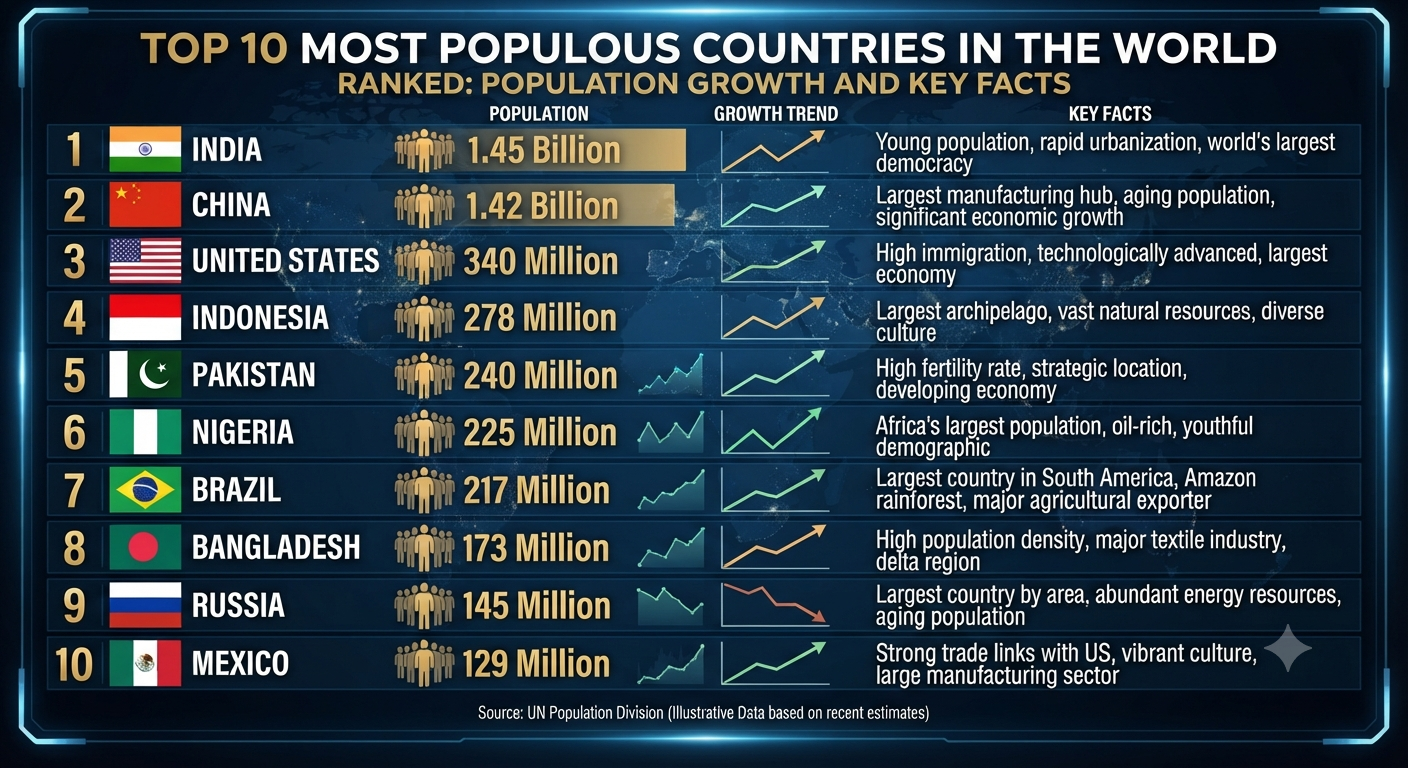
Population is one of the most important indicators of a country’s influence, economic potential, and global role. In 2026, the world’s population continues to grow, with several nations accounting for a significant share of the global population. The most populous countries in the world are home to billions of people and play major roles in international trade, politics, technology, and culture.
From Asia’s population giants to emerging economies in Africa and beyond, these countries face unique opportunities and challenges. Rapid urbanization, economic development, healthcare improvements, and changing birth rates all influence population growth trends.
This article explores the Top 10 Most Populous Countries in the World Ranked, including their estimated populations, population growth patterns, and key facts that make each nation unique.
1. India – The World’s Most Populous Country
Estimated Population (2026): Over 1.4 billion people
India ranks as the most populous country in the world, surpassing China in recent years. With a population exceeding 1.4 billion, India represents nearly one-fifth of the global population.
The country’s large population is supported by a young demographic structure, with millions of people entering the workforce every year. Major cities such as Mumbai, Delhi, Bengaluru, and Hyderabad continue to experience rapid urban growth.
Key Facts About India:
- Capital: New Delhi
- Largest city: Mumbai
- Population growth: Moderate but slowing
- Major industries: Technology, agriculture, manufacturing, services
- Official languages: Hindi and English (along with many regional languages)
India’s growing middle class and expanding technology sector make it one of the world’s fastest-growing major economies. However, challenges such as employment, infrastructure, and resource management remain important issues.
2. China – The Largest Population in East Asia
Estimated Population (2026): Around 1.4 billion people
China remains one of the world’s largest countries by population despite experiencing slower growth and population decline in recent years. For decades, China maintained the position of the most populous country before being overtaken by India.
China’s population is highly urbanized, with major metropolitan areas including Shanghai, Beijing, Guangzhou, and Shenzhen.
Key Facts About China:
- Capital: Beijing
- Largest city: Shanghai
- Population trend: Declining due to lower birth rates
- Major industries: Manufacturing, technology, exports
- Economy: Second-largest economy globally
China faces demographic challenges, including an aging population and a shrinking workforce. The government has introduced policies to encourage higher birth rates while investing heavily in automation and technology.
3. United States – The Most Populous Country in the Americas
Estimated Population (2026): Over 340 million people
The United States ranks third among the world’s most populous countries. Unlike many developed nations, the U.S. continues to experience population growth due to immigration and economic opportunities.
Large cities such as New York City, Los Angeles, Chicago, and Houston contribute significantly to the country’s population concentration.
Key Facts About the United States:
- Capital: Washington, D.C.
- Largest city: New York City
- Population growth: Steady growth through immigration
- Major industries: Technology, finance, healthcare, entertainment
- Economy: Largest economy in the world
The United States remains a global leader in innovation, higher education, and business. Its diverse population is one of its greatest strengths.
4. Indonesia – Southeast Asia’s Population Giant
Estimated Population (2026): Around 280 million people
Indonesia is the fourth most populous country in the world and the largest nation in Southeast Asia. Spread across thousands of islands, Indonesia has a diverse population with hundreds of ethnic groups and languages.
The island of Java is the country’s most populated region, containing major cities such as Jakarta, Surabaya, and Bandung.
Key Facts About Indonesia:
- Capital: Jakarta (with government transition to Nusantara underway)
- Largest city: Jakarta
- Population growth: Moderate growth
- Major industries: Manufacturing, agriculture, tourism, digital economy
- Geography: Largest archipelago country in the world
Indonesia’s young population provides significant economic opportunities. The country is also becoming an important player in global manufacturing and digital markets.
5. Pakistan – One of the Fastest Growing Populations
Estimated Population (2026): Over 250 million people
Pakistan ranks among the fastest-growing large populations in the world. With a young population and high birth rate, the country is expected to continue increasing in population size.
Major cities including Karachi, Lahore, and Islamabad are important economic and cultural centers.
Key Facts About Pakistan:
- Capital: Islamabad
- Largest city: Karachi
- Population trend: Rapid growth
- Major industries: Agriculture, textiles, services
- Demographics: One of the youngest populations globally
Pakistan’s young workforce creates opportunities for economic expansion, although education, employment, and infrastructure development remain major priorities.
6. Nigeria – Africa’s Population Powerhouse
Estimated Population (2026): Over 230 million people
Nigeria is the most populous country in Africa and one of the fastest-growing populations worldwide. The country’s population is expected to continue expanding significantly in the coming decades.
Lagos, one of Africa’s largest cities, is a major financial and commercial hub.
Key Facts About Nigeria:
- Capital: Abuja
- Largest city: Lagos
- Population growth: Very high
- Major industries: Oil, technology, agriculture, entertainment
- Region: West Africa
Nigeria has enormous economic potential due to its young population and natural resources. The growth of technology startups and digital services has made Nigeria an important emerging market.
7. Brazil – South America’s Largest Population
Estimated Population (2026): Over 210 million people
Brazil is the most populous country in South America and one of the largest nations in the world by land area. Its population is concentrated mainly along the Atlantic coastline.
Cities such as São Paulo, Rio de Janeiro, and Brasília are major population centers.
Key Facts About Brazil:
- Capital: Brasília
- Largest city: São Paulo
- Population trend: Slow growth
- Major industries: Agriculture, mining, energy, manufacturing
- Famous for: Amazon rainforest and cultural diversity
Brazil’s population growth has slowed significantly due to declining birth rates, but the country remains a major global economic force.
8. Bangladesh – A Densely Populated Nation
Estimated Population (2026): Over 170 million people
Bangladesh is one of the most densely populated countries in the world. Despite its relatively small land area, it has developed into a major manufacturing hub, especially in the textile industry.
Dhaka, the capital city, is among the world’s largest urban areas.
Key Facts About Bangladesh:
- Capital: Dhaka
- Largest city: Dhaka
- Population density: Extremely high
- Major industries: Garments, agriculture, exports
- Economic growth: Rapid development
Bangladesh has achieved major progress in poverty reduction, education, and healthcare while managing challenges related to population density and climate change.
9. Russia – Largest Country by Land Area
Estimated Population (2026): Around 140 million people
Russia ranks among the world’s largest countries by population and is the largest country geographically. However, its population has been declining due to low birth rates and demographic challenges.
Most Russians live in the western part of the country, including cities like Moscow and Saint Petersburg.
Key Facts About Russia:
- Capital: Moscow
- Largest city: Moscow
- Population trend: Declining
- Major industries: Energy, mining, technology
- Geography: Largest country by territory
Russia’s vast natural resources, especially oil and gas, continue to influence its global economic position.
10. Mexico – A Major Population Center in Latin America
Estimated Population (2026): Over 130 million people
Mexico completes the list of the world’s top 10 most populous countries. Located in North America, Mexico has a large urban population and a growing economy.
Mexico City is one of the largest metropolitan areas in the world.
Key Facts About Mexico:
- Capital: Mexico City
- Largest city: Mexico City
- Population trend: Slow growth
- Major industries: Manufacturing, automotive, tourism
- Economy: One of Latin America’s largest
Mexico benefits from its location near the United States and plays an important role in global supply chains.
Global Population Growth Trends
The world’s population continues to change due to several major factors, including birth rates, life expectancy, migration, and economic development.
Developing countries such as India, Nigeria, and Pakistan continue to experience population growth, while countries like China and Russia face population decline.
Some important global population trends include:
- Urbanization: More people are moving to cities for jobs and better opportunities.
- Aging populations: Many developed countries face increasing numbers of elderly citizens.
- Young workforces: Countries with younger populations have opportunities for economic growth.
- Migration: International migration continues to reshape population patterns.
Conclusion: The World’s Most Populous Countries and Their Future
The Top 10 Most Populous Countries in the World represent a significant portion of humanity and play crucial roles in shaping the global future. India and China remain population giants, while countries such as Nigeria, Pakistan, and Indonesia are becoming increasingly influential due to their growing populations.
Population size alone does not determine success. How countries manage education, healthcare, employment, technology, and sustainability will determine whether population growth becomes an advantage or a challenge.
As global demographics continue to shift, these nations will remain at the center of economic, political, and social developments for decades to come.
penulis: keysya






Post Comment